How many times have you heard that teams using agile methodologies do not estimate their work? This couldn’t be further from the truth. They do estimate, but the techniques that agile teams use are not the same as those used in traditional project management.
Agile estimation techniques are essential tools for project planning and delivery in modern software development. These methods help teams forecast effort, prioritize tasks, and manage resources effectively. By understanding and applying agile estimation techniques, you’ll be better equipped to lead successful projects and deliver value to your customers. This guide will provide you with practical insights and actionable strategies to improve your estimation skills and boost your team’s performance.
What Are Agile Estimation Techniques?
Agile estimation techniques are methods used in agile project management to predict the effort, time, or resources needed for completing tasks or user stories. These techniques are designed to be flexible and adaptable, aligning with the core principles of agile methodologies. Unlike traditional estimation methods, agile techniques focus on relative sizing rather than precise time estimates.
In agile project management, agile estimation is vital in planning sprints, allocating resources, and setting realistic expectations for stakeholders. It helps teams prioritize work, manage workload, and make informed decisions about project scope and timelines. By using these techniques, teams can respond more effectively to changes and uncertainties that often arise during software development or other complex projects.
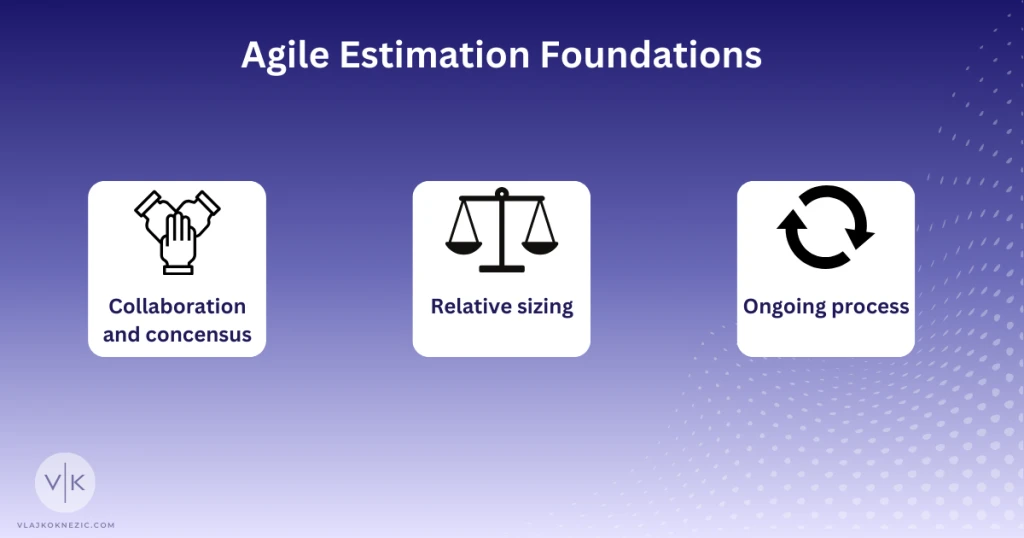
Agile estimation differs from traditional methods in several key ways. First, it emphasizes collaboration and team consensus, often involving all team members in the estimation process. Second, it uses relative sizing instead of absolute values, which can be more accurate for complex tasks. Lastly, agile estimation is an ongoing process, with estimates being regularly reviewed and adjusted as new information becomes available.
Popular Agile Estimation Methods
Planning Poker

Planning Poker is a consensus-based technique where team members use numbered cards to estimate the relative size of user stories or tasks. Each team member secretly selects a card representing their estimate, and all cards are revealed simultaneously. If there’s a significant discrepancy, team members discuss their reasoning and re-estimate until a consensus is reached.
This method encourages participation from all team members and helps prevent anchoring bias, where initial estimates influence subsequent ones. Planning Poker is particularly useful for new teams or when estimating unfamiliar work.
T-Shirt Sizing
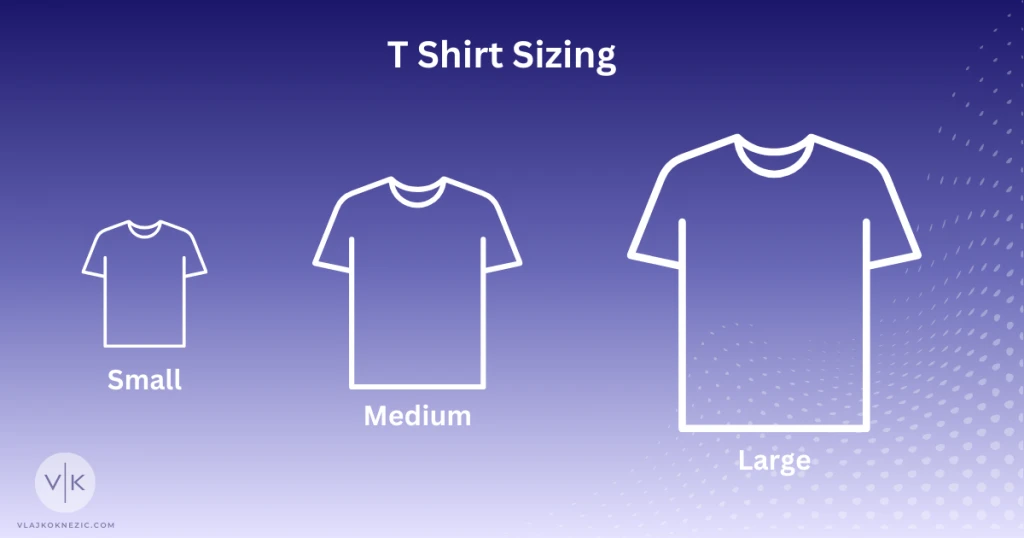
T-Shirt Sizing is a simple and intuitive method where tasks are categorized into sizes like XS, S, M, L, and XL. This technique is easy to understand and can be quickly implemented, making it ideal for high-level estimation or when working with non-technical stakeholders.
The simplicity of T-Shirt Sizing allows for quick categorization of tasks, but it may lack the precision needed for detailed sprint planning. It’s often used as an initial estimation technique before moving to more detailed methods.
Dot Voting
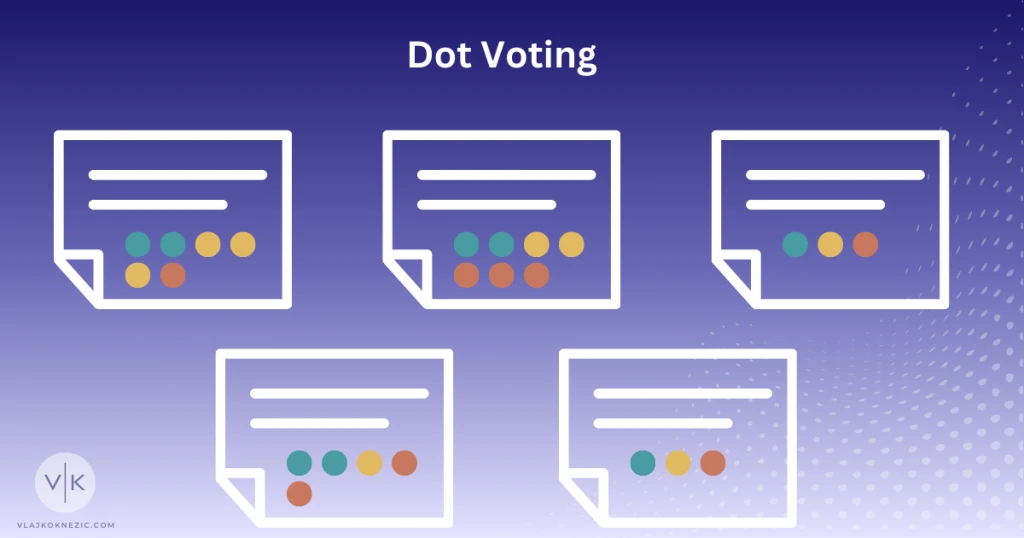
Dot Voting is a visual estimation technique where team members place dots on a board to indicate their estimates for each task. The number of dots represents the relative effort or complexity. This method provides a quick visual representation of the team’s collective estimation.
Dot Voting is particularly useful for large backlogs or when time is limited. It allows for rapid estimation of multiple items and can help identify tasks that require further discussion due to widely varying estimates.
The Bucket System
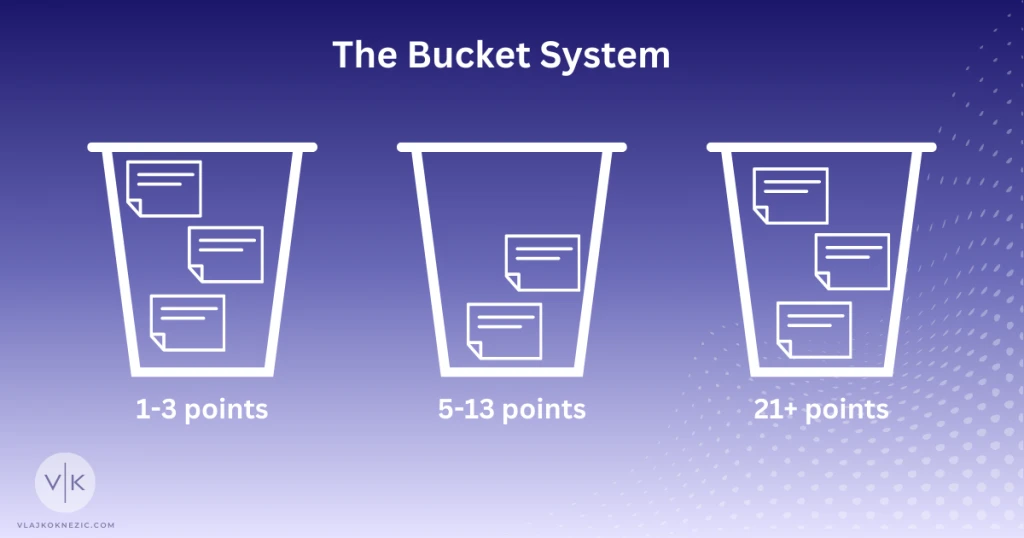
The Bucket System involves categorizing tasks into predefined “buckets” or ranges of effort. Each bucket represents a range of story points or time estimates. Team members place tasks into the appropriate buckets based on their perceived effort or complexity.
This method strikes a balance between the simplicity of T-Shirt Sizing and the precision of numerical estimates. It’s particularly useful for teams transitioning from time-based estimates to relative sizing.
Fibonacci Sequence
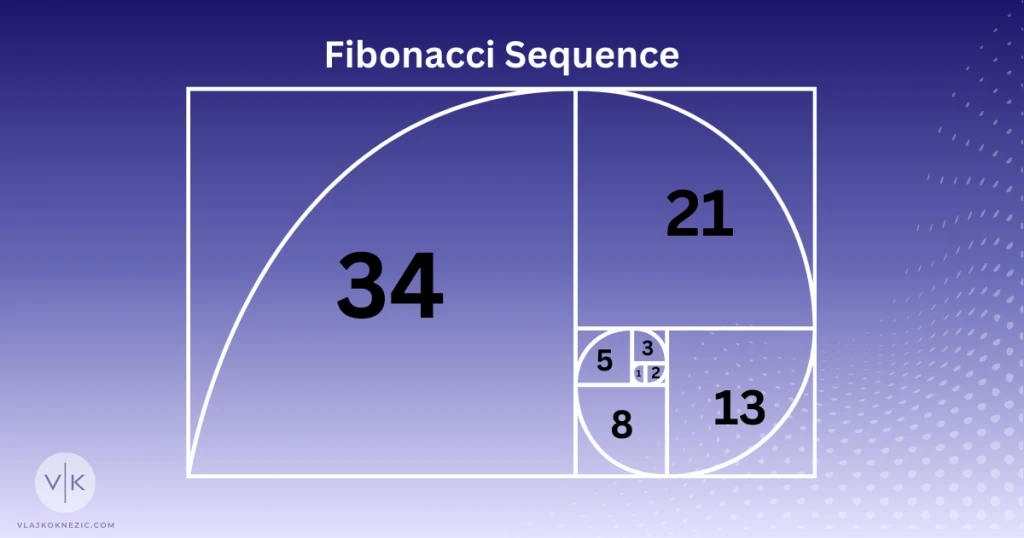
The Fibonacci Sequence method uses the Fibonacci series (1, 2, 3, 5, 8, 13, 21, etc.) for estimating story points. This approach recognizes that as complexity increases, estimates become less precise, which is reflected in the increasing gaps between numbers in the sequence.
Using the Fibonacci Sequence helps teams avoid false precision in estimates for complex tasks. It’s often combined with Planning Poker, where the cards used represent Fibonacci numbers.
Story Points vs. Time-Based Estimates
Explanation of story points
Story points are a unit of measure used in agile estimation to express the overall effort required to fully implement a product backlog item or complete a task. They’re a relative measure, not tied to specific time units. Story points consider factors like complexity, uncertainty, and effort, while time estimates consider the time required to complete a task.
Using story points allows teams to focus on the relative size of work items rather than trying to predict exact durations. This approach acknowledges that different team members may work at different speeds or have varying levels of experience.
Advantages of using story points
Story points offer several benefits over time-based estimates. They are based on the complexity and risk of the task, not on how long it takes to complete the task, which nicely accounts for the fact that different team members work at different speeds.
Story points can lead to more accurate long-term planning as teams establish their velocity (the number of story points completed per sprint).
Another advantage is that story points can help reduce the pressure associated with time-based estimates. Teams can focus on delivering value rather than meeting specific time commitments.
When to use time-based estimates
Despite the advantages of story points, there are situations where time-based estimates are more appropriate. For tasks with well-defined processes or for experienced teams working on familiar types of work, time estimates can be quite accurate.
Time-based estimates are also useful for budgeting purposes, client communications, or when coordinating with external dependencies that operate on fixed schedules. They’re often necessary for high-level project planning and resource allocation.
Combining story points and time estimates
Many agile teams find value in using both story points and time estimates. Story points can be used for sprint planning and tracking team velocity, while time estimates can be used for long-term planning and external communications.
To combine these approaches, teams might use story points for estimation within sprints, but also track the actual time spent on tasks. Over time, this data can be used to establish a rough conversion between story points and hours, which can be useful for high-level planning and forecasting.
Best Practices for Agile Estimation
Involving the whole team
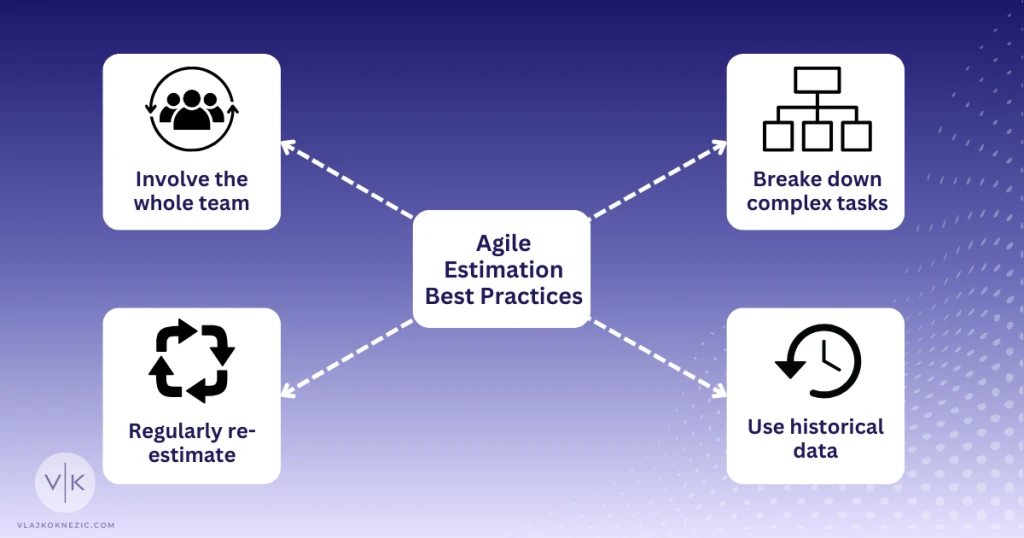
One of the key principles of agile estimation is to involve the entire team in the process. This includes developers, testers, designers, and anyone else who will be contributing to the work. By involving everyone, you tap into the collective wisdom and experience of the team.
Team involvement leads to more accurate estimates as different perspectives are considered. It also increases buy-in and commitment to the estimates, as team members feel ownership over the process. Encourage open discussion and make sure everyone’s voice is heard during estimation sessions.
Breaking down complex tasks
When faced with large or complex tasks, it’s crucial to break them down into smaller, more manageable pieces. This process, often called task decomposition, makes estimation more accurate and helps identify potential risks or dependencies.
Start by identifying the major components of a complex task. Then, break each component down further until you have a list of small, specific tasks that can be easily estimated. This approach not only improves estimation accuracy but also makes the work more manageable during sprint execution.
Regular re-estimation
Agile estimation is not a one-time event but an ongoing process. As work progresses and new information becomes available, it’s important to regularly re-evaluate and adjust estimates. This might happen during sprint planning, daily stand-ups, or as part of sprint retrospectives.
Be open to changing estimates based on new insights or challenges that arise. Regular re-estimation helps maintain the accuracy of your backlog and sprint plans, allowing for better decision-making and more reliable delivery forecasts.
Using historical data
Historical data from previous sprints or similar projects can greatly improve estimation accuracy. Keep records of past estimates and actual outcomes, and use this information to inform future estimates. This data can help identify patterns, such as certain types of tasks that are consistently under or overestimated.
Consider using tools or spreadsheets to track and analyze historical estimation data. Look for trends in your team’s velocity and use this information to refine your estimation process over time.
Avoiding common pitfalls
Several common pitfalls can undermine the effectiveness of agile estimation. One is allowing a single team member (often the most senior or vocal) to dominate the estimation process. Encourage equal participation and consider using techniques like Planning Poker to mitigate this.
Another pitfall is trying to estimate too far into the future. Focus on detailed estimates for the near term (upcoming sprint or two) and use rougher estimates for work further out. Avoid the temptation to provide precise time estimates for complex tasks far in the future.
Tools and Software for Agile Estimation
Overview of popular estimation tools
Numerous tools are available to support agile estimation processes. Some popular options include Jira, Trello, and Azure DevOps, which offer built-in estimation features. These tools allow teams to assign story points or time estimates to tasks and track progress over time.
Other specialized estimation tools like Planning Poker Online or Scrumpy provide digital implementations of specific estimation techniques. These can be particularly useful for distributed teams or when working remotely.
Features to look for in estimation software
When choosing estimation software, look for features that support your team’s specific estimation approach. Key features might include using custom estimation scales (like T-shirt sizes or Fibonacci numbers), support for team voting or consensus-building, and integration with your existing project management tools.
Good estimation software should also provide reporting and analytics capabilities. Look for tools that can generate burndown charts, velocity reports, and other visualizations that help track estimation accuracy over time.
Integrating estimation tools with project management platforms
For maximum efficiency, it’s beneficial to integrate your estimation tools with your broader project management ecosystem. This integration allows for seamless tracking of estimates throughout the project lifecycle and enables more accurate reporting and forecasting.
Many popular project management platforms offer APIs or pre-built integrations with estimation tools. When selecting tools, consider how well they’ll fit into your existing workflow and what level of integration is possible with your current systems.
Improving Estimation Accuracy Over Time
Tracking and analyzing estimation data
To improve estimation accuracy, it’s essential to consistently track and analyze your estimation data. Keep records of initial estimates, any re-estimates made during the sprint, and the actual time or effort required to complete each task.
Use this data to calculate your team’s velocity and to identify any patterns in over or underestimation. Look for trends related to specific types of tasks, team members, or project phases. This analysis can provide valuable insights for refining your estimation process.
Conducting retrospectives on estimation process
Regular retrospectives focused specifically on the estimation process can be incredibly valuable. During these sessions, discuss what went well and what could be improved in your estimation approach. Encourage team members to share their experiences and insights.
Consider questions like: Were our estimates generally accurate? If not, why? Did we encounter any unexpected challenges that affected our estimates? How can we adjust our process to account for these factors in the future?
Continuous learning and adaptation
Improving estimation accuracy is an ongoing process of learning and adaptation. Be open to trying new estimation techniques or adjusting your current methods based on your team’s experiences and the data you’ve collected.
Encourage a culture of continuous improvement where team members feel comfortable suggesting changes to the estimation process. Regularly review and update your estimation guidelines based on lessons learned. Remember, the goal is not perfect estimates, but rather to become increasingly accurate and consistent over time.
Agile estimation techniques are essential for effective project management in agile environments. Various methods like Planning Poker, T-Shirt Sizing, and Story Points offer flexible approaches to estimate work. By involving the whole team, breaking down tasks, and regularly reassessing estimates, teams can improve their accuracy over time. Utilizing appropriate tools and software can further streamline the estimation process. With practice and commitment to continuous improvement, agile estimation becomes a valuable asset for project success.