Can Agile methodologies improve project management beyond the software industry? Originally developed for software development, Agile principles have gained traction in various fields, offering a flexible and collaborative approach to project execution. This guide will walk you through the essentials of implementing Agile for non-software projects, providing practical insights and real-world examples. By the end, you’ll have the knowledge and tools to transform your project management approach, regardless of your industry.
What is Agile and Why Use it for Non-Software Projects?
Agile methodology is a flexible, iterative approach to project management that emphasizes collaboration, adaptability, and rapid delivery of value. It’s a set of principles and practices that guide teams to work more efficiently and effectively. Agile was initially developed for software projects, but its core ideas can be applied to various fields.

The key principles of Agile include customer satisfaction through early and continuous delivery, welcoming changing requirements, frequent delivery of working products, close collaboration between business people and developers, motivated individuals, face-to-face communication, working products as the primary measure of progress, sustainable development, technical excellence, simplicity, self-organizing teams, and regular reflection and adjustment.
In non-software contexts, Agile can bring numerous benefits. It allows teams to respond quickly to changes, improve communication, and deliver value faster. Projects can be broken down into smaller, manageable chunks, making it easier to track progress and make adjustments as needed. This approach can lead to higher-quality outcomes and increased stakeholder satisfaction.
However, there are some common misconceptions about Agile in non-tech fields. Some people believe Agile means no planning or documentation, which isn’t true. Others think it’s only for software development or that it’s a silver bullet for all project management problems. In reality, Agile is a mindset and a set of principles that can be adapted to various industries and project types.
Adapting Agile Principles for Non-Software Projects

Iterative planning and execution
Iterative planning and execution is a core aspect of Agile that can be easily adapted to non-software projects. Instead of creating a detailed long-term plan, teams break down work into smaller cycles or iterations. This approach allows for regular reassessment and adjustment of priorities. For example, a marketing team might plan campaigns in two-week sprints, reviewing results and adjusting strategies after each cycle.
Customer-centric approach
A customer-centric approach is another key Agile principle that translates well to non-software projects. This involves regularly seeking and incorporating customer feedback throughout the project lifecycle. In a non-software context, this could mean conducting user testing for a new product design or gathering input from stakeholders during different phases of a construction project. By keeping the customer’s needs at the forefront, teams can ensure they’re delivering value that aligns with expectations.
Flexibility and adaptability in project management
Flexibility and adaptability are crucial in Agile project management. This principle encourages teams to be open to change and ready to pivot when necessary. In non-software projects, this might mean being prepared to adjust timelines, reallocate resources, or modify deliverables based on new information or changing circumstances. For instance, an event planning team might need to quickly adapt their plans in response to unexpected weather conditions or venue changes.
Continuous improvement and feedback loops
Continuous improvement and feedback loops are essential for Agile teams. This involves regularly reflecting on processes and outcomes to identify areas for improvement. In non-software projects, teams can implement regular retrospectives or feedback sessions to discuss what’s working well and what could be better. For example, a manufacturing team might hold weekly meetings to review production efficiency and brainstorm ways to streamline processes.
Popular Agile Frameworks for Non-Software Projects
Scrum for non-tech teams
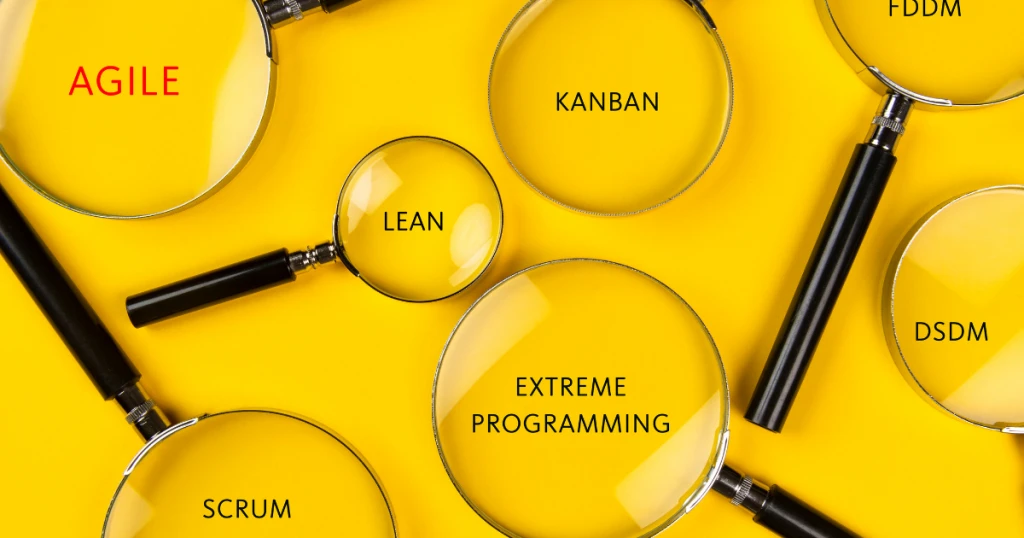
Scrum, a popular Agile framework, can be effectively applied to non-tech teams. It involves working in short sprints, typically 1-4 weeks long, with daily stand-up meetings and regular sprint planning and review sessions. For example, a marketing team might use Scrum to manage their content creation process. They could plan their content calendar in sprints, have daily check-ins to discuss progress, and hold sprint reviews to evaluate the performance of published content.
Kanban in various industries
Kanban is another Agile framework that’s widely applicable across industries. It focuses on visualizing workflow, limiting work in progress, and continuous improvement. A manufacturing team might use a Kanban board to track the progress of products through different stages of production. This visual representation helps identify bottlenecks and ensures a smooth flow of work.
Lean principles in non-software environments
Lean principles, which emphasize maximizing customer value while minimizing waste, can be applied in various non-software environments. For instance, a healthcare facility might use Lean principles to streamline patient care processes, reducing wait times and improving overall patient experience. This could involve mapping out the patient journey, identifying non-value-adding steps, and implementing improvements.
Hybrid Agile approaches for diverse projects
Hybrid Agile approaches combine elements from different Agile frameworks to suit the specific needs of diverse projects. For example, a construction project might use a combination of Scrum for planning and coordination, and Kanban for managing the flow of materials and tasks on-site. This hybrid approach allows teams to tailor Agile practices to their unique project requirements and constraints.
Implementing Agile in Non-Software Teams
Steps to introduce Agile methodologies
Introducing Agile methodologies to non-software teams requires a thoughtful approach. Start by educating the team about Agile principles and how they can benefit the project. Next, choose an Agile framework that fits your team’s needs. Begin with a pilot project or a small team to test the waters. Implement basic Agile practices like daily stand-ups, sprints, and retrospectives. Gradually expand the use of Agile as the team becomes more comfortable with the approach.
Overcoming resistance to change
Resistance to change is a common challenge when implementing Agile. Address concerns by clearly communicating the benefits of Agile and how it will improve the team’s work. Involve team members in the decision-making process to gain buy-in. Provide support and resources to help team members adapt to new ways of working. Celebrate early wins to build momentum and enthusiasm for the Agile approach.
Training and upskilling team members
Training and upskilling are crucial for successful Agile implementation. Offer workshops and training sessions on Agile principles and practices. Encourage team members to pursue Agile certifications if relevant. Provide ongoing support through mentoring or coaching programs. Create opportunities for team members to share knowledge and experiences as they adapt to Agile methodologies.
Tools and software for Agile project management
Various tools and software can support Agile project management in non-software teams. Digital Kanban boards like Trello or Jira can help visualize workflow. Project management tools like Asana or Monday.com can assist with sprint planning and tracking. Collaboration platforms like Slack or Microsoft Teams can facilitate communication. Choose tools that integrate well with your existing systems and are user-friendly for your team.
Real-World Examples of Agile in Non-Software Industries

Agile in marketing and advertising
Marketing and advertising agencies have found success with Agile methodologies. They use sprints to plan and execute campaigns, allowing for quick adjustments based on market feedback. Daily stand-ups help teams stay aligned on priorities and address bottlenecks. Kanban boards are often used to manage content creation workflows. This approach allows marketing teams to be more responsive to market trends and client needs.
Here are three examples of companies using Agile methodologies in their marketing and advertising efforts:
SEMRush adopted an Agile approach for its marketing department, implementing a flat organizational structure and empowering autonomous teams. They use Scrum with daily standup meetings and sprints to allow for rapid experimentation and testing. This Agile approach helped SEMRush gain 500,000 new users in just 8 months and achieve over 90% year-over-year revenue growth in their top 10 new markets.
Santander Bank used Agile marketing for their “Unlock you London” campaign aimed at promoting their mobile app. They assembled cross-functional teams around shared objectives and KPIs, and agreed to tweak the campaign weekly based on results. This allowed them to test ideas quickly and iterate. The Agile approach led to a 12% increase in customer loyalty, 10% increase in account satisfaction, and their highest Net Promoter Score in 17 years.
Dell reorganized its global marketing team of about 200 people into an Agile formation aligned with product families. They trained all marketing personnel in HubSpot’s inbound methodology and implemented 30-day sprint cycles across worldwide marketing teams. Within 7 months of adopting Agile and inbound methodologies, Dell’s marketing team started seeing significant benefits in terms of efficiency and alignment across product lines.
Construction projects using Agile methods
Construction projects have benefited from Agile methods. Teams use sprint planning to break down large projects into manageable chunks. Daily stand-ups on site help identify and address issues quickly. Kanban boards are used to manage the flow of materials and tasks. This approach has led to improved communication, faster problem-solving, and more efficient resource allocation in construction projects.
Agile approaches in healthcare
Agile methodologies have found increasing relevance in healthcare settings. The dynamic and complex nature of healthcare systems aligns well with the adaptive and iterative approach that Agile promotes. By emphasizing collaboration, flexibility, and continuous improvement, Agile approaches can enhance patient care, streamline processes, and foster innovation in healthcare organizations.
A few examples of healthcare companies that use Agile methodologies are listed below:
Mayo Clinic has adopted Agile project management practices, particularly in its information technology department. They use Agile frameworks to develop customized software solutions more quickly and efficiently while maintaining high quality standards. This approach has helped Mayo Clinic position itself to fulfill diverse needs faster and with increased quality, especially during their enterprise practice convergence and transition to a new electronic health record system.
Atrium Health Wake Forest Baptist, the leading health system, utilized Agile methodologies to streamline its patient appointment scheduling system. By applying Agile principles, they were able to improve the efficiency of their scheduling processes and enhance patient experience.
As a leading healthcare provider, Kaiser Permanente has embraced Agile practices to optimize its IT projects and improve patient care. Their adoption of Agile methodologies has allowed them to streamline various processes and enhance overall efficiency in delivering healthcare services.
Healthcare organizations have adopted Agile approaches to improve patient care and operational efficiency. Hospitals use Kanban boards to manage patient flow and reduce wait times. Agile sprints are used for process improvement initiatives. Daily huddles help healthcare teams coordinate care and address urgent issues. These Agile practices have resulted in improved patient outcomes and more efficient healthcare delivery.
Educational institutions adopting Agile practices
Educational institutions are increasingly adopting Agile practices. Schools use sprints to plan and implement curriculum changes. Teachers use Kanban boards to manage classroom activities and track student progress. Universities apply Agile methods to research projects, allowing for more flexibility and collaboration. These Agile approaches in education have led to more adaptive learning environments and improved student engagement.
Here are three examples of companies using Agile methodologies in education:
Ashram College in the Netherlands has been a pioneer in applying Agile principles to education since 2012. Led by teacher Willy Wijnands, the school developed “eduScrum”, an adaptation of the Scrum framework for educational settings. EduScrum aims to make learning more student-centered and collaborative by:
- Organizing students into self-managing teams
- Breaking down curriculum into “sprints”
- Using visual boards to track progress
- Incorporating regular reflection sessions
This approach has helped increase student engagement and ownership of the learning process at Ashram College.
While primarily known as a financial institution, Barclays has applied Agile methodologies to its internal training and development programs[4]. The company implemented Disciplined Agile Delivery (DAD) and Agile coaching to transform its approach to employee education. Key outcomes include:
- A 300% increase in learning throughput
- 50% reduction in complexity of training materials
- Improved employee satisfaction with learning programs
- Greater adaptability in responding to changing skill needs
By applying Agile principles to corporate learning, Barclays has created a more responsive and effective educational environment for its employees.
The Leysin American School in Switzerland has been experimenting with Agile in education since 2014. Their approach includes:
- Using Scrum and Kanban boards in middle school and high school classes
- Applying Agile principles in faculty meetings and long-term projects like curriculum review
- Developing an “agile toolkit” for teachers
- Incorporating regular reflection sessions for both students and teachers
The school has found that Agile methods help create a more flexible and student-centered learning environment. They’ve also used Agile approaches to improve collaboration among faculty and staff.
These examples demonstrate how Agile principles can be adapted to various educational settings, from K-12 schools to corporate training programs. The common thread is a focus on flexibility, collaboration, and continuous improvement in the learning process.
Agile in the Manufacturing Industry
John Deere successfully implemented Agile methodologies across its Global IT group, initiating a transformation in 2019. They adopted the Scrum@Scale framework alongside DevOps practices to enhance their Agile Operating Model (AOM). A phased training approach was implemented to ensure effective learning with minimal disruption. As a result, the company experienced a 165% increase in output and a 15-fold improvement in deployment frequency. Time to market was reduced by 87%, and the number of features delivered per sprint nearly tripled. The estimated ROI from this transformation exceeded 100%.
Additionally, John Deere saved over 10,000 annual people-hours and streamlined several costly applications. The implementation of Technology Business Management (TBM) provided monthly visibility into product investments. Overall, the Agile transformation has significantly improved quality measures and accelerated delivery speeds. John Deere’s success showcases the effectiveness of Agile in driving value and operational efficiency.
Measuring Success with Agile in Non-Software Projects

Key performance indicators for Agile projects
Key performance indicators (KPIs) for Agile projects in non-software contexts may differ from those in software development. Common KPIs include cycle time (how long it takes to complete a task), lead time (time from request to delivery), and throughput (number of items completed in a given time). Customer satisfaction scores and team morale metrics are also important. Project-specific KPIs should be established based on the unique goals and context of each project.
Tracking and reporting Agile metrics
Tracking and reporting Agile metrics is essential for measuring success. Use visual tools like burndown charts to show progress over time. Cumulative flow diagrams can help identify bottlenecks in the process. Regular sprint reviews provide an opportunity to present metrics to stakeholders. Emphasize trends over time rather than focusing on single data points. Make sure metrics are easily accessible and understood by all team members.
Continuous improvement through data analysis
Data analysis plays a crucial role in continuous improvement for Agile teams. Review metrics regularly to identify patterns and areas for improvement. Use retrospectives to discuss what the data reveals about team performance. Encourage team members to suggest experiments based on data insights. Implement changes and monitor their impact on key metrics. This data-driven approach to improvement helps teams become more efficient and effective over time.
Comparing Agile vs. traditional project outcomes
Comparing Agile and traditional project outcomes can help demonstrate the value of Agile methods. Look at metrics like time-to-market, customer satisfaction, and ability to adapt to changes. Consider qualitative factors like team morale and stakeholder engagement. While direct comparisons can be challenging due to project differences, trends over time can show the impact of Agile adoption. Use case studies and success stories to illustrate the benefits of Agile in non-software contexts.
Challenges and Solutions in Adopting Agile for Non-Software Projects
Common hurdles in Agile implementation
Implementing Agile in non-software projects often faces several hurdles. Resistance to change from team members accustomed to traditional methods is common. Lack of understanding about Agile principles can lead to misapplication. Some industries may struggle with the concept of “potentially shippable product” at the end of each sprint. Stakeholders might be uncomfortable with the iterative nature of Agile, expecting detailed long-term plans. These challenges require patience and a tailored approach to overcome.
Strategies to overcome Agile adoption challenges
To overcome Agile adoption challenges, focus on education and communication. Provide thorough training on Agile principles and practices. Start with small, low-risk projects to demonstrate value. Involve key stakeholders early in the process to gain buy-in. Adapt Agile terminology to fit your industry context. Be prepared to show early wins and tangible benefits. Encourage open dialogue about challenges and continuously refine your approach based on feedback.
Tailoring Agile practices to specific industries
Tailoring Agile practices to specific industries is crucial for success. In manufacturing, focus on lean principles and continuous flow. For creative industries, emphasize iterative design and frequent client feedback. In healthcare, prioritize patient safety and regulatory compliance within the Agile framework. Adapt sprint lengths and rituals to fit the natural rhythms of your industry. The key is to maintain the core Agile principles while adjusting the practices to suit your specific context.
Balancing Agile flexibility with regulatory requirements
Balancing Agile flexibility with regulatory requirements can be challenging in highly regulated industries. Create a hybrid approach that incorporates necessary documentation and approval processes into the Agile workflow. Use “compliance sprints” to focus on meeting regulatory requirements. Involve compliance officers in sprint planning and reviews. Document decisions and changes thoroughly. Remember that Agile’s emphasis on transparency and frequent communication can actually support regulatory compliance when implemented thoughtfully.
Agile methodology, originally developed for software projects, has proven valuable in various non-tech fields. By applying core Agile principles like iterative planning, customer focus, and continuous improvement, organizations can boost efficiency and adaptability. Popular frameworks like Scrum, Kanban, and Lean can be adapted for diverse industries. Implementing Agile requires careful planning, training, and the right tools. Real-world examples demonstrate Agile’s success in marketing, construction, healthcare, and education. Measuring success through appropriate metrics and addressing challenges are key to successful Agile adoption in non-software projects.