Are you struggling to choose between Agile and Waterfall methodologies for your project? Many organizations face this dilemma when planning their development processes. Both approaches have their strengths and weaknesses, and selecting the right one can significantly impact your project’s success. This guide will provide you with a solid understanding of Agile and Waterfall methodologies, their key differences, and when to use each approach. Eventually, you will be equipped with the knowledge to make an informed decision that best suits your project needs and team dynamics.
What is the Agile Methodology?
Agile methodology is an iterative approach to project management that emphasizes flexibility, collaboration, and rapid delivery. At its core, Agile focuses on breaking projects into smaller, manageable chunks called “sprints” or “iterations.” This method allows teams to adapt quickly to changes and deliver value to customers more frequently.
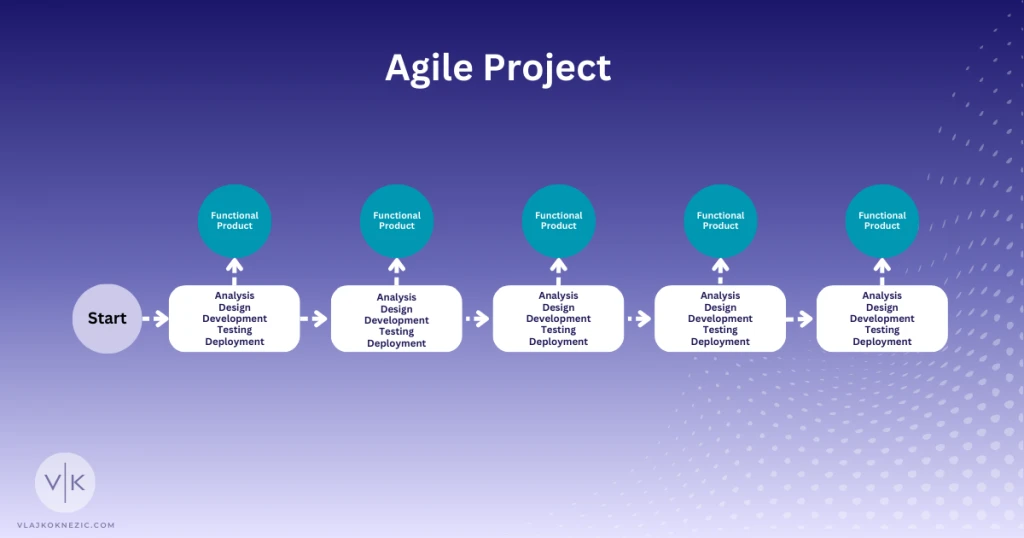
The Agile Manifesto is a set of guiding principles for software development that emphasizes flexibility, collaboration, and rapid delivery. It was created in 2001 by a group of software developers seeking to improve existing development methodologies.
There are four Agile values introduced in the manifesto.
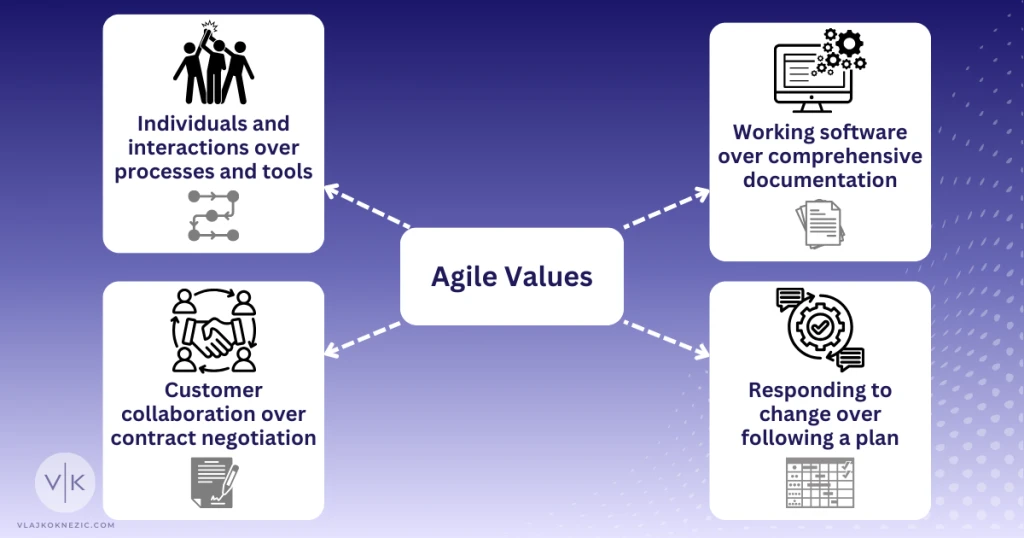
Individuals and interactions over processes and tools
Human communication and teamwork are prioritized above rigid procedures or software tools. It recognizes that people are the foundation of successful projects.
Working software over comprehensive documentation
Delivering functional software quickly is more important than spending excessive time on detailed documentation. While there is no question that documentation is important, the primary measure of progress is working software.
Customer collaboration over contract negotiation
This stresses the importance of ongoing communication with the client throughout the development process. It favors adaptive planning and continuous feedback over strict adherence to initial contracts.
Responding to change over following a plan
It is a known fact that requirements and circumstances often change during a project. Agile methodologies embrace change and adapt quickly rather than rigidly following predetermined plans.
In summary, Agile project management is characterized by its emphasis on continuous improvement, regular feedback loops, and self-organizing teams. It encourages face-to-face communication and daily stand-up meetings to keep everyone aligned. The focus is on delivering functional pieces of the project incrementally rather than waiting until the end to present a complete product.
Agile Frameworks
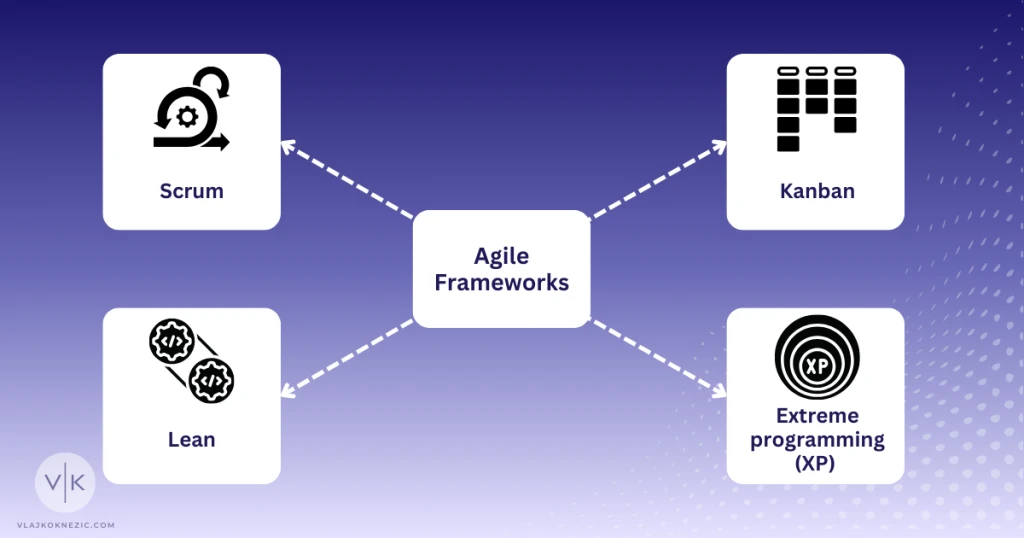
There are several popular Agile frameworks, each with its own unique approach:
- Scrum: Scrum uses fixed-length sprints along with defined team roles like Scrum Master and Product Owner and a series of events such as daily standups, sprint planning, sprint reviews and retrospectives.
- Kanban: Kanban focuses on visualizing work, limiting work in progress, and maximizing efficiency.
- Lean:
- Extreme Programming (XP): XP emphasizes technical practices like pair programming and test-driven development.
Benefits of using Agile
The benefits of using Agile project management are numerous. It allows for faster delivery of working products, improved quality through continuous testing and integration, and increased customer satisfaction due to regular feedback and adaptation. Also, development teams often report higher morale and productivity when using Agile methods.
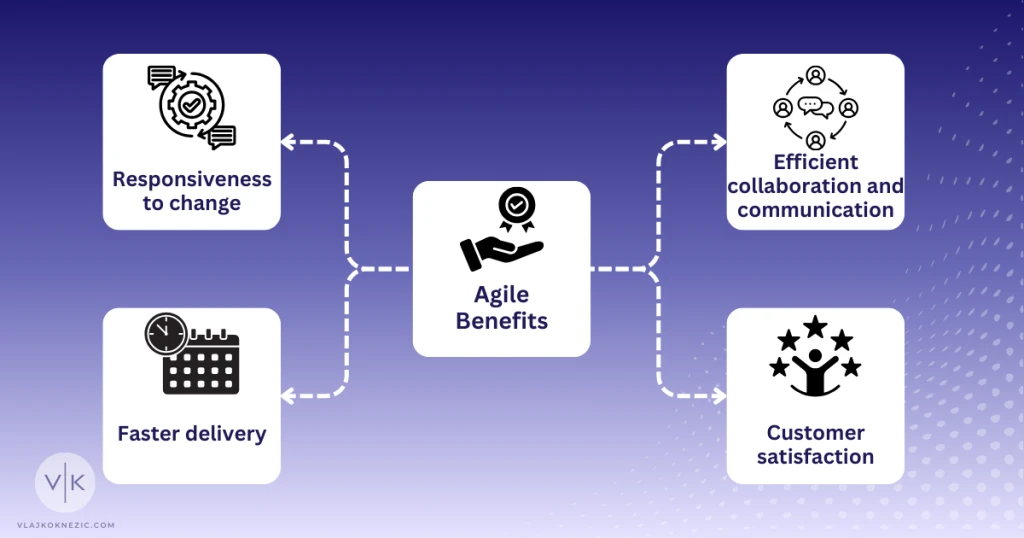
Here are some key statistics illustrating the efficiency of agile project management:
- Projects using agile methodologies have a 64% success rate, compared to a 49% success rate for traditional waterfall projects [1].
- Teams using agile are 25% more productive on average compared to non-agile teams [1].
- Only 9% of projects operated using agile fail, compared to much higher failure rates for traditional approaches [1].
- 71% of organizations now use agile approaches [1].
- 98% of companies report that agile methodologies have helped their organization [1].
- Adopting agile resulted in an average 60% growth in revenue for companies [1].
- Up to 60% of businesses experienced improved profits after implementing agile [1].
- 39% of respondents using agile project management reported the highest average project performance rate, with an overall project success rate of 75.4% [2].
- 59% of agile practitioners report enhanced collaboration, while 57% note better alignment with organizational objectives [2].
- Business units that fully embraced an agile model demonstrated greater resilience in facing challenges presented by COVID-19, as evidenced by metrics like customer satisfaction, employee engagement, and operational efficiency [2].
These statistics highlight that agile methodologies tend to result in higher project success rates, improved productivity, better alignment with business goals, increased revenues and profits, and greater adaptability to change compared to traditional project management approaches. The data suggests agile can provide significant benefits for many organizations across various metrics.
Understanding the Waterfall Method
The Waterfall method is a linear, sequential approach to project management that originated in the manufacturing and construction industries. It was later adopted by software development teams in the 1970s. This method is called “Waterfall” because progress flows steadily downwards through distinct phases, like a cascading waterfall.
In the Waterfall model, each phase must be completed before moving on to the next. The typical phases include:
- Requirements gathering and analysis
- Design
- Implementation
- Testing
- Deployment
- Maintenance
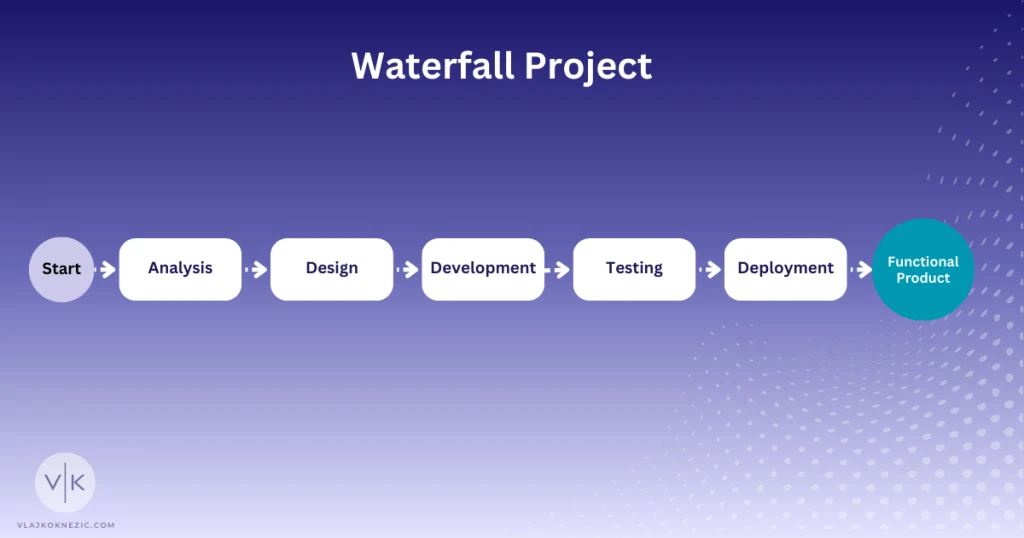
One of the key features of Waterfall project management is its emphasis on extensive and thorough planning and documentation. Each phase is carefully defined, with clear deliverables and review processes. This approach can be particularly useful for projects with well-defined requirements and minimal expected changes.
Waterfall offers several advantages in certain situations. It provides a clear structure and timeline for the project, making it easier to estimate costs and allocate resources. The extensive documentation produced can be valuable for future reference or when team members change. Additionally, the defined phases and milestones can help stakeholders track progress more easily.
Agile or Waterfall: Key Differences
Project Planning and Execution
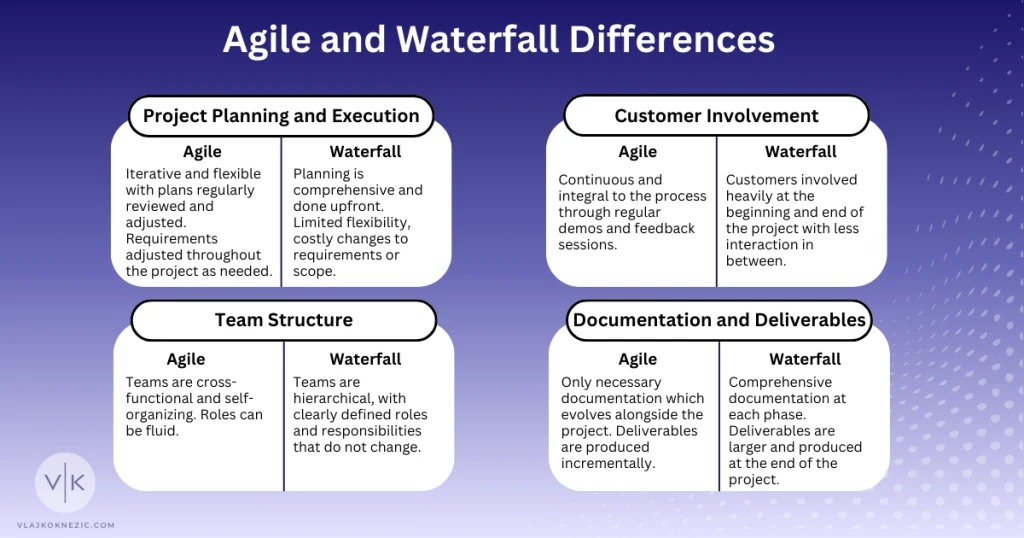
Agile and Waterfall differ significantly in how projects are planned and executed. Agile planning is iterative and flexible, with short-term plans that are regularly reviewed and adjusted. Work is divided into small increments, usually lasting 1-4 weeks. In contrast, Waterfall planning is comprehensive and done upfront, with a detailed project plan covering the entire timeline.
Agile methodologies are designed to be highly flexible and adaptable. Requirements can be adjusted throughout the project based on customer feedback or changing market conditions. This flexibility allows teams to pivot quickly when needed. Waterfall, on the other hand, is less flexible. Changes to requirements or scope can be costly and time-consuming once the project is underway.
Customer Involvement and Feedback
In Agile projects, customer involvement is continuous and integral to the process. Regular demos and feedback sessions are built into the project timeline. This constant communication helps ensure that the final product meets customer needs.
Waterfall projects typically involve customers heavily at the beginning (requirements gathering) and end (final delivery) of the project, with less interaction in between.
Team Structure and Roles
Agile teams are often cross-functional and self-organizing. Roles can be fluid, with team members taking on various responsibilities as needed.
Waterfall teams are usually more hierarchical, with clearly defined roles and responsibilities that remain consistent throughout the project.
Documentation and Deliverables
Agile prioritizes working software over extensive documentation. While documentation is still produced, it’s often leaner and evolves alongside the project. Deliverables are produced incrementally, with potentially shippable products at the end of each iteration.
Waterfall places a strong emphasis on comprehensive documentation at each phase. Deliverables are typically larger and produced at the end of each phase or at the project’s completion.
When to Choose Agile
Agile methodologies shine in certain project types and environments. They’re particularly well-suited for projects with evolving requirements or where the end goal might not be clearly defined at the beginning. Software development, product design, and creative initiatives often benefit from Agile’s flexibility.
Teams that thrive in Agile environments are typically those that are comfortable with change and ambiguity. They should be self-motivated, collaborative, and able to communicate effectively. Agile teams need to be willing to take ownership of their work and be open to regular feedback and iteration.
Here are some industries that are typically adopters of Agile practices:
- Technology and software development
- Marketing and advertising
- Finance and banking
- Education
While Agile offers many benefits, it’s not without challenges. Implementing Agile requires a significant cultural shift for many organizations. It can be difficult to maintain consistency across multiple Agile teams, and some stakeholders may be uncomfortable with the perceived lack of upfront planning. To address these challenges, organizations should invest in training, start with small pilot projects, and focus on clear communication about the Agile process.
When to Opt for Waterfall
There are some types of projects in which the Waterfall method remains useful. Specifically, it is a good fit for projects with clear, well-defined requirements that are unlikely to change significantly during development. Large-scale infrastructure projects, manufacturing processes, and certain types of regulatory or compliance-driven projects often benefit from Waterfall’s structured approach.
Teams that work well with Waterfall tend to have clearly defined roles and hierarchies. They’re often comfortable with detailed planning and documentation processes. Waterfall can be effective when team members are geographically dispersed or when there’s a need for strict control over project phases.
Industries where Waterfall is still commonly used include:
- Construction and engineering
- Manufacturing
- Aerospace and defense
- Government and public sector projects
- Healthcare and pharmaceuticals
While Waterfall offers structure and predictability, it also has drawbacks. The rigid nature of the process can make it difficult to adapt to changes or unforeseen issues. There’s also a risk of discovering problems late in the development cycle, which can be costly to address. To mitigate these risks, teams can incorporate some flexibility into the process, such as allowing for limited revisions between phases or conducting regular risk assessments.
Hybrid Approaches: Combining Agile and Waterfall
Hybrid project management methods aim to combine the best aspects of both Agile and Waterfall approaches. These models recognize that different phases or components of a project might benefit from different methodologies. For example, a project might use Waterfall for the initial planning and requirements gathering, then switch to Agile for development and testing.
The benefits of using a hybrid approach include increased flexibility while maintaining structure, better risk management, and the ability to adapt to diverse project needs. This approach can be particularly useful for large, complex projects or in organizations transitioning from Waterfall to Agile.
Successful hybrid implementations have been seen in various industries. For instance, some government agencies have adopted hybrid models to balance the need for documentation and oversight with the desire for more rapid, iterative development. Large software companies have also used hybrid approaches for projects involving both hardware and software components.
Here are some examples of successful implementations of the Agile-Waterfall hybrid approach:
- Microsoft: Microsoft has widely adopted Agile practices across its development teams, but also incorporates elements of Waterfall for certain aspects of project management [1][2].
- IBM: IBM uses Agile methodologies extensively but also employs hybrid approaches when necessary [1][2].
- Barclays Bank: Implemented Disciplined Agile Delivery (DAD) and Agile coaching across 800 teams, which is a form of hybrid approach combining Agile principles with more structured elements [1].
- U.S. Federal Government: By 2017, 80% of U.S. federal IT projects were using Agile or iterative approaches, often incorporating hybrid methodologies to meet regulatory requirements while maintaining agility [1].
To create a custom hybrid model, consider the following tips:
- Analyze your project’s specific needs and constraints.
- Identify which phases or components would benefit most from Agile or Waterfall approaches.
- Establish clear communication protocols to ensure smooth transitions between methodologies.
- Train your team on both Agile and Waterfall principles.
- Regularly review and adjust your hybrid model based on project outcomes and team feedback.
By thoughtfully combining elements of both methodologies, organizations can create a tailored approach that maximizes efficiency and effectiveness for their unique project requirements.
We have covered the key aspects of Agile and Waterfall methodologies, including their definitions, core principles, and best use cases. We have also explored the main differences between these approaches and discussed hybrid models that combine elements from both. By understanding these methodologies, project managers can make informed decisions about which approach best suits their specific project needs, team dynamics, and industry requirements.
Frequently Asked Questions
What is Agile Scrum best suited for?
Agile Scrum is best suited for dynamic projects with changing requirements, emphasizing frequent client interaction and rapid adaptability, making it ideal for environments that require flexibility and continuous improvement.
Can Waterfall methodology adapt to changes during a project?
No, Waterfall methodology is not adaptable to changes during a project due to its linear and sequential nature, which can lead to delays and increased costs.
Are there any industries or projects where Waterfall is the preferred methodology?
Yes, Waterfall is preferred in industries such as construction and manufacturing, as well as projects with stable requirements and strict regulatory compliance.
How do hybrid methodologies benefit a project?
Hybrid methodologies benefit a project by combining the structured planning of Waterfall with the flexibility of Agile Scrum, making it suitable for projects that require both adherence to planning phases and adaptability during development.
Is it challenging to switch from Waterfall to Agile Scrum?
Yes, it can be challenging to switch from Waterfall to Agile Scrum, but with the right training and mindset, it can lead to more efficient project management.