Scrum, an agile framework, has revolutionized how organizations tackle complex projects and deliver value to their customers. Many organizations tried to implement Scrum, but not all of them succeeded. This guide will take you through the fundamentals of Scrum, its key roles, artifacts, and ceremonies, and provide practical steps for implementation. You will gain knowledge and tools to boost your team’s efficiency, adaptability, and overall success.
Understanding Scrum Fundamentals
Scrum is an agile, lightweight framework for managing complex projects that focuses on delivering value through iterative and incremental development. Agile methodologies, including Scrum, emphasize flexibility, collaboration, and rapid delivery of working products. Scrum’s core principles include transparency, inspection, and continuous improvement with adaptation, which allow teams to respond quickly to changes and deliver high-quality results. It is built on the idea that work should be done in short, focused bursts called sprints, which typically last 1-4 weeks.
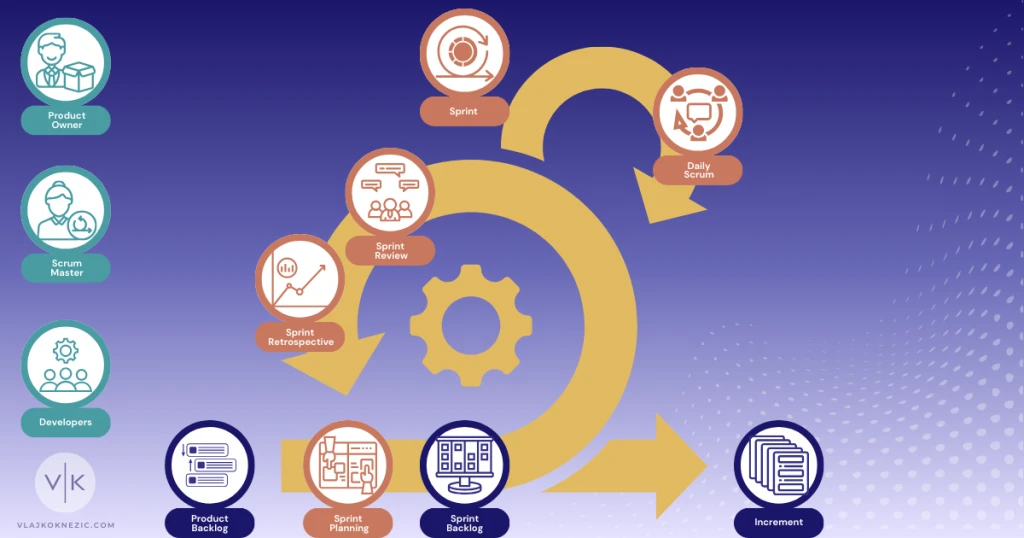
Transparency, inspection, and adaptation form the three pillars of Scrum. Transparency means all aspects of the project are visible to everyone involved. Inspection involves regularly checking progress and identifying issues. Adaptation is about making necessary changes based on these inspections.
Organizations that implement Scrum often see improved productivity and product quality. Teams become more self-organized and cross-functional. This leads to faster delivery of valuable products to customers. Scrum also helps reduce risks by breaking work into manageable chunks and allowing for frequent feedback.
Key Roles in a Scrum Team
Product Owner responsibilities and skills
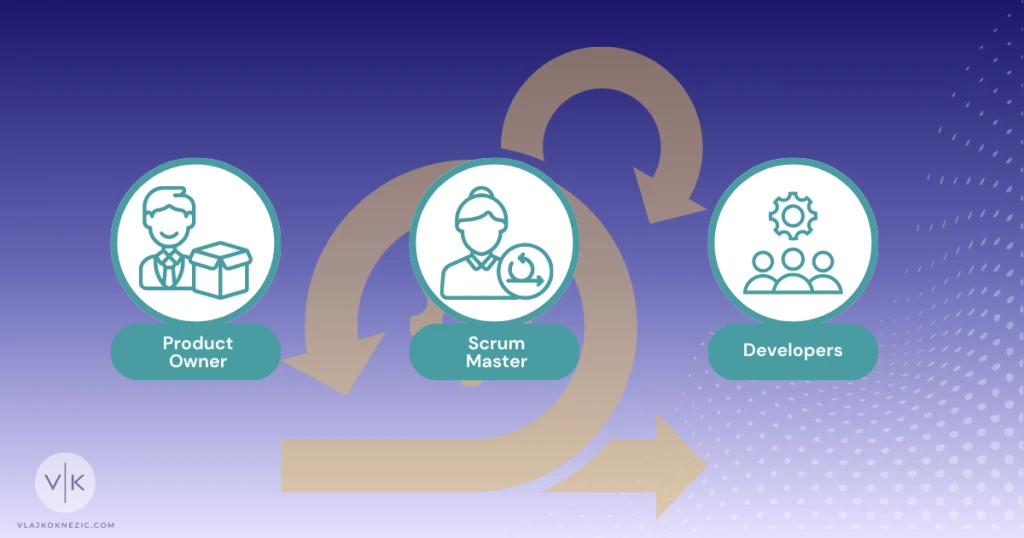
The Product Owner is the voice of the customer within the Scrum team. They’re responsible for maximizing the value of the product being built. This role requires excellent communication skills and a deep understanding of the product and its market. Product Owners manage the product backlog, prioritizing items based on business value. They work closely with stakeholders to gather requirements and feedback.
Scrum Master duties and qualities
A Scrum Master serves as a facilitator for the Scrum team. They ensure the team follows Scrum practices and principles. Scrum Masters remove obstacles that hinder the team’s progress. They also shield the team from external interruptions during sprints. Good Scrum Masters possess strong leadership skills and a thorough understanding of Scrum methodology.
Development Team structure and expectations
The Scrum development Team typically consists of 3-9 members. These professionals work together to deliver potentially shippable product increments at the end of each sprint. The team is self-organizing, meaning it decides how to accomplish its work. It is expected to be cross-functional and have all the skills necessary to create the product increment.
Essential Scrum Artifacts
Product Backlog creation and management
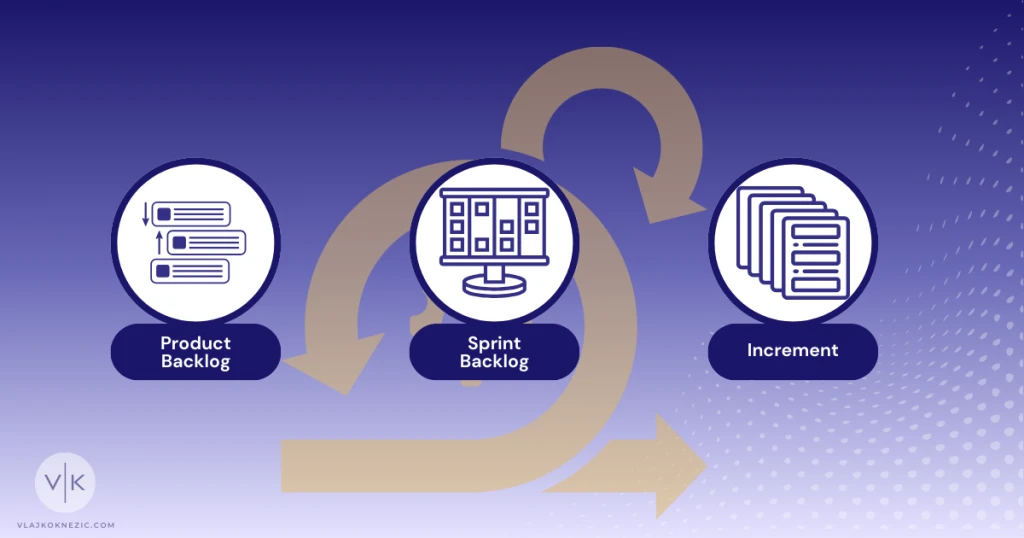
The Product Backlog is an ordered list of everything that might be needed in the product. It’s the single source of requirements for any changes to be made. Creating and managing the Product Backlog is an ongoing process. Items are continually added, removed, and reprioritized. The Product Owner is responsible for maintaining the Product Backlog, but may receive input from the team and stakeholders.
Sprint Backlog organization and updates
The Sprint Backlog is a subset of Product Backlog items selected for a specific sprint. It includes a plan for delivering the product increment and realizing the Sprint Goal. The Development Team owns the Sprint Backlog. They update it throughout the sprint as they learn more about the work needed to achieve the Sprint Goal. This allows for flexibility within the sprint.
Increment definition and importance
The Increment is the sum of all Product Backlog items completed during a sprint. It must be in useable condition at the end of each sprint, regardless of whether the Product Owner decides to release it. The Increment is a step toward a long-term goal. It provides transparency and opportunities for inspection and adaptation. Each Increment builds upon previous ones, ensuring continuous progress toward the product vision.
Scrum Events and Their Purpose
Sprint Planning meeting objectives and tasks
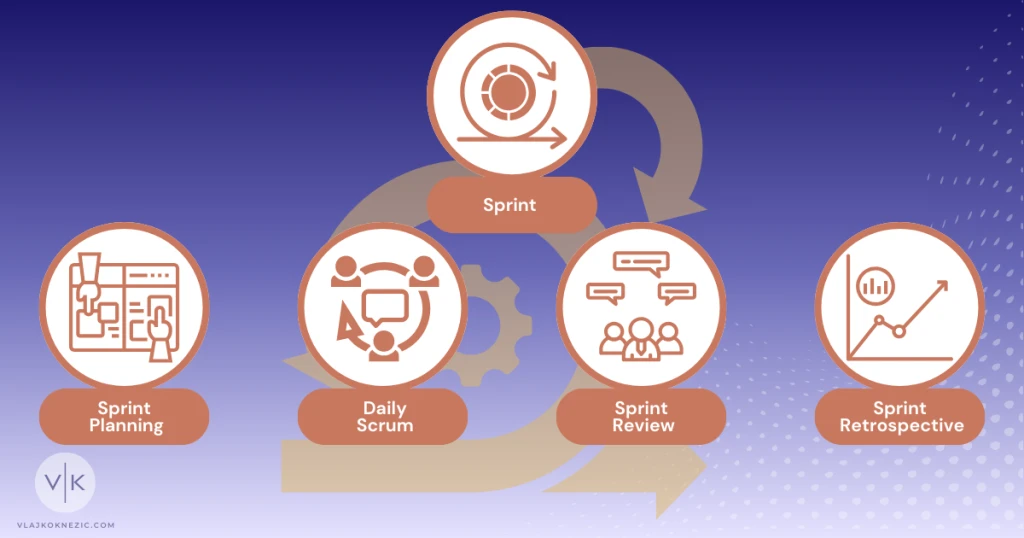
Sprint Planning sets the stage for the upcoming sprint. The entire Scrum team participates in this meeting. They decide what can be delivered in the sprint and how that work will be achieved. The Product Owner presents the highest priority Product Backlog items. The Development Team then determines how many of these they can complete in the sprint. They also create a plan for delivering the Sprint Goal.
Daily Scrum stand-up best practices
The Daily Scrum is a 15-minute time-boxed event for the Development Team. It’s held at the same time and place each day to reduce complexity. During this meeting, team members share what they did yesterday, what they plan to do today, and any obstacles they face. This promotes transparency and collaboration within the team. It’s not a status update for management, but a planning meeting for the Development Team.
Sprint Review and Sprint Retrospective tips
The Sprint Review happens at the end of each sprint. The Scrum team and stakeholders collaborate on what was done in the sprint. They discuss what went well and what could be improved. This feedback is used to update the Product Backlog. The Sprint Retrospective follows the Sprint Review. It’s an opportunity for the Scrum team to inspect itself and create a plan for improvements in the next sprint. These meetings foster continuous improvement and adaptation.
Steps to Implement Scrum in Your Organization
Implementing Scrum in an organization requires careful planning and execution.
Assess your organization’s readiness for Scrum
Start by assessing your organization’s readiness for Scrum. This involves evaluating current processes, team structures, and organizational culture. Identify areas that may need to change to support Scrum practices.
Focus on forming and training Scrum teams
Select individuals for key roles like Product Owner and Scrum Master. Provide comprehensive training on Scrum principles and practices. This might involve bringing in external trainers or sending team members to Scrum certification courses.
Create a Scrum-friendly work environment
This is a crucial step which might involve rearranging office spaces to facilitate collaboration. Ensure teams have the necessary tools and technologies to support Scrum practices. Encourage open communication and transparency across all levels of the organization.
Gradually introduce Scrum practices
Starting with a pilot project or team. Use lessons learned from this initial implementation to refine your approach. Be prepared to make adjustments as you scale Scrum across the organization.
Common Challenges When Implementing Scrum
Resistance to change and how to overcome it
Resistance to change is a common challenge when implementing Scrum. Some team members may be comfortable with existing processes and reluctant to adopt new ways of working. To overcome this, focus on clear communication about the benefits of Scrum. Involve team members in the transition process, addressing their concerns and incorporating their feedback. Celebrate early successes to build momentum and demonstrate the value of Scrum.
Balancing Scrum practices with existing processes
Finding the right balance between Scrum practices and existing organizational processes can be tricky. Some companies try to blend Scrum with traditional project management methods, which can lead to confusion. Strive for a clear delineation between Scrum teams and non-Scrum parts of the organization. Gradually phase out processes that conflict with Scrum principles. Be patient and allow time for the organization to adapt to the new way of working.
Dealing with distributed teams and remote work
Implementing Scrum with distributed teams or in remote work settings presents unique challenges. Time zone differences can make scheduling Scrum events difficult. Communication may be less spontaneous than in co-located teams. To address these issues, invest in good collaboration tools. Establish clear communication protocols. Consider adjusting sprint lengths or meeting times to accommodate different time zones. Foster a strong team culture despite the physical distance.
Measuring Scrum Success
Measuring the success of your Scrum implementation is vital for continuous improvement. Key performance indicators (KPIs) for Scrum teams might include sprint burndown charts, velocity, and cycle time. These metrics provide insights into team productivity and efficiency.
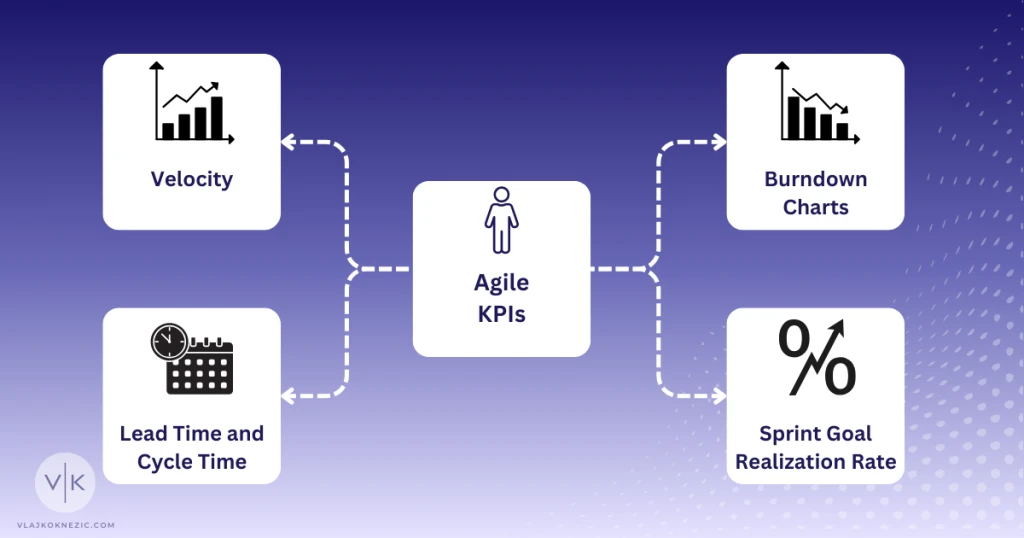
Use these metrics to identify areas for improvement in your Scrum process. For example, if velocity is consistently lower than expected, you might need to refine your sprint planning process. If cycle time is high, look for ways to reduce bottlenecks in your workflow.
Continuous improvement is at the heart of Scrum. Regularly review your Scrum practices and adjust as needed. Encourage teams to experiment with different approaches and share their learnings. Foster a culture where failure is seen as an opportunity to learn and improve. Remember, successful Scrum implementation is an ongoing process, not a one-time event.
To wrap up, Scrum is an agile framework that can significantly improve project management and team productivity. By understanding its core principles, roles, artifacts, and ceremonies, organizations can effectively implement Scrum. While challenges may arise, proper planning, training, and a focus on continuous improvement can lead to successful adoption. Measuring success through key performance indicators helps teams refine their processes and achieve better results over time.