How do you choose between Kanban and Scrum for your agile project management needs? Both methodologies offer unique approaches to organizing work and improving productivity. This guide will break down the key aspects of Kanban vs Scrum, compare their strengths and weaknesses, and provide you with the knowledge to make an informed decision for your team or organization.
What is Kanban?
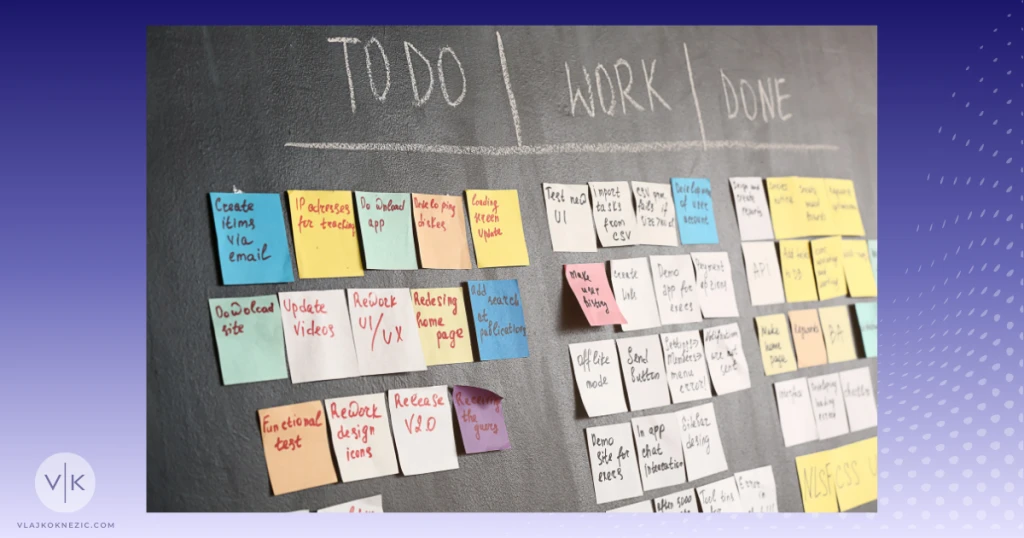
Kanban is a method for managing work that originated in Toyota’s manufacturing processes. It is now widely used in software development and other industries. The word “Kanban” comes from Japanese, meaning “visual signal” or “card.” This visual aspect is key to the method’s effectiveness.
At its core, Kanban is about visualizing work, limiting work in progress, and maximizing efficiency. It’s a flexible system that can be adapted to various team sizes and project types. One of the main goals of Kanban is to identify bottlenecks in your process and improve flow.
A Kanban board is the primary tool used in this method. It’s typically divided into columns representing different stages of work, such as “To Do,” “In Progress,” and “Done.” Tasks are represented by cards that move across the board as they progress. This visual representation allows teams to quickly see the status of all work items.
Work in progress (WIP) limits are another crucial aspect of Kanban. By setting a maximum number of tasks that can be in any stage at once, teams avoid overloading themselves and can focus on completing work before starting new tasks. This helps maintain a continuous, smooth flow of work through the system.
Understanding Scrum
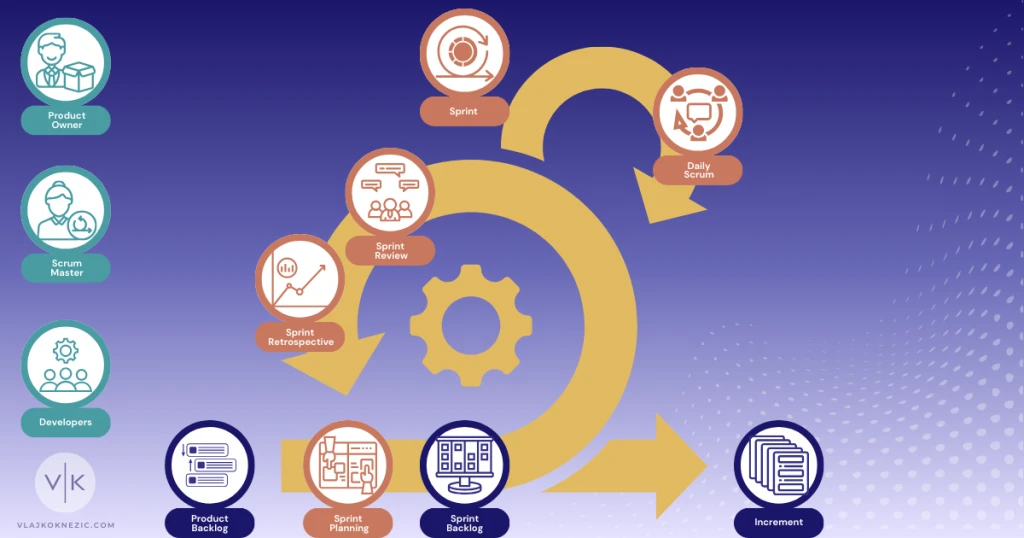
Scrum is a framework for developing and sustaining complex products, particularly in software development. It’s built on the principles of transparency, inspection, and adaptation. Scrum provides a structure for teams to work together effectively on challenging projects.
Roles in Scrum: Product Owner, Scrum Master, and Development Team
In Scrum, there are three main roles: the Product Owner, Scrum Master, and Development Team.
The Product Owner is responsible for maximizing the value of the product and the work of the Development Team. They manage the product backlog and ensure that it’s visible and clear to all.
The Scrum Master serves the Scrum Team in several ways, including coaching the team in Scrum practices, removing impediments to the team’s progress, and ensuring that Scrum events take place.
The Development Team consists of professionals who do the work of delivering a potentially releasable Increment of “Done” product at the end of each Sprint.
Scrum Events and Their Importance
Sprints are the heartbeat of Scrum. These are fixed-length events of one month or less to create consistency. A new Sprint starts immediately after the conclusion of the previous Sprint. During the Sprint, no changes are made that would endanger the Sprint Goal, quality goals remain constant, and the scope may be clarified and renegotiated between the Product Owner and Development Team as more is learned.
Four scrum events are included in each sprint to ensure transparency and inspection: sprint planning, daily scrum, sprint review, and sprint retrospective.
Scrum Artifacts: Product Backlog, Sprint Backlog, and Increment
Scrum’s artifacts represent work or value. The Product Backlog is an ordered list of everything that is known to be needed in the product. The Sprint Backlog is the set of Product Backlog items selected for the Sprint, plus a plan for delivering the product Increment and realizing the Sprint Goal. The Increment is the sum of all the Product Backlog items completed during a Sprint and the value of the increments of all previous Sprints.
Kanban vs Scrum: Key Differences
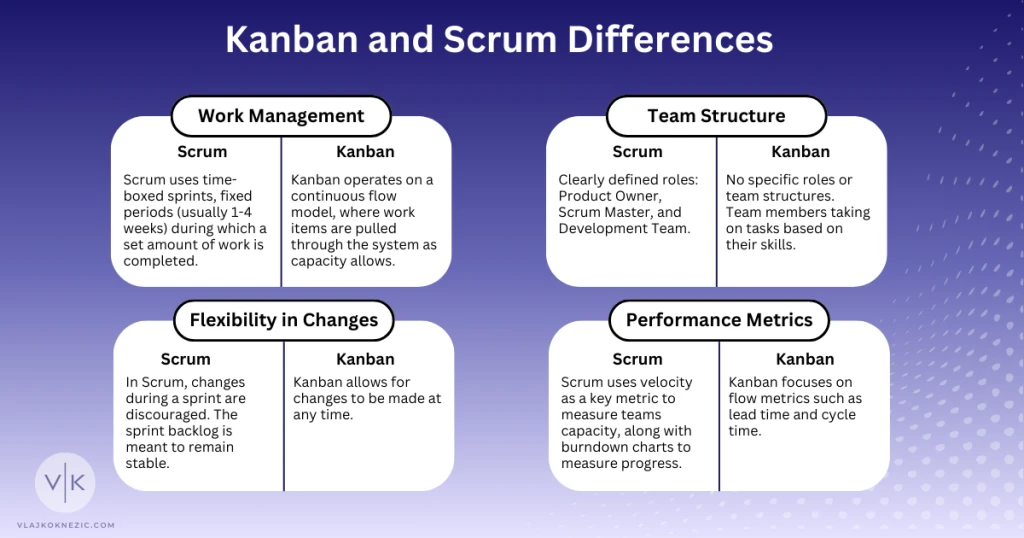
Work Management Approach: Continuous Flow vs Time-boxed Sprints
One of the main differences between Kanban and Scrum lies in their approach to work management. Kanban operates on a continuous flow model, where work items are pulled through the system as capacity allows. There’s no set timeframe for completing work; instead, the focus is on maintaining a steady flow.
Scrum, on the other hand, uses time-boxed sprints. These are fixed periods (usually 1-4 weeks) during which a set amount of work is completed. At the end of each sprint, a potentially shippable product increment is delivered. This time-boxed approach provides regular intervals for planning, review, and adjustment.
Team Roles and Structure
Kanban doesn’t prescribe specific roles or team structures. It can be applied to existing teams without significant reorganization. Teams using Kanban often have more fluid roles, with members taking on tasks based on their skills and the current needs of the project.
Scrum has clearly defined roles: Product Owner, Scrum Master, and Development Team. Each role has specific responsibilities and accountabilities. This structure provides clarity but may require more significant changes to existing team dynamics when adopted.
Flexibility in Changes and Priorities
Kanban allows for changes to be made at any time. New tasks can be added to the backlog and prioritized as needed. This flexibility makes Kanban well-suited for projects with frequently changing priorities or maintenance work.
In Scrum, changes during a sprint are discouraged. The sprint backlog is meant to remain stable to allow the team to focus on achieving the sprint goal. Changes can be made between sprints during the sprint planning meeting. This approach provides more predictability but less flexibility.
Metrics and Performance Indicators
Kanban and Scrum use different metrics to measure performance. Kanban often focuses on flow metrics such as lead time (how long it takes for a task to be completed from start to finish) and cycle time (how long a task spends in the “in progress” state). These metrics help teams identify and resolve bottlenecks.
Scrum uses velocity as a key metric, which measures how much work a team can complete in a sprint. Burndown charts are also commonly used to track progress within a sprint. These metrics help teams plan future sprints and improve their estimation skills.
When to Choose Kanban
Kanban shines in situations where work is flowing continuously, and priorities can change frequently. It’s particularly useful for support teams, maintenance projects, or any scenario where tasks come in unpredictably. If your team needs to be highly responsive to changing priorities, Kanban might be the right choice.
One of the key benefits of Kanban is its ability to visualize workflow. This can help identify bottlenecks and inefficiencies in your process. Kanban also tends to be easier to implement than Scrum, as it doesn’t require significant changes to existing roles or processes. It can be gradually adopted, starting with just visualizing your current workflow on a board.
Many companies have successfully implemented Kanban. For example, Spotify uses a Kanban-inspired approach for some of its teams. They found that it allowed for more flexibility. and faster response times compared to their previous methods. Another example is Microsoft’s Cloud + Enterprise division, which used Kanban to reduce lead times and improve productivity.
When Scrum Works Best
Scrum is particularly effective for complex projects where the end product is not fully defined at the start. It works well in software development, where requirements can evolve and regular feedback is valuable. If your project benefits from regular planning, review, and adaptation cycles, Scrum might be the best fit.
One of the main advantages of Scrum is its structure. The defined roles and events provide a clear framework for teams to operate within. This can be especially helpful for teams that are new to agile methodologies. Scrum also promotes transparency and regular communication, which can lead to better team collaboration and faster problem-solving.
There are numerous success stories of Scrum implementation. For instance, Amazon has used Scrum to manage its retail website development. They found that it allowed them to iterate quickly and respond to customer needs more effectively. Another example is Salesforce, which credits Scrum with helping them release new features more frequently and with higher quality.
Combining Kanban and Scrum: Scrumban
What is Scrumban?
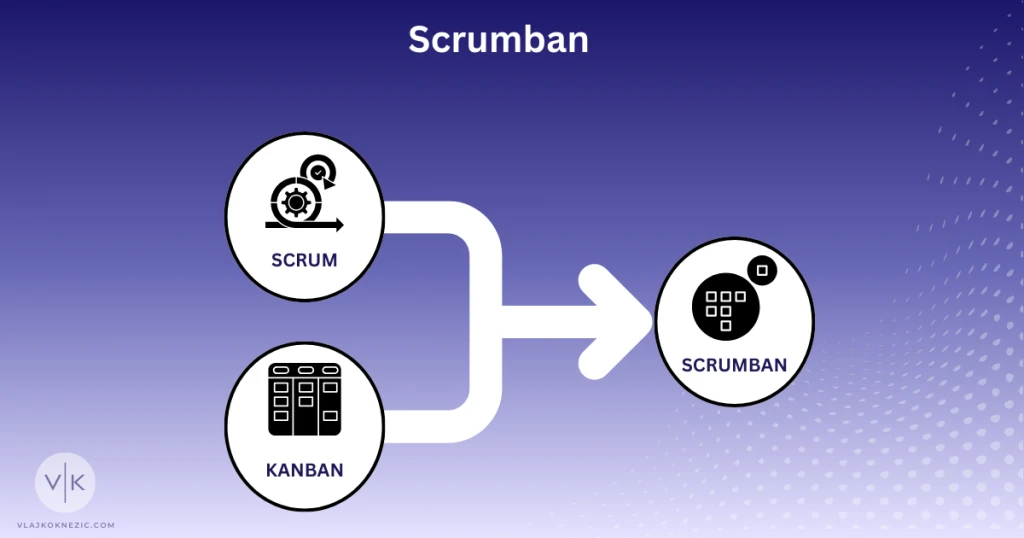
Scrumban is a hybrid approach that combines elements of both Scrum and Kanban. It was developed to help teams transition from Scrum to Kanban, but has evolved into its own methodology. Scrumban takes the structure and regularity of Scrum and blends it with the flexibility and visual management of Kanban.
How Scrumban Blends Elements of Both Methodologies
In Scrumban, teams typically keep Scrum elements like daily stand-ups and retrospectives. However, they use a Kanban board for visualizing and managing work. Instead of planning work in sprints, teams pull work from a backlog as capacity becomes available, similar to Kanban. Work-in-progress (WIP) limits are often implemented to maintain flow.
Situations Where Scrumban Might Be the Best Choice
Scrumban can be an excellent choice for teams that need more flexibility than Scrum offers but still want some of its structure. It’s often used in maintenance projects or support scenarios where work is less predictable. Teams transitioning from Scrum to Kanban might also find Scrumban a useful intermediate step.
Implementing Kanban or Scrum in Your Organization
Transitioning to Kanban or Scrum requires careful planning and execution. Start by educating your team about the chosen methodology. For Kanban, begin by visualizing your current workflow on a board. Gradually introduce WIP limits and other Kanban principles. For Scrum, start by defining roles and setting up the necessary ceremonies.
One common challenge is resistance to change. Address this by involving team members in the decision-making process and highlighting the benefits of the new system. Another challenge can be maintaining consistency in following the new practices. Regular check-ins and reinforcement can help overcome this.
There are many tools available for managing Kanban and Scrum processes. For Kanban, popular options include Trello and Kanbanize. For Scrum, tools like JIRA and VersionOne are widely used. When choosing a tool, consider factors like ease of use, integration capabilities, and reporting features. Remember, the tool should support your process, not dictate it.
To wrap up, Kanban and Scrum are powerful agile project management methodologies, each with unique strengths. Kanban focuses on continuous flow and visual management, while Scrum emphasizes structured sprints and defined roles. Understanding their differences helps in choosing the right approach for your project. Some organizations even combine both in Scrumban. Whichever method you choose, proper implementation and addressing challenges are key to success.