How can organizations effectively manage large-scale projects while maintaining agility? This question challenges many businesses today as they strive to balance flexibility with coordination. In this guide, we will compare Scaled Agile vs Agile methodologies, helping you understand their key differences, advantages, and best use cases. By the end of the article, you will have the knowledge to choose the right approach for your projects, setting your organization up for success in today’s fast-paced business environment.
What is Agile?
Agile is a flexible and iterative approach to project management and software development. It focuses on delivering value to customers through continuous improvement and collaboration. Agile methodologies break projects into smaller, manageable chunks called sprints or iterations. This allows teams to adapt quickly to changes and deliver working products faster.
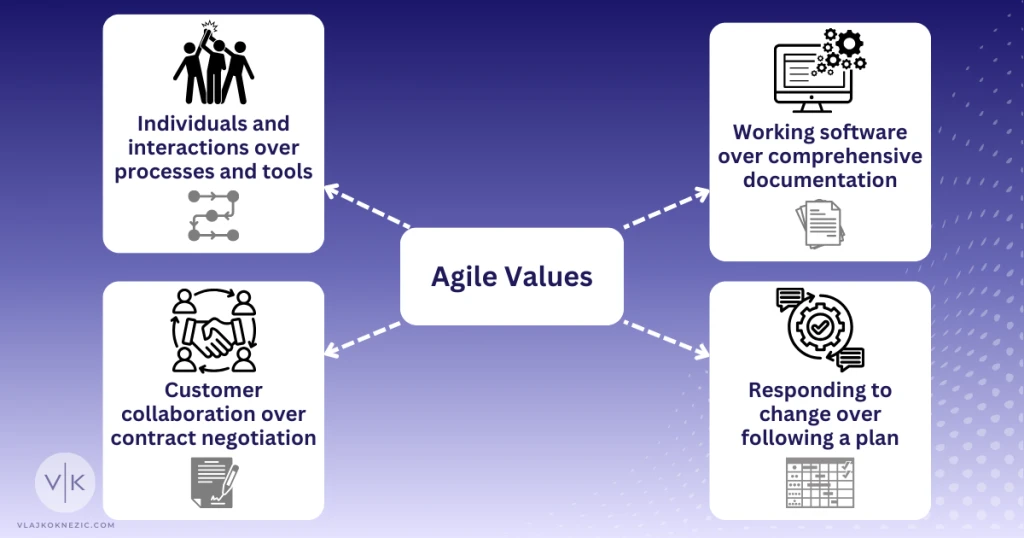
At its core, Agile is built on four key values: individuals and interactions over processes and tools, working software over comprehensive documentation, customer collaboration over contract negotiation, and responding to change over following a plan. These values guide Agile teams in their decision-making and help them stay focused on what truly matters.
Agile offers numerous benefits to organizations. It improves product quality by encouraging frequent testing and customer feedback. Teams can respond to market changes more rapidly, reducing the risk of building obsolete products. Agile also boosts team morale and productivity by fostering a culture of trust and empowerment.
Several frameworks fall under the Agile umbrella, each with its own unique approach. Scrum is perhaps the most well-known, emphasizing short sprints and daily stand-up meetings. Kanban focuses on visualizing work and limiting work in progress. Extreme Programming (XP) prioritizes technical excellence and customer satisfaction through practices like pair programming and test-driven development.
Understanding Scaled Agile
Definition of Scaled Agile
Scaled Agile is an extension of Agile methodologies designed to handle larger, more complex projects involving multiple teams. It provides a framework for applying Agile principles and practices across an entire organization. Scaled Agile aims to align teams, coordinate efforts, and ensure consistent delivery of value at an enterprise level.
Key components of Scaled Agile Framework (SAFe)
The Scaled Agile Framework (SAFe) is a popular approach to implementing Scaled Agile. It consists of several key components:
- Portfolio Level: Aligns strategy with execution
- Large Solution Level: Coordinates multiple Agile Release Trains
- Program Level: Organizes teams into Agile Release Trains
- Team Level: Focuses on individual Agile teams
SAFe also includes roles like Release Train Engineers and Solution Architects to facilitate coordination and alignment across levels.
Benefits of implementing Scaled Agile
Implementing Scaled Agile can bring significant benefits to large organizations. It improves alignment between business strategy and execution, ensuring that all teams are working towards common goals.
Scaled Agile enhances coordination and communication between teams, reducing silos and improving overall efficiency. It also provides a structured approach to managing dependencies and risks across complex projects.
When to consider Scaled Agile
Scaled Agile should be considered when an organization faces challenges in coordinating multiple Agile teams or managing large, complex projects. It’s particularly useful for enterprises with 50+ developers working on related products or services.
If your organization struggles with aligning team efforts with business objectives or lacks visibility into project progress at a higher level, Scaled Agile might be the solution.
Scaled Agile vs Agile: Key Differences
Team size and structure
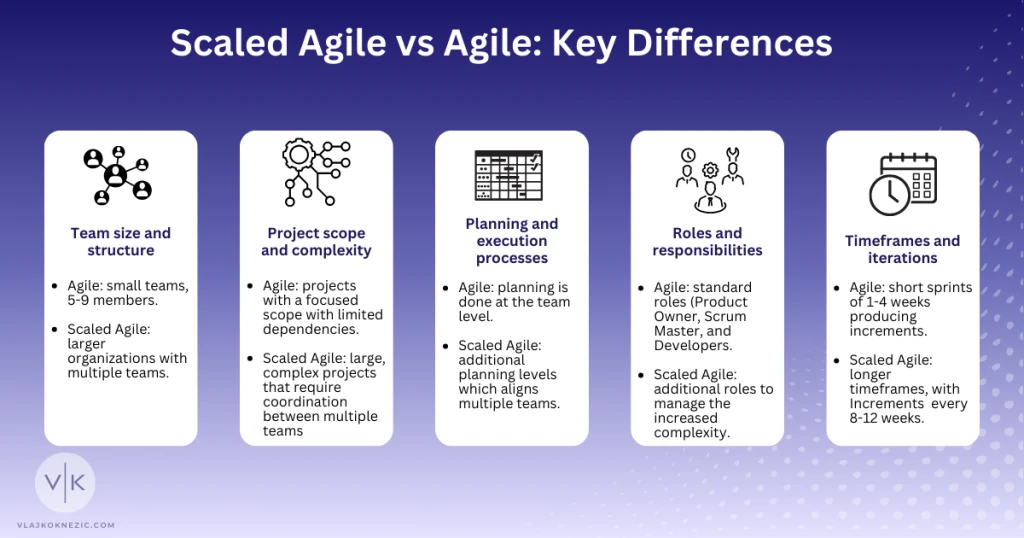
Agile typically works best with small, cross-functional teams of 5-9 members. These teams are self-organizing and can handle most aspects of a project independently.
Scaled Agile, on the other hand, is designed for larger organizations with multiple teams. It introduces additional layers of coordination and management to handle the increased complexity.
Project scope and complexity
Agile is well-suited for projects with a focused scope and limited dependencies that a single team can manage.
Scaled Agile is better for large, complex projects that require coordination between multiple teams or departments. It provides frameworks for managing dependencies and aligning efforts across the organization.
Planning and execution processes
In Agile, planning is done at the team level, often in short sprints of 1-4 weeks. Scaled Agile introduces additional planning levels, such as PI (Program Increment) planning, which aligns multiple teams over longer periods.
Execution in Agile is highly iterative, with frequent deliveries. Scaled Agile maintains this iterative approach but adds synchronization points to ensure alignment across teams.
Roles and responsibilities
Agile teams typically have roles like Product Owner, Scrum Master, and Development Team members.
Scaled Agile introduces additional roles to manage the increased complexity, such as Release Train Engineers, Solution Architects, and Portfolio Managers. These roles help coordinate efforts and ensure alignment across the organization.
Timeframes and iterations
Agile projects often work in short sprints of 1-4 weeks, with each sprint resulting in a potentially shippable product increment.
Scaled Agile operates on longer timeframes, with Program Increments typically lasting 8-12 weeks. These longer cycles allow for better coordination and planning across multiple teams while still maintaining an iterative approach.
Advantages of Scaled Agile over Traditional Agile
Better alignment with business goals
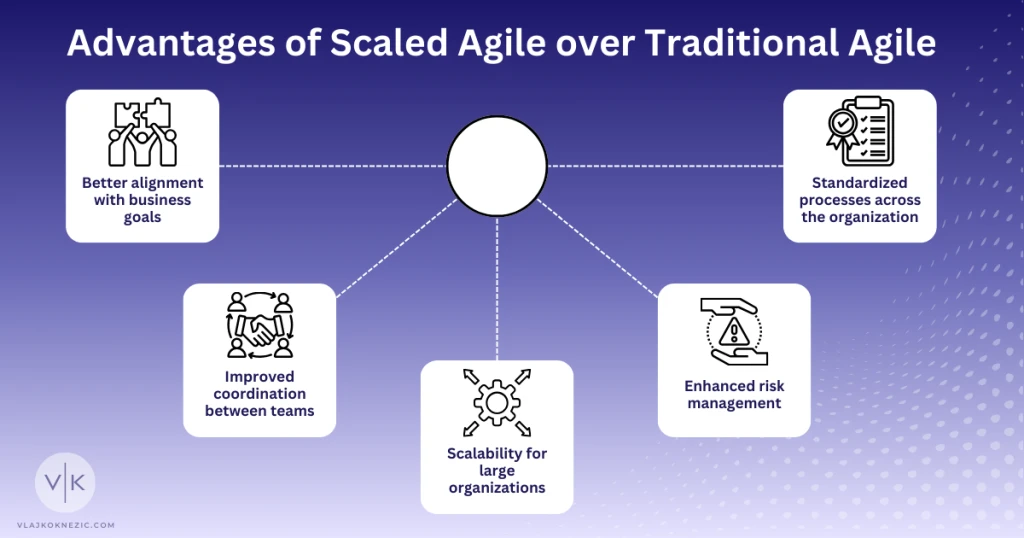
Scaled Agile provides a structured approach to aligning team efforts with overall business objectives. It introduces tools like the Portfolio Kanban and Strategic Themes to ensure that all teams are working towards common goals. This alignment helps organizations prioritize work effectively and deliver value more consistently.
Improved coordination between teams
One of the key advantages of Scaled Agile is its ability to facilitate coordination between multiple teams. It introduces mechanisms like Scrum of Scrums and PI Planning events, which bring teams together to discuss dependencies, risks, and shared objectives. This improved coordination reduces bottlenecks and helps teams work more efficiently together.
Scalability for large organizations
Scaled Agile is designed to handle the complexities of large organizations. It provides a framework for managing hundreds or even thousands of team members working on related products or services. This scalability allows organizations to apply Agile principles consistently across the enterprise, rather than just at the team level.
Enhanced risk management
Scaled Agile introduces tools and practices for managing risks at multiple levels of the organization. It emphasizes early identification and mitigation of risks through practices like PI Planning and regular system demos. This proactive approach to risk management helps organizations avoid costly delays and failures in large, complex projects.
Standardized processes across the organization
Scaled Agile helps establish standardized processes and terminology across the organization. This standardization improves communication and makes it easier for teams to collaborate. It also facilitates the sharing of best practices and lessons learned, leading to continuous improvement across the enterprise.
Challenges in Adopting Scaled Agile
Organizational resistance to change
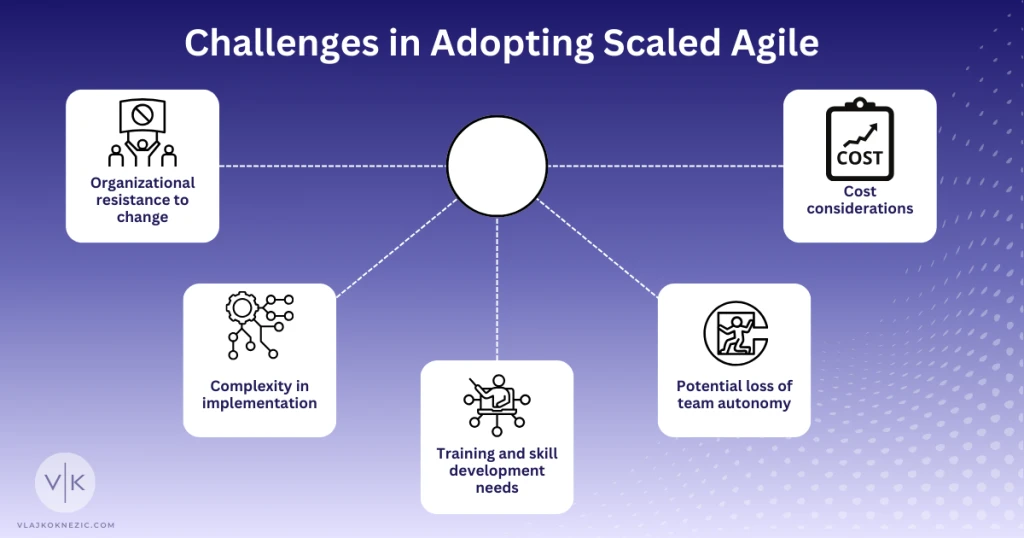
Adopting Scaled Agile often requires significant changes to existing processes and structures. This can lead to resistance from employees who are comfortable with the status quo.
Overcoming this resistance requires strong leadership support, clear communication of the benefits, and patience as the organization adapts to new ways of working.
Complexity in implementation
Scaled Agile frameworks like SAFe can be complex to implement, especially for organizations new to Agile. The numerous roles, ceremonies, and artifacts can be overwhelming at first. Organizations may struggle to understand how all the pieces fit together and how to apply them effectively in their specific context.
Training and skill development needs
Implementing Scaled Agile requires new skills and knowledge at all levels of the organization. This necessitates significant investment in training and coaching. From executives to team members, everyone needs to understand the principles and practices of Scaled Agile. Ongoing education is crucial to ensure the organization can effectively apply and evolve its Agile practices.
Potential loss of team autonomy
While Scaled Agile aims to maintain team-level agility, the additional layers of coordination can sometimes lead to a perceived loss of autonomy for individual teams. Teams may feel constrained by the need to align with broader organizational objectives and synchronize their work with other teams. Balancing team autonomy with organizational alignment is a key challenge in Scaled Agile implementations.
Cost considerations
Adopting Scaled Agile can involve significant upfront costs. These may include training expenses, consulting fees, and potential productivity dips during the transition period.
Organizations need to carefully consider these costs against the expected benefits. It’s important to have a clear understanding of the potential return on investment before committing to a Scaled Agile transformation.
When to Choose Agile
Agile is an excellent choice for small to medium-sized projects that can be handled by a single team. It shines in environments where requirements are likely to change frequently and rapid iteration is valuable. Startups and small businesses often find Agile particularly useful due to its flexibility and focus on delivering value quickly.
Agile works best when there’s a need for close collaboration with customers or end-users. Its iterative approach allows for frequent feedback and adjustments, ensuring the final product meets user needs. This makes it ideal for projects where the exact requirements may not be clear at the outset.
Projects with limited dependencies on other teams or departments are well-suited to Agile. The self-contained nature of Agile teams allows them to move quickly without being held up by external factors. This autonomy can lead to faster delivery and higher team satisfaction.
Agile is also a good fit when there’s a need to get a minimum viable product (MVP) to market quickly. Its focus on delivering working software in short iterations allows organizations to test ideas and gather user feedback early in the development process. This can be particularly valuable in competitive markets where being first to market is important.
When to Choose Scaled Agile
Scaled Agile is the right choice for large, complex projects that involve multiple teams or even multiple departments. It’s designed to handle the challenges that arise when trying to apply Agile principles at an enterprise scale. If your organization is struggling to coordinate the efforts of numerous Agile teams, Scaled Agile can provide the structure and alignment needed.
Enterprise-level organizations with hundreds or thousands of developers working on related products or services should consider Scaled Agile. It provides frameworks for managing dependencies, aligning objectives, and ensuring consistent delivery across large groups of teams. This can be particularly valuable in industries like finance, healthcare, or telecommunications where large-scale software systems are common.
Scaled Agile is also beneficial for organizations undertaking long-term, strategic initiatives. Its focus on aligning team-level work with portfolio-level objectives ensures that day-to-day activities contribute to overarching business goals. This alignment is crucial for initiatives that may span several years and involve significant investment.
Organizations with complex value streams involving multiple stages of development, testing, and deployment can benefit from Scaled Agile. It provides tools for visualizing and optimizing these value streams, helping to identify and eliminate bottlenecks. This can lead to faster, more consistent delivery of value to customers.
Best Practices for Implementing Scaled Agile
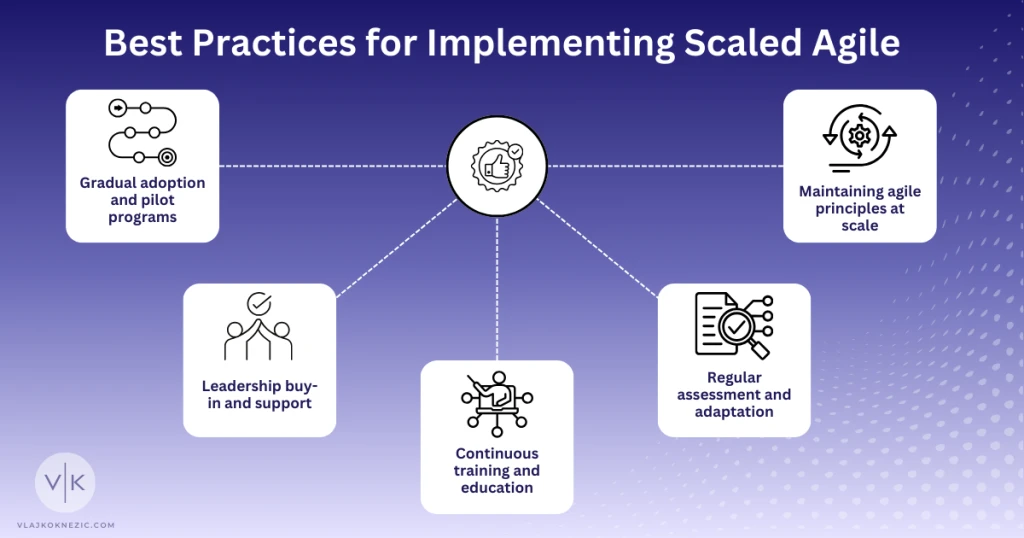
Gradual adoption and pilot programs
Implementing Scaled Agile across an entire organization at once can be overwhelming. A more effective approach is to start with a pilot program in a single department or business unit. This allows the organization to learn and adapt the framework to its specific needs before rolling it out more broadly. Gradually expanding the implementation based on lessons learned from the pilot can lead to a smoother transition.
Leadership buy-in and support
Strong leadership support is crucial for a successful Scaled Agile implementation. Leaders need to understand and champion the principles of Agile and be willing to make necessary organizational changes. They should actively participate in the transformation, attending training sessions and key events like PI Planning. This visible support helps overcome resistance and demonstrates the importance of the initiative to the entire organization.
Continuous training and education
Implementing Scaled Agile requires new skills and mindsets at all levels of the organization. Invest in comprehensive training programs for all roles, from executives to team members. Don’t stop at initial training – provide ongoing education opportunities to deepen understanding and keep up with evolving best practices. Consider creating internal Agile coaches to provide continuous support and guidance.
Regular assessment and adaptation
Continuously assess the effectiveness of your Scaled Agile implementation and be willing to adapt as needed. Use metrics and feedback from teams to identify areas for improvement. Regular retrospectives at all levels – team, program, and portfolio – can provide valuable insights. Be prepared to adjust your approach based on these learnings, always striving for better outcomes.
Maintaining agile principles at scale
As organizations scale their Agile practices, it’s easy to lose sight of core Agile principles. Strive to maintain the spirit of Agile even as you add necessary coordination mechanisms. Encourage autonomy and self-organization within teams while providing clear alignment to broader objectives. Keep ceremonies and artifacts lean, focusing on those that provide real value. Regularly revisit the Agile Manifesto and principles to ensure your scaled implementation stays true to Agile values.
Agile and Scaled Agile are powerful methodologies that can transform project management and organizational efficiency. While Agile works well for smaller projects and teams, Scaled Agile is designed for larger, more complex environments. Each approach has its strengths and challenges, and choosing the right one depends on your organization’s size, project scope, and goals. Implementing either methodology requires careful planning, commitment, and ongoing adaptation to achieve the best results.