Most Scrum teams are very successful in keeping their projects on track and delivering value consistently. The answer to how they do it lies in Scrum artifacts—powerful tools that steer the development process and foster collaboration. In this guide, we’ll break down the essential Scrum artifacts, their roles, and how to use them effectively. By the end, you’ll have the knowledge to implement these artifacts in your own projects, boosting productivity and ensuring better outcomes for your team and stakeholders.
What Are Scrum Artifacts?
Scrum artifacts are key information sources that help teams and stakeholders understand the work being done and the progress being made in a Scrum project. These artifacts provide a shared understanding of the project’s goals, scope, and current status. They’re essential tools for fostering transparency and enabling regular inspection of the work.
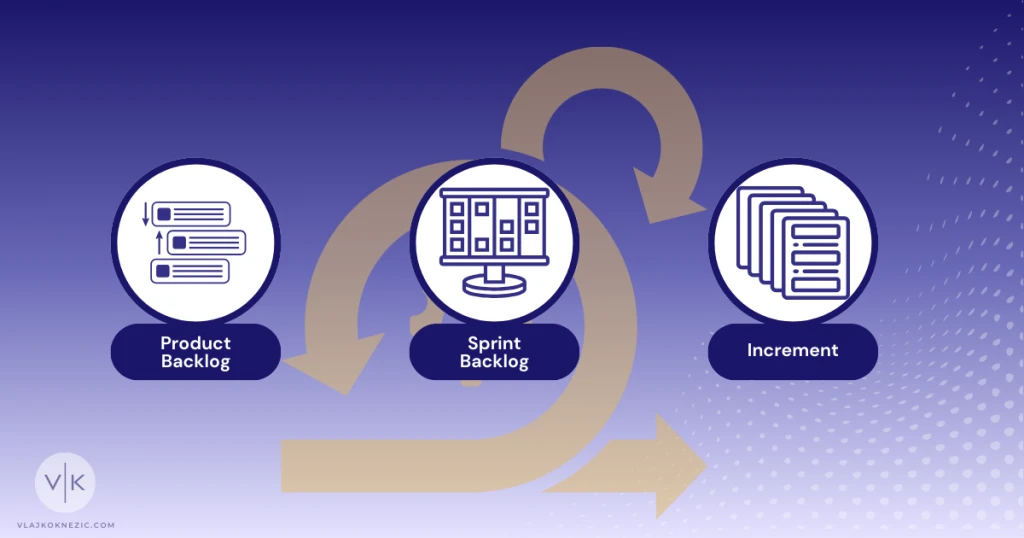
In the Scrum framework, artifacts are vital in keeping everyone aligned and informed. They serve as tangible representations of the work and value being created. By maintaining these artifacts, teams can make informed decisions and adapt their approach as needed.
Artifacts support transparency by making important project information visible and accessible to all stakeholders. This openness allows for regular inspection, which is a core principle of Scrum. Through inspection, teams can identify areas for improvement and make necessary adjustments to optimize their work processes.
The Product Backlog: Your Project’s Roadmap
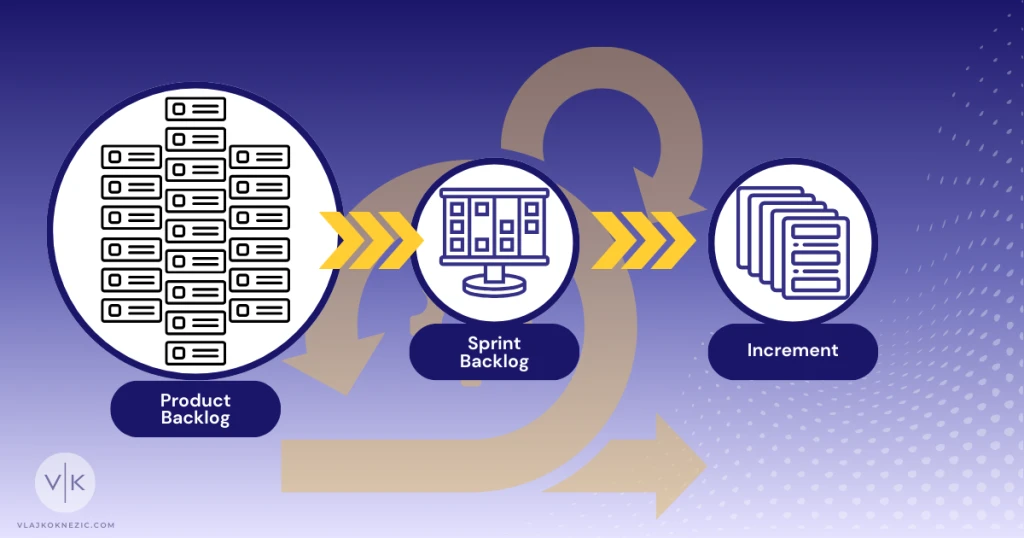
Purpose and characteristics of the product backlog
The product backlog is a ordered list of everything that might be needed in the product. It’s the single source of truth for what work needs to be done. This living document evolves as the product and market change, constantly being updated to reflect current needs and priorities.
A well-maintained product backlog is clear, concise, and prioritized. It contains user stories, bug fixes, technical work, and knowledge acquisition. Each item in the backlog should be described in enough detail for the team to understand and estimate the effort required.
Key components of a well-maintained product backlog
A good product backlog includes several key components. First, it has a clear, concise description of each item. Second, it includes estimates of the effort required for each item. Third, it specifies the value or benefit of completing each item. Fourth, it includes acceptance criteria that define when an item is considered “done.”
The backlog should also be ordered by priority, with the most important items at the top. This ordering helps the team focus on delivering the highest value items first. The backlog should be visible and accessible to all team members and stakeholders.
Tips for effective product backlog refinement
Regular backlog refinement is crucial for maintaining an effective product backlog.
- Schedule regular refinement sessions with the team to review and update backlog items. During these sessions, add details to items, break down large items into smaller ones, and update estimates as needed.
- Involve the entire Scrum team in refinement activities to ensure a shared understanding. Use this time to clarify requirements and discuss potential approaches.
- Keep the backlog lean by removing outdated or unnecessary items.
- Continuously reprioritize based on changing business needs and market conditions.
Sprint Backlog: Planning for Success
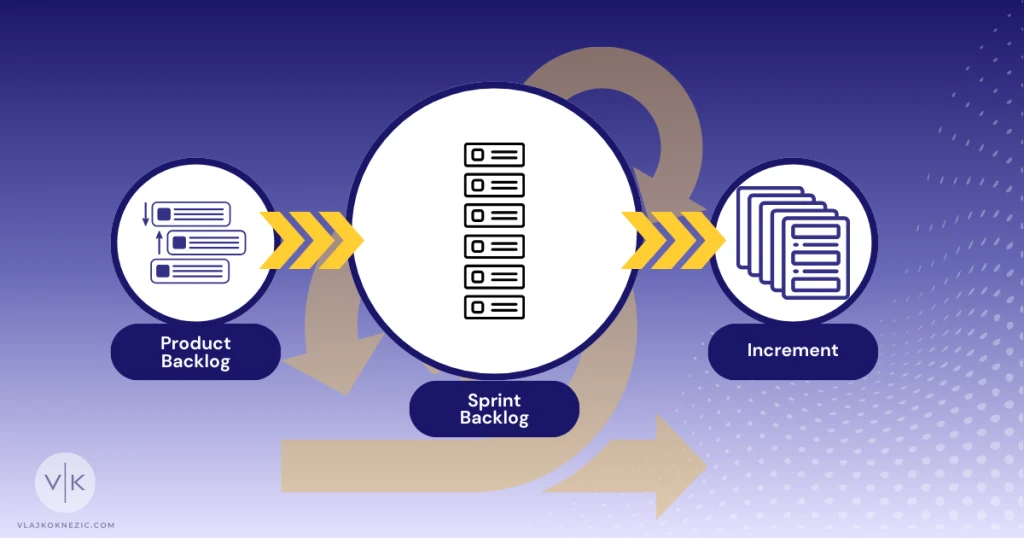
The function of the sprint backlog in Scrum
The sprint backlog is a plan for delivering the sprint goal and creating the increment. It’s created at the start of each sprint during sprint planning. This artifact helps the team focus on the work needed to achieve the sprint goal.
The sprint backlog includes selected product backlog items and a plan for delivering them. It’s a highly visible, real-time picture of the work the team plans to accomplish during the sprint. This visibility helps the team stay aligned and track their progress throughout the sprint.
Creating and updating the sprint backlog
To create the sprint backlog, the team selects items from the product backlog that they believe they can complete in the upcoming sprint. They then break these items down into smaller tasks or subtasks. Each task should be small enough to be completed within a day or two.
The sprint backlog is updated daily as work progresses. Team members update the status of tasks, add new tasks as needed, and remove completed ones. This constant updating ensures the sprint backlog accurately reflects the current state of work.
Using the sprint backlog to track progress
The sprint backlog is a key tool for tracking progress during the sprint. Teams often use a task board or burndown chart to visualize the work remaining. This visual representation helps identify any bottlenecks or issues early in the sprint.
Daily stand-up meetings are an opportunity for the team to review the sprint backlog and discuss progress. Team members can update each other on completed tasks, planned work, and any obstacles they are facing. This daily review helps keep everyone aligned and focused on the sprint goal.
Increment: Delivering Value to Stakeholders
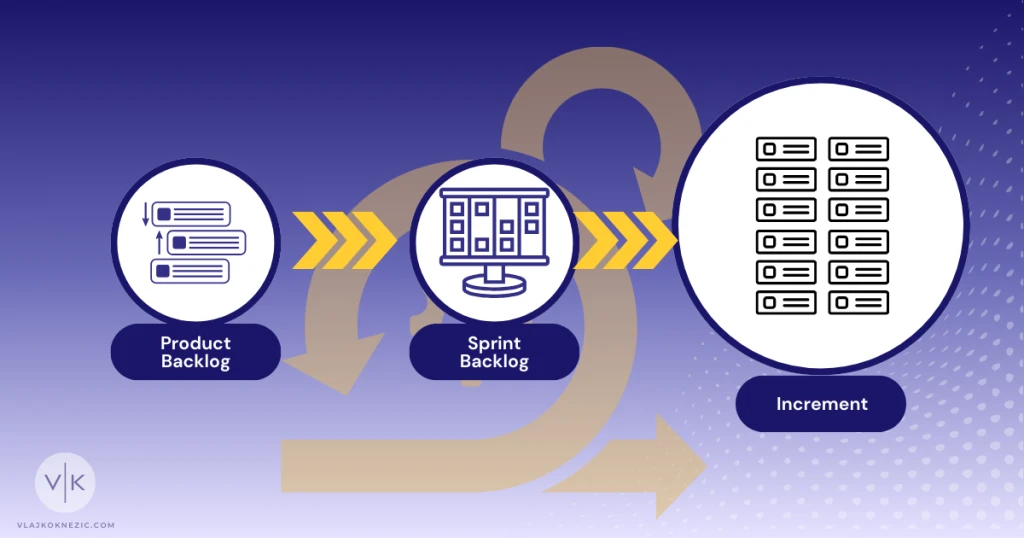
Definition of increment in scrum
In Scrum, an increment is the sum of all product backlog items completed during a sprint, combined with the value of all previous increments. It’s a concrete stepping stone toward the product goal. Each increment is a potentially releasable slice of the product that adds value for stakeholders.
The increment is inspected at the sprint review, where stakeholders provide feedback. This feedback is used to update the product backlog and inform future sprint planning. The increment is a tangible measure of progress and a key artifact for transparency and inspection in Scrum.
Importance of the “Done” criteria
The “Done” criteria are a shared understanding of what it means for work to be complete. These criteria ensure that everyone has the same definition of what constitutes a finished increment.
Without clear “Done” criteria, there’s a risk of misunderstanding and incomplete work.
“Done” criteria typically include aspects like code quality, testing, documentation, and performance standards. These criteria are agreed upon by the team and stakeholders. They help maintain quality and prevent the accumulation of technical debt.
How increments contribute to project success
Increments contribute to project success by providing regular, tangible evidence of progress. They allow for early and frequent delivery of value to stakeholders. This frequent delivery enables faster feedback loops, helping the team to adapt and improve their work based on real-world usage.
By focusing on delivering a potentially releasable increment each sprint, teams are forced to break down work into manageable chunks. This approach helps prevent the common pitfall of trying to do too much at once. It also allows for more accurate planning and estimation over time.
Best Practices for Managing Scrum Artifacts
Keeping artifacts up-to-date and visible
Maintaining current and visible Scrum artifacts is crucial for project success.
- Update artifacts regularly to reflect the latest information and decisions.
- Make them easily accessible to all team members and stakeholders.
- Use digital tools or physical boards to display artifacts prominently in the team’s workspace.
- Encourage team members to take ownership of updating artifacts.
- Assign specific roles or rotate responsibilities for maintaining each artifact.
Regular reviews of artifacts during Scrum events help ensure they remain accurate and relevant.
Collaborative approaches to artifact management
Adopt a collaborative approach to managing Scrum artifacts. Involve the entire team in creating and updating artifacts. This shared ownership increases engagement and ensures diverse perspectives are considered.
Facilitate open discussions about the content and structure of artifacts. Encourage team members to challenge assumptions and suggest improvements. Create a safe environment where everyone feels comfortable contributing to artifact management.
Tools and techniques for efficient artifact handling
Utilize appropriate tools to streamline artifact management. Project management software can help maintain and track artifacts efficiently. Choose tools that support real-time collaboration and provide easy access for all team members. Consider using visual management techniques like Kanban boards to make artifact status more apparent.
Implement automation where possible to reduce manual work in artifact maintenance. Use templates or checklists to ensure consistency in artifact creation and updates. Regularly review and refine your artifact management processes to identify areas for improvement.
Common Pitfalls and How to Avoid Them
Overcomplicating artifact creation and maintenance
One common pitfall is making artifact creation and maintenance too complex. This can lead to team members avoiding or neglecting these important tasks. Keep artifacts simple and focused on essential information. Avoid adding unnecessary details or bureaucracy to the process.
Regularly review your artifacts and processes to identify any unnecessary complexity. Ask team members for feedback on what’s working and what’s not. Be willing to simplify or streamline artifacts if they’re not providing value.
Neglecting regular updates and refinement
Another pitfall is failing to update and refine artifacts regularly. This can result in outdated information and misaligned expectations. Schedule regular times for artifact updates and refinement. Make these activities a normal part of your team’s routine.
Emphasize the importance of keeping artifacts current. Demonstrate how up-to-date artifacts contribute to project success. Celebrate when team members take initiative in updating and refining artifacts.
Misalignment between artifacts and project goals
Misalignment between artifacts and project goals can lead to wasted effort and confusion. Regularly review artifacts to ensure they align with current project objectives. Update the product backlog to reflect changing priorities or new information.
Conduct regular alignment checks between artifacts and project goals. Use sprint reviews and retrospectives to identify any misalignments. Encourage open communication about any perceived disconnects between artifacts and project direction.
Scrum artifacts are essential tools that guide and support the Scrum framework. The Product Backlog serves as a project roadmap, while the Sprint Backlog helps teams plan and track progress. Increments deliver tangible value to stakeholders.
Effective management of these artifacts involves keeping them up-to-date, visible, and aligned with project goals. By avoiding common pitfalls like overcomplication and neglect, teams can maximize the benefits of Scrum artifacts and improve their project outcomes.