At the heart of Scrum, two roles stand out: the Scrum Master and the Product Owner. While both are essential, they serve distinct purposes within the team. This guide will compare Scrum Master vs Product Owner and clarify their unique responsibilities, skills, and challenges, helping you understand how these roles drive project success. By the end, you’ll have a clear picture of how Scrum Masters and Product Owners contribute to Agile teams and which career path might suit you best.
What is a Scrum Master?
A Scrum Master is a key player in Agile project management, acting as a servant-leader for the Scrum team. They are responsible for ensuring the team follows Scrum principles and practices effectively. Scrum Masters remove obstacles that hinder the team’s progress and facilitate communication both within the team and with external stakeholders.
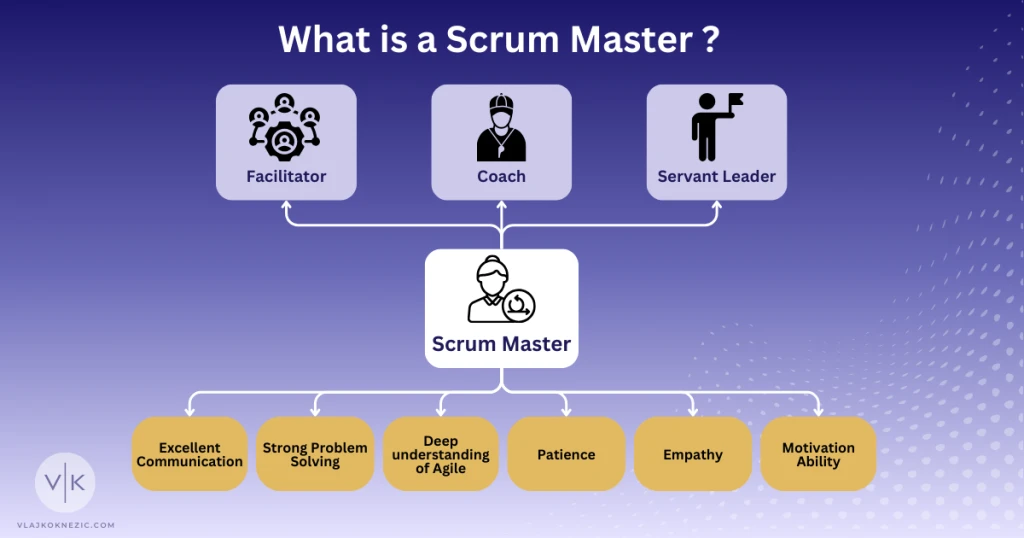
Key skills for a Scrum Master include excellent communication, problem-solving abilities, and a deep understanding of Agile methodologies. They must be adept at coaching and mentoring team members, fostering a collaborative environment where creativity and innovation can thrive. Adaptability is crucial, as Scrum Masters often need to adjust their approach based on the team’s needs and project requirements.
Scrum Masters support the development team in various ways. They shield the team from external interruptions during sprints, ensuring focus on sprint goals. By facilitating daily stand-ups, sprint planning, and retrospectives, they help the team stay aligned and continuously improve their processes. Scrum Masters also act as conflict mediators when disagreements arise within the team.
Common challenges faced by Scrum Masters include resistance to change from team members or stakeholders, maintaining team motivation during long projects, and balancing the need for structure with the flexibility inherent in Agile methodologies. They must also manage expectations and ensure clear communication between the development team and other parts of the organization.
What is a Product Owner?
A Product Owner is the voice of the customer within the Scrum team and is responsible for maximizing the value of the product being developed. They define and prioritize the product backlog, ensuring that the team works on the most important features first. Product Owners must have a clear vision for the product and be able to communicate it effectively to both the development team and stakeholders.
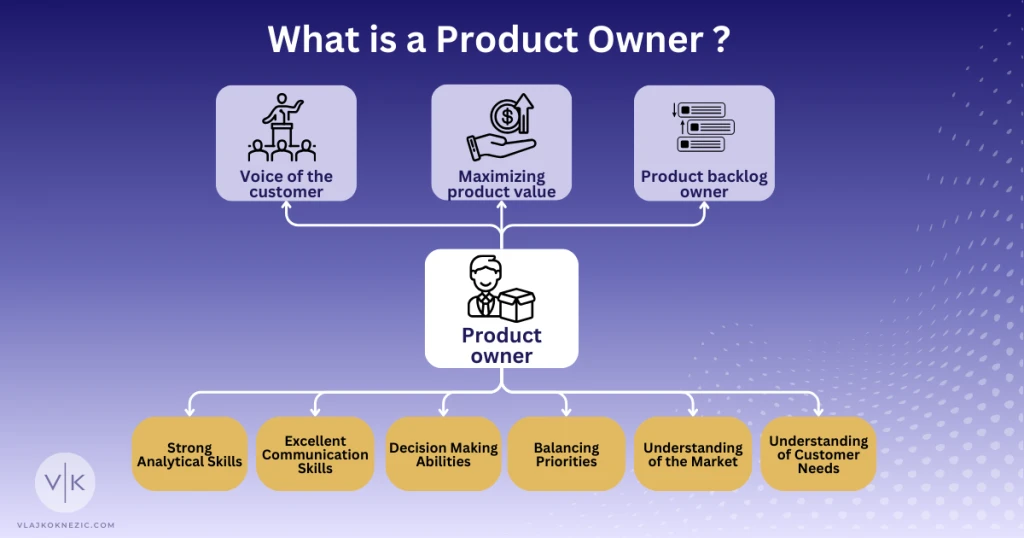
Essential skills for effective Product Owners include strong analytical abilities, excellent communication skills, and the capacity to make tough decisions under pressure. They need to be able to balance competing priorities and stakeholder needs while keeping the product vision in focus. A good understanding of the market and customer needs is crucial for success in this role.
Product Owners interact with stakeholders regularly to gather requirements, provide updates on product progress, and manage expectations. They must be able to translate business needs into clear, actionable user stories for the development team. This requires the ability to negotiate and find compromises when different stakeholders have conflicting priorities.
Typical obstacles Product Owners encounter include managing conflicting stakeholder demands, keeping the product backlog organized and up-to-date, and ensuring that the development team fully understands the product vision and requirements. They may also struggle with balancing short-term demands with long-term product goals and maintaining a sustainable pace of development.
Scrum Master vs Product Owner: Key Differences
Focus Areas: Process vs Product
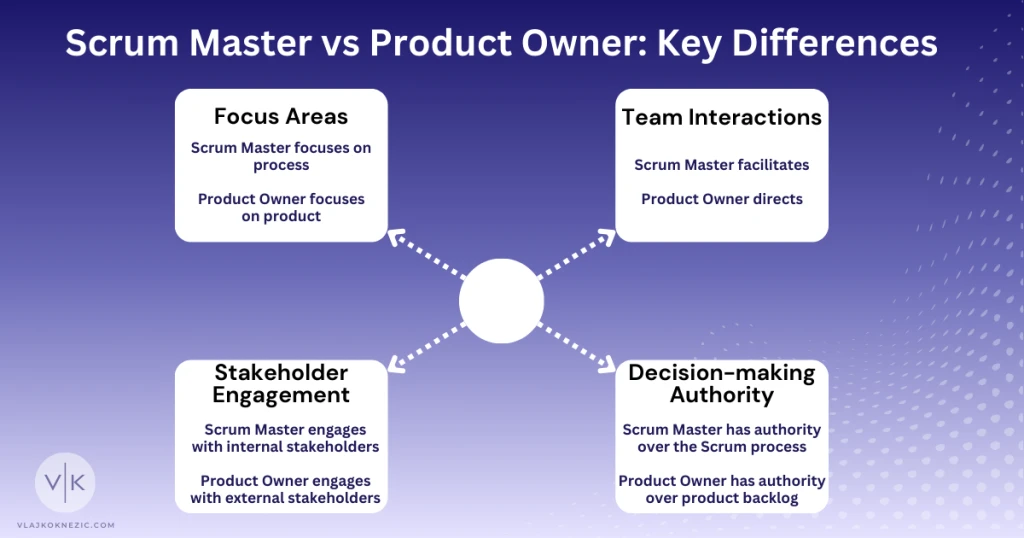
The primary focus of a Scrum Master is on the process and team dynamics. They ensure that Scrum practices are followed correctly and that the team works efficiently. Their goal is to optimize the development process and remove any impediments that might slow down the team.
In contrast, the Product Owner focuses on the product itself. They are responsible for defining what needs to be built and why. Their primary concern is maximizing the value of the product and ensuring that it meets customer needs and business objectives.
Team Interactions: Facilitation vs Direction
Scrum Masters interact with the team primarily as facilitators. They don’t assign tasks or make decisions about the product. Instead, they help the team make their own decisions and work together more effectively. They organize and facilitate Scrum events, ensuring that they’re productive and stay within the prescribed time-boxes.
Product Owners, on the other hand, provide direction to the team regarding what to build next. They prioritize the product backlog and work closely with the development team to clarify requirements and answer questions about user stories. While they don’t micromanage the team’s work, they do set the overall direction for product development.
Stakeholder Engagement: Internal vs External
Scrum Masters primarily engage with internal stakeholders, focusing on the development team and other departments within the organization. They work to create a supportive environment for the team and help other parts of the organization understand and respect the Scrum process.
Product Owners have a more external focus, regularly engaging with customers, users, and business stakeholders outside the development team. They gather feedback, manage expectations, and ensure that the product aligns with market needs and business strategy.
Decision-making Authority: Scrum Process vs Product Backlog
In the Scrum framework, Scrum Masters have authority over the Scrum process. They can make decisions about how Scrum events are conducted and can intervene if they see the team straying from Scrum principles. However, they don’t have authority over product decisions or team assignments.
Product Owners have decision-making authority over the product backlog. They decide what features or user stories should be prioritized and can accept or reject work as it’s completed. However, they don’t have authority over how the team organizes itself or conducts its daily work.
How Scrum Masters and Product Owners Collaborate
Scrum Masters and Product Owners work together towards shared goals in Agile projects. Both roles aim to deliver high-quality products that meet customer needs efficiently. They collaborate to ensure that the development team has what it needs to succeed and that the product vision is realized through effective Scrum practices.
Communication patterns between these two roles are frequent and multifaceted. They often meet before and after sprint planning sessions to discuss the upcoming work and any potential challenges. During sprints, they may have regular check-ins to address any issues that arise and to ensure that the team is on track to meet sprint goals.
Scrum Masters supports product owners by helping them communicate effectively with the development team. They might coach Product Owners on how to create clear, well-defined user stories or how to best present information during sprint planning. Product Owners, in turn, help Scrum Masters by providing clear direction on product priorities, which helps the Scrum Master guide the team’s focus.
Together, they work on resolving conflicts and overcoming challenges. For example, if there’s a disagreement between the Product Owner and the development team about the feasibility of a feature, the Scrum Master might facilitate a discussion to find a compromise. If external stakeholders are putting pressure on the team to change priorities mid-sprint, the Product Owner and Scrum Master would collaborate to manage these expectations and protect the team’s focus.
Common Misconceptions About Scrum Master and Product Owner Roles
Myth: Scrum Masters are Project Managers
One common misconception is that Scrum Masters are simply Agile project managers. This isn’t accurate. While both roles involve facilitating team progress, Scrum Masters don’t assign tasks, manage schedules, or make decisions about the product. Their focus is on coaching the team in Scrum practices and removing impediments to their progress.
Project managers typically have more control over the project’s direction and resources. Scrum Masters, on the other hand, empower the team to self-organize and make their own decisions within the Scrum framework. They serve the team rather than direct it.
Myth: Product Owners Write All User Stories
Another myth is that Product Owners are responsible for writing all user stories. While Product Owners do define and prioritize the product backlog, they don’t necessarily write every user story themselves. Often, they collaborate with the development team and stakeholders to create user stories.
The Product Owner’s main responsibility is to ensure that the backlog is clear, well-prioritized, and aligned with the product vision. They may write some user stories, but their role is more about managing and refining the backlog rather than creating every item in it.
Myth: These Roles Can Be Combined Into One
Some organizations mistakenly believe that the Scrum Master and Product Owner roles can be combined into a single position. This is generally not recommended. The two roles have distinct focuses and responsibilities that can conflict if performed by the same person.
Combining the roles can lead to a lack of checks and balances within the Scrum team. It may also result in one aspect of the role being neglected, as it’s challenging for one person to give equal attention to both process facilitation and product direction.
Clarifying the Boundaries Between the Two Roles
To avoid confusion, it’s important to clearly define the boundaries between Scrum Master and Product Owner roles. Scrum Masters focus on the team’s process and adherence to Scrum principles. They don’t make decisions about the product or its features.
Product Owners, conversely, are responsible for the product vision and backlog prioritization. They don’t manage the team’s day-to-day activities or interfere with how the team organizes its work. By respecting these boundaries, both roles can work together effectively to support the team and deliver value to customers.
Choosing Between a Scrum Master and Product Owner Career Path
Choosing between a Scrum Master and Product Owner career path depends on your skills, interests, and career goals. Both roles require specific certifications and training. For Scrum Masters, common certifications include Certified ScrumMaster (CSM) from Scrum Alliance or Professional Scrum Master (PSM) from Scrum.org. Product Owners often pursue certifications like Certified Scrum Product Owner (CSPO) or Professional Scrum Product Owner (PSPO).
Career progression opportunities differ for each role. Scrum Masters might advance to become Agile coaches, working across multiple teams or organizations. They could also move into roles focused on organizational change management or Agile transformation. Product Owners often progress to senior product management positions, potentially overseeing multiple products or product lines.
Salary comparisons and job market demand can vary by location and industry. Generally, both roles are in high demand as more organizations adopt Agile methodologies. Product Owner salaries tend to be slightly higher on average, but this can vary widely based on factors like company size and industry.
Personal qualities suited for each role differ. Scrum Masters should be patient, empathetic, and skilled at facilitation and conflict resolution. They need to be comfortable in a supportive role rather than a directive one. Product Owners should be decisive, strategic thinkers with strong communication skills. They need to be comfortable making tough decisions and managing stakeholder expectations.
Consider your strengths and preferences when choosing between these roles. If you enjoy coaching others and are passionate about process improvement, a Scrum Master role might be a good fit. If you’re more interested in shaping product strategy and working closely with customers and stakeholders, a Product Owner role could be the right choice for you.
To wrap up, Scrum Masters and Product Owners play distinct yet complementary roles in Agile projects. Scrum Masters focus on process optimization and team facilitation, while Product Owners manage product vision and stakeholder relationships. Despite common misconceptions, these roles require unique skill sets and cannot be combined. Both positions offer promising career paths with ample opportunities for growth and competitive salaries. Understanding the differences and synergies between these roles is key to successful Agile implementation.