Scum Master and Project Manager roles often seem similar at first glance, but they have distinct responsibilities and approaches to guiding teams and projects. This article will compare Scrum Master vs Project Manager and clarify the unique aspects of each position, providing insights into their methodologies, leadership styles, and career paths. Through the end, you’ll have a clear understanding of how these roles shape project success and team dynamics in today’s professional landscape.
Defining Scum Master vs Project Manager Roles
What is a Scrum Master?

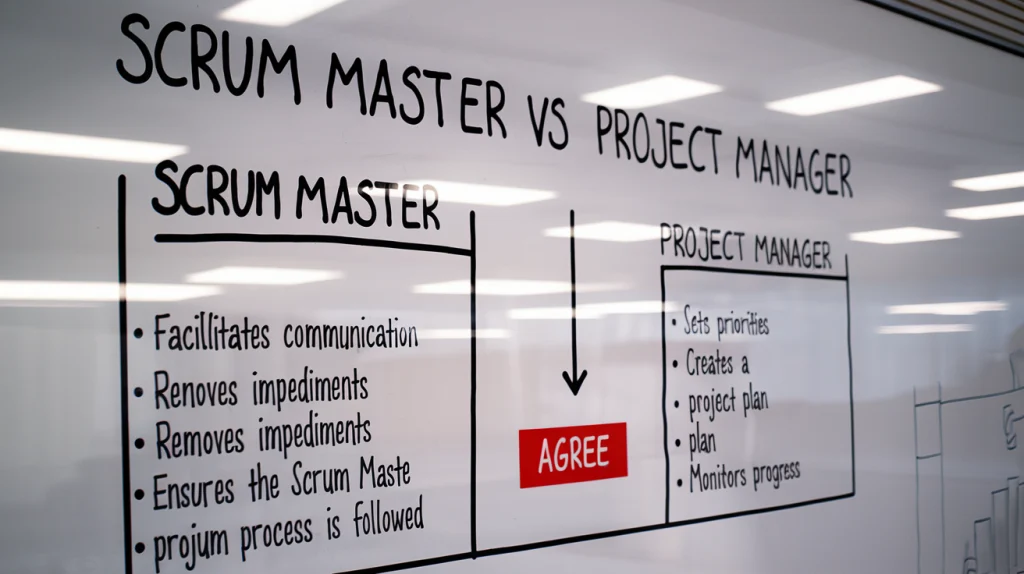
A Scrum Master is an essential facilitator in Agile project management. They help the team understand and implement Scrum principles, removing obstacles and ensuring smooth communication. Scrum Masters don’t manage the team directly but instead focus on creating an environment where the team can thrive. They protect the team from external disruptions and help them stay focused on sprint goals. A key responsibility is facilitating Scrum events like daily stand-ups, sprint planning, and retrospectives.
What is a Project Manager?

Project Managers oversee the entire lifecycle of a project, from initiation to closure. They’re responsible for planning, executing, and delivering projects on time and within budget. Unlike Scrum Masters, Project Managers have direct authority over team members and resources. They create project schedules, assign tasks, manage stakeholder expectations, and mitigate risks. Project Managers also handle budgeting, resource allocation, and quality control throughout the project’s duration.
Core responsibilities of each role
Scrum Masters primarily focus on facilitating the Scrum process and helping the team improve their practices. They coach team members on Agile principles, remove impediments, and protect the team from external distractions. Scrum Masters also help the Product Owner manage the backlog and ensure that sprint goals are clear and achievable.
Project Managers, on the other hand, are responsible for the overall success of the project. They develop project plans, manage resources, monitor progress, and communicate with stakeholders. Project Managers also handle risk management, quality assurance, and change control processes. They’re accountable for delivering the project within the defined scope, time, and budget constraints.
Key skills required for success
Successful Scrum Masters need excellent facilitation and coaching skills. They should be adept at conflict resolution, have strong communication abilities, and possess a deep understanding of Agile methodologies. Scrum Masters must be able to influence without authority and foster a collaborative team environment.
Project Managers require a different set of skills, including strong leadership, organizational abilities, and strategic thinking. They need to be proficient in project management tools and techniques, have excellent time management skills, and be able to make difficult decisions under pressure. Good negotiation and stakeholder management skills are also crucial for Project Managers.
Methodologies and Frameworks
Agile and Scrum for Scrum Masters
Scrum Masters are experts in Agile methodologies, particularly Scrum. They guide teams in implementing Scrum practices, such as sprint planning, daily stand-ups, sprint reviews, and retrospectives. Scrum Masters help teams embrace the Agile values of flexibility, continuous improvement, and customer-centricity. They promote transparency and encourage self-organization within the team. Scrum Masters also assist in breaking down complex projects into manageable sprints and user stories.
Traditional project management approaches for Project Managers
Project Managers often use traditional methodologies like Waterfall or PRINCE2. These approaches involve sequential phases, detailed planning, and strict control mechanisms. Project Managers create comprehensive project plans, define clear milestones, and manage resources accordingly. They use tools like Gantt charts and critical path analysis to track progress and dependencies. Risk management and change control processes are also key components of traditional project management approaches.
Hybrid models and their impact on both roles
Hybrid models combine elements of both Agile and traditional methodologies. These approaches can blur the lines between Scrum Master and Project Manager roles. In hybrid models, Scrum Masters might take on more project management responsibilities, while Project Managers may need to adopt some Agile practices. This can lead to increased flexibility and adaptability in project execution, but it also requires both roles to expand their skill sets and be more versatile in their approaches.
Adapting to different project types
Both Scrum Masters and Project Managers need to adapt their approaches based on project types. Scrum Masters may need to modify Scrum practices for large, complex projects or distributed teams. They might incorporate elements of Scaled Agile Framework (SAFe) or other scaling methodologies. Project Managers, too, must tailor their approach to suit different project sizes, industries, and organizational cultures. They may need to incorporate Agile elements into traditional projects or vice versa, depending on the specific needs of the project and stakeholders.
Team Dynamics and Leadership
How Scrum Masters facilitate team collaboration
Scrum Masters play a crucial role in fostering team collaboration. They create an environment where team members feel safe to share ideas and concerns openly. Scrum Masters facilitate effective communication by ensuring that all voices are heard during meetings and discussions. They encourage peer-to-peer learning and knowledge sharing within the team. By promoting transparency and trust, Scrum Masters help build strong, self-organizing teams that can deliver high-quality results consistently.
Project Managers’ approach to team management
Project Managers take a more direct approach to team management. They assign tasks, set deadlines, and monitor individual performance. Project Managers often use team-building activities to improve cohesion and motivation. They also identify and develop team members’ strengths, delegating responsibilities accordingly. Project Managers must balance the needs of the project with the well-being of the team, ensuring that workloads are manageable and resources are allocated efficiently.
Decision-making processes in each role
Scrum Masters facilitate decision-making rather than making decisions themselves. They guide the team through collaborative problem-solving processes, ensuring that all relevant information is considered. Scrum Masters help the team reach consensus on important issues, but ultimately, the team makes the decisions collectively.
In contrast, Project Managers often have the final say in decision-making. They gather input from team members and stakeholders, analyze options, and make informed decisions based on project goals and constraints.
Conflict resolution strategies
Both roles require effective conflict resolution skills, but their approaches differ. Scrum Masters act as neutral facilitators, helping team members resolve conflicts themselves. They create a safe space for open dialogue and guide the team towards finding mutually beneficial solutions.
Project Managers may take a more active role in conflict resolution, mediating disputes and making final decisions when necessary. They focus on maintaining team harmony while ensuring that conflicts don’t derail project progress.
Metrics and Performance Tracking
Scrum Masters’ focus on team velocity and sprint goals
Scrum Masters primarily track metrics related to team performance and process improvement. They monitor team velocity, which measures the amount of work completed in each sprint. Scrum Masters also track sprint burndown charts to visualize progress towards sprint goals. They help the team set and achieve realistic sprint objectives, focusing on continuous improvement rather than rigid targets. Scrum Masters use these metrics to identify bottlenecks and areas for improvement in the team’s processes.
Project Managers’ emphasis on timelines, budgets, and deliverables
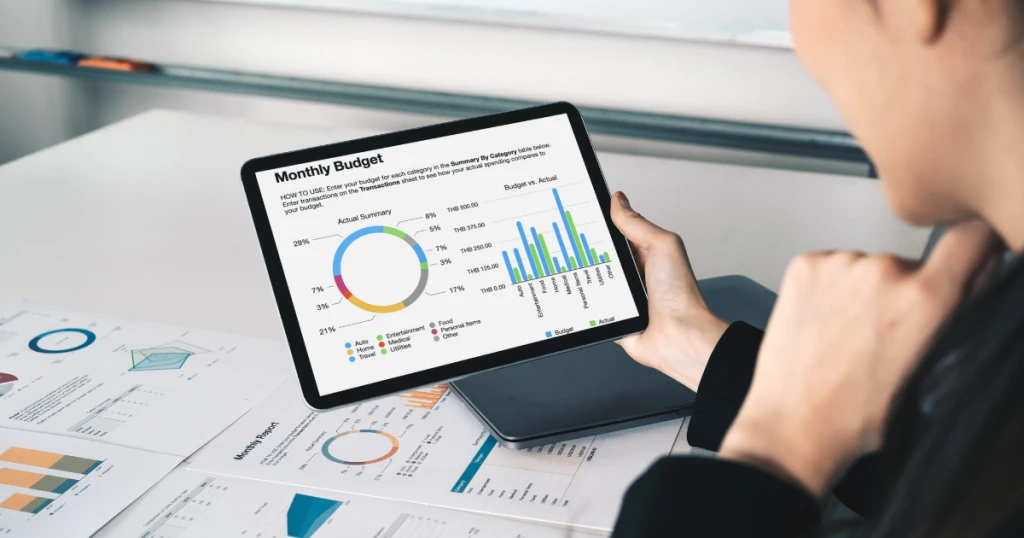
Project Managers track a broader range of metrics related to project success. They monitor project timelines, ensuring that tasks are completed on schedule and milestones are met. Budget tracking is another crucial aspect, with Project Managers keeping a close eye on expenses and resource utilization. They also track deliverables, ensuring that project outputs meet quality standards and stakeholder expectations. Project Managers use earned value management techniques to assess project performance in terms of cost and schedule variances.
Tools and techniques used by each role
Scrum Masters often use digital Kanban boards and Agile project management tools like Jira or Trello. These tools help visualize work in progress and track sprint progress. They also use retrospective tools to gather team feedback and facilitate continuous improvement discussions.
Project Managers typically use more comprehensive project management software like Microsoft Project or Primavera. These tools allow for detailed project planning, resource allocation, and progress tracking across multiple project dimensions.
Reporting to stakeholders and upper management
Scrum Masters focus on reporting team performance and process improvements to stakeholders. They present sprint review results, highlighting completed work and lessons learned. Scrum Masters also share insights on team velocity trends and impediments that need addressing.
Project Managers provide more detailed reports on overall project status, including progress against timelines, budget utilization, and risk assessments. They prepare executive summaries and presentations for upper management, often using dashboards to visualize key project metrics and milestones.
Career Paths and Progression

Educational background and certifications for each role
Scrum Masters often come from diverse educational backgrounds, but many have degrees in computer science, information technology, or business. Key certifications for Scrum Masters include Certified Scrum Master (CSM) from the Scrum Alliance and Professional Scrum Master (PSM) from Scrum.org. These certifications validate a Scrum Master’s knowledge of Agile principles and Scrum practices. Additional certifications like SAFe Scrum Master can be beneficial for those working in scaled Agile environments.
Project Managers typically have degrees in business administration, management, or related fields. The most recognized certification for Project Managers is the Project Management Professional (PMP) from the Project Management Institute (PMI). Other valuable certifications include PRINCE2 Practitioner and Certified Associate in Project Management (CAPM). These certifications demonstrate a Project Manager’s expertise in various project management methodologies and best practices.
Salary ranges and job market demand
Salaries for both roles can vary widely depending on experience, location, and industry. Generally, experienced Project Managers tend to earn slightly higher salaries than Scrum Masters. However, the demand for Scrum Masters has been growing rapidly in recent years, which has led to competitive compensation packages. Both roles are in high demand across various industries, particularly in technology, finance, and healthcare sectors. The job market for these positions is expected to remain strong as organizations continue to adopt Agile practices and seek effective project leadership.
Opportunities for growth and advancement
Scrum Masters can advance their careers by taking on larger, more complex projects or moving into Agile coaching roles. They may also progress to become Release Train Engineers in SAFe environments or transition into Product Owner roles. Some Scrum Masters choose to specialize in specific industries or Agile scaling frameworks to increase their expertise and value.
Project Managers have various advancement opportunities, including managing larger projects, overseeing multiple projects as a program manager, or moving into executive roles like Director of Project Management or Chief Operating Officer.
Transitioning between Scrum Master and Project Manager roles
Many professionals find opportunities to transition between Scrum Master and Project Manager roles throughout their careers. Scrum Masters moving into Project Manager positions need to develop stronger skills in areas like budgeting, resource management, and stakeholder communication. They may need to gain experience with traditional project management methodologies and tools.
Project Managers transitioning to Scrum Master roles must shift their focus from direct management to facilitation and coaching. They need to deepen their understanding of Agile principles and learn to influence without authority. Both transitions require adaptability and a willingness to learn new approaches to project delivery.
To wrap up, Scrum Masters and Project Managers play distinct yet complementary roles in project execution. While Scrum Masters focus on team facilitation and Agile methodologies, Project Managers oversee broader aspects like timelines and budgets. Both roles require strong leadership and communication skills, but their approaches to team dynamics and performance tracking differ. Career paths for these roles offer various opportunities for growth and advancement, with the possibility of transitioning between the two positions based on experience and certifications.