Why is a sprint backlog essential for Agile project success? In Agile development, the sprint backlog serves as a vital tool for teams to plan, execute, and track their work during each sprint. This guide will take you through the ins and outs of sprint backlogs, from creation to management, and provide you with practical tips to optimize your Agile workflow. By the end, you’ll have the knowledge and tools to boost your team’s productivity and deliver outstanding results in your Agile projects.
-   [1\. Selecting items from the product backlog](#1-selecting-items-from-the-product-backlog)
-   [2\. Breaking down user stories into tasks](#2-breaking-down-user-stories-into-tasks)
-   [3\. Estimating effort and time for each task](#3-estimating-effort-and-time-for-each-task)
-   [4\. Daily progress updates](#4-daily-progress-updates)
-   [5\. Using burndown charts to track progress](#5-using-burndown-charts-to-track-progress)
-   [6\. Handling changes during the sprint](#6-handling-changes-during-the-sprint)
-   [7\. Communication with the Scrum team](#7-communication-with-the-scrum-team)
What Is a Sprint Backlog?
A sprint backlog is a crucial tool in Agile project management, specifically within the Scrum framework. It is a detailed list of tasks and items that a team commits to completing during a single sprint. This list is derived from the product backlog but focuses on the immediate work at hand.
The sprint backlog contains several key components. These include user stories, tasks, and subtasks that need to be completed to achieve the sprint goal. Each item in the sprint backlog is typically accompanied by an estimate of the effort required to complete it, usually in hours or story points.
In the Scrum framework, the sprint backlog plays a vital role. It is created during the sprint planning meeting, where the team selects items from the product backlog to work on during the upcoming sprint. Throughout the sprint, the team refers to the backlog to guide their daily work and track progress.
It is important to understand the differences between a product backlog and a sprint backlog. While the product backlog is a comprehensive list of all desired features and improvements for the product, the sprint backlog is a subset of these items specifically chosen for the current sprint. The product backlog is maintained by the Product Owner, while the sprint backlog is owned and managed by the development team.
Best Practices For an Effective Creation and Management of Sprint Backlog
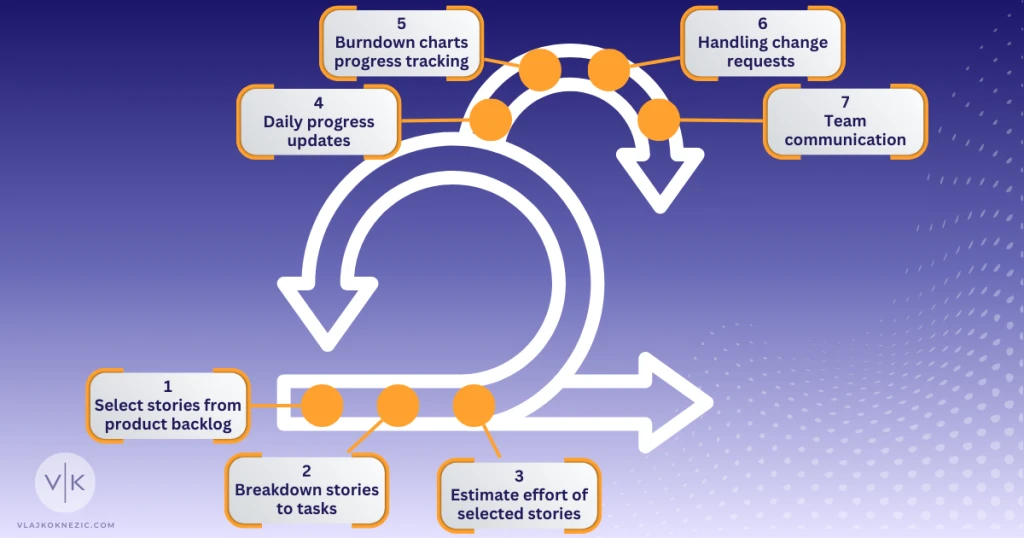
Building an effective sprint backlog involves several steps. First, the team needs to review the product backlog and select items that align with the sprint goal. This is typically done during the sprint planning meeting. The team should consider their capacity and velocity when choosing items to ensure they can realistically complete the work within the sprint timeframe. Next, the team breaks down the selected items into smaller, manageable tasks. This process helps to clarify the work that needs to be done and makes it easier to track progress. Each task should be specific and clearly defined to avoid ambiguity.
1. Selecting items from the product backlog
When selecting items from the product backlog, the team should prioritize based on business value and urgency. The Product Owner plays a key role in this process, guiding the team on which items are most important to stakeholders. It’s also crucial to consider dependencies between items and how they might affect the sprint flow.
2. Breaking down user stories into tasks
Breaking down user stories into tasks is a collaborative effort. The team should discuss each story and identify the specific steps needed to complete it. This might include design work, coding, testing, and documentation. Each task should be small enough to be completed within a day or two.
3. Estimating effort and time for each task
Estimating effort and time for tasks is often done using story points or hours. The team can use techniques like Planning Poker to reach a consensus on estimates. It’s important to be realistic and consider factors like task complexity, potential roadblocks, and team members’ skills and experience.
4. Daily progress updates
Managing your sprint backlog effectively requires daily attention. The team should update the status of tasks during the daily stand-up meeting. This helps everyone stay informed about progress and any obstacles that have arisen. Tasks can be moved between states like “To Do,” “In Progress,” and “Done” to visually represent their status.
5. Using burndown charts to track progress
Burndown charts are a useful tool for tracking sprint progress. They show the amount of work remaining versus time, helping the team identify if they’re on track to complete all tasks by the end of the sprint. Regular updates to the burndown chart can highlight potential issues early, allowing the team to adjust their approach if needed.
6. Handling changes during the sprint
While it’s best to avoid changes during a sprint, sometimes they’re unavoidable. If new tasks need to be added or existing ones modified, the team should carefully consider the impact on the sprint goal. Any changes should be discussed with the entire team and the Product Owner to ensure everyone understands the implications.
7. Communication with the Scrum team
Clear communication is key to managing the sprint backlog effectively. The team should have open discussions about task progress, any blockers, and potential solutions. Regular check-ins beyond the daily stand-up can help address issues promptly and keep everyone aligned on sprint goals.
Common Sprint Backlog Mistakes to Avoid
Overcommitting to too many items
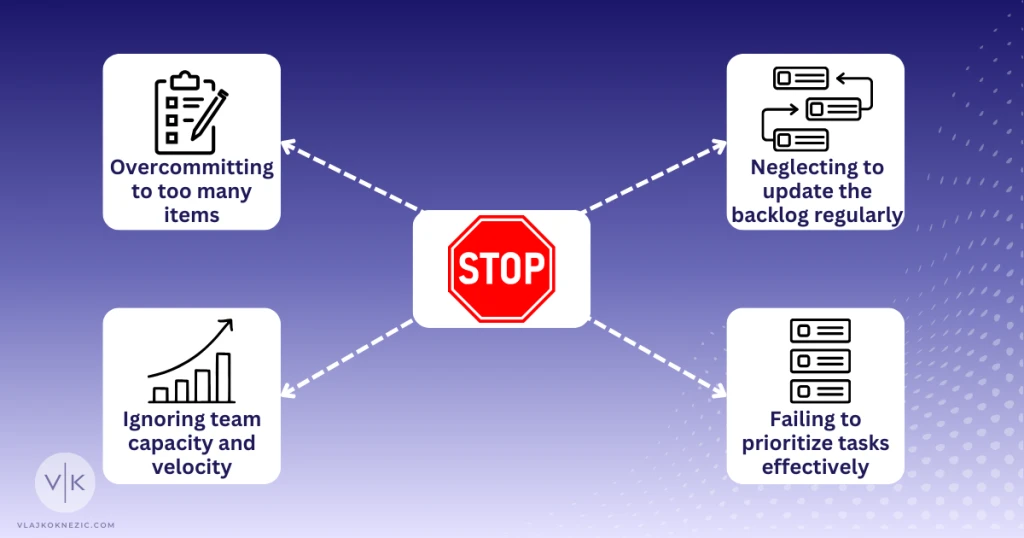
One common mistake teams make is overcommitting to too many items in their sprint backlog. This often happens when teams are overly optimistic about their capacity or feel pressured to take on more work. Overcommitting can lead to stress, decreased quality, and failure to meet sprint goals. To avoid this, teams should use their historical velocity as a guide and leave some buffer for unexpected issues.
Neglecting to update the backlog regularly
Another mistake is failing to update the sprint backlog regularly. The backlog should be a living document that reflects the current state of work. When updates are neglected, it becomes difficult for the team to track progress accurately and identify potential roadblocks. Daily updates during stand-up meetings and prompt logging of completed tasks can help keep the backlog current.
Ignoring team capacity and velocity
Ignoring team capacity and velocity when planning a sprint can lead to unrealistic expectations. Each team has a unique capacity based on factors like skill set, experience, and availability. Historical velocity data should be used to inform sprint planning. Teams should also account for time spent on meetings, administrative tasks, and potential interruptions when assessing their capacity for sprint work.
Failing to prioritize tasks effectively
Poor task prioritization can derail a sprint. When high-priority items are not clearly identified or worked on first, the team may miss delivering the most valuable features by the end of the sprint. To avoid this, work closely with the Product Owner to understand item priorities and ensure the most critical tasks are tackled early in the sprint.
Tools and Software for Sprint Backlog Management
Popular Agile project management tools
There are numerous tools available for managing sprint backlogs. Some popular options include Jira, Trello, Asana, and Microsoft Azure DevOps. These tools offer features specifically designed for Agile methodologies and can help teams visualize their work, track progress, and collaborate effectively.
Features to look for in sprint backlog software
When choosing sprint backlog software, look for features that support Agile practices. These might include customizable boards, sprint planning tools, burndown charts, and the ability to create and manage user stories and tasks. Integration with version control systems and the ability to generate reports can also be valuable.
Integrating sprint backlog tools with other systems
Integration capabilities are crucial for streamlining workflows. Look for tools that can integrate with your existing systems, such as version control repositories, continuous integration tools, or communication platforms like Slack. This can help reduce manual data entry and keep information synchronized across different tools.
Tips for selecting the right tool for your team
When selecting a tool, consider your team’s specific needs and workflows. Involve team members in the decision-making process to ensure the chosen tool will be adopted readily. Consider factors like ease of use, scalability, and cost. It’s often helpful to start with a trial period to evaluate how well the tool fits your team’s requirements before making a long-term commitment.
The sprint backlog is a vital component of Scrum methodology, helping teams plan and execute their work efficiently. This post covered its definition, creation, management, common mistakes, tools, and best practices. We discussed how to build an effective sprint backlog, track progress, and avoid pitfalls like overcommitting. The importance of selecting appropriate tools and incorporating new technologies was also highlighted. By following these guidelines, teams can improve their Agile processes and deliver better results.