Agile project management is more than a buzzword; it represents a shift in how we approach projects! From startups to multinational corporations, Agile methodologies have transformed the project management landscape. Did you know that according to recent surveys, companies implementing Agile practices have seen a 60% increase in project success rates? In this article, we will explore the top 5 Agile methodologies, breaking down their pros and cons and where they fit best in the real world. Whether you’re a seasoned pro or just starting out, you will find actionable insights to make your projects more responsive and effective!
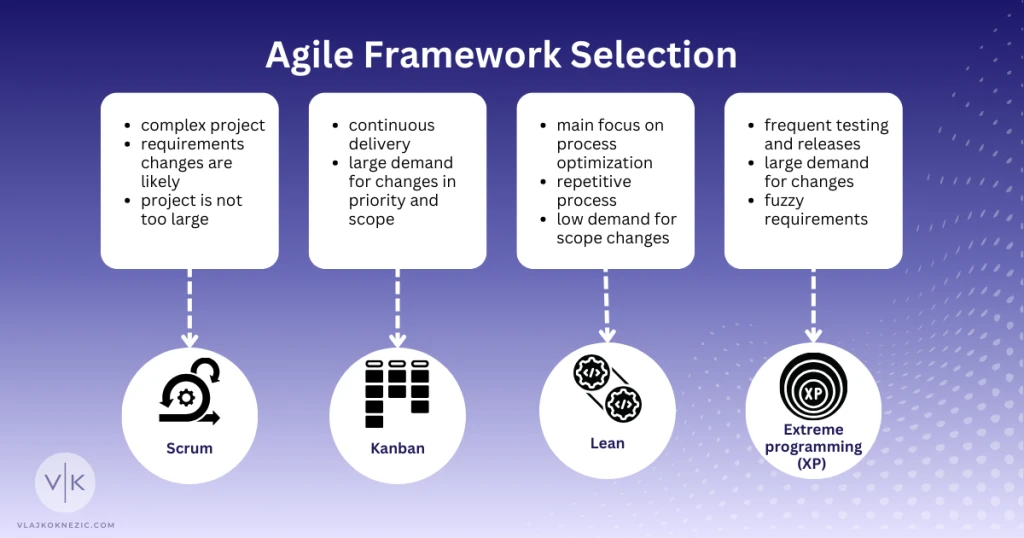
Scrum: The Sprint Champion
Scrum is often considered the foundation of agile project management. It breaks down disorganized development timelines into manageable, short intervals called sprints. This approach is designed not just to keep the project moving swiftly but also to align closely with the shifting demands of project stakeholders and markets. Here is a closer look at the Scrum framework, its elements, benefits, limitations, and real-world applications.
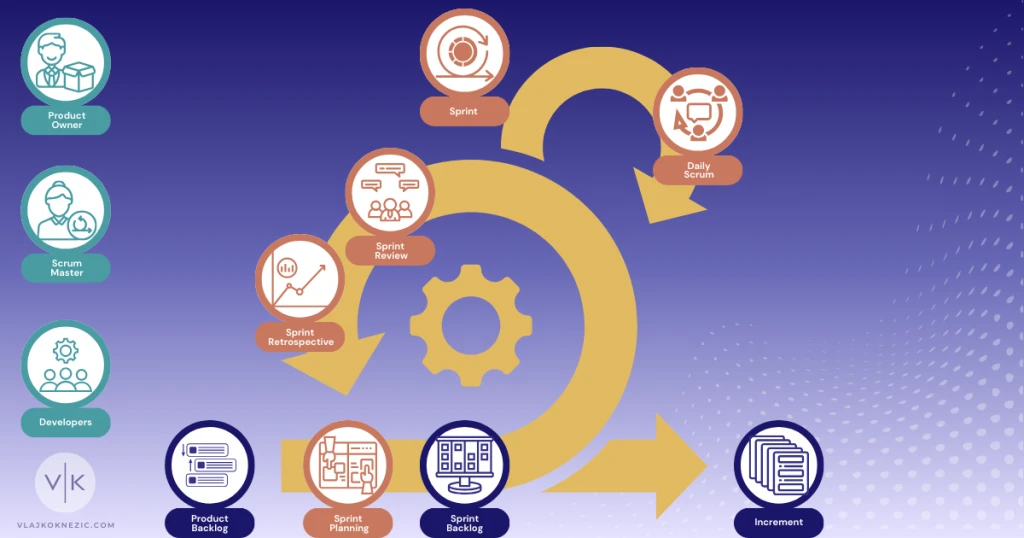
Understanding Scrum Principles and Roles
At its core, Scrum operates on iterative progress through fixed-length sprints, typically lasting two to four weeks. This structure allows teams to tackle complex projects by breaking them down into manageable groups of tasks, prioritized and completed sprint by sprint. Key roles in Scrum include the Product Owner, who represents the stakeholders’ interests and keeps the product backlog filled with prioritized tasks; the Scrum Master, who ensures that the team adheres to Scrum principles and practices while facilitating obstacles; and the Development Team, the individuals who do the work to deliver the product increment.
Advantages of Scrum
The primary strength of Scrum lies in its promotion of increased team accountability. Each team member knows their tasks and is encouraged to collaborate and innovate to meet sprint goals. Frequent feedback loops, another well-known characteristic of Scrum, are integrated through regular sprint reviews and retrospectives, allowing teams to adjust their plans based on real-time feedback from the product owner and other stakeholders. This not only improves product quality but also enhances customer satisfaction as changes and improvements can be incorporated rapidly.
Challenges with Scrum
However, Scrum is not without its challenges. Its dependency on frequent updates and close collaboration can be less effective in highly structured and regulated environments where long-term planning is crucial. Projects that require significant up-front design or those in highly regulated industries may find Scrum’s flexibility more of a hindrance than a help.
Scrum in Action: Use Cases
Scrum thrives in fields that benefit from rapid development cycles, such as software development and product launches. In software development, for example, Scrum enables teams to adjust quickly to new technologies or changing market demands. Similarly, in product launches, where market feedback is crucial, Scrum allows teams to iterate on product features quickly based on real-world user feedback and testing.
Conclusion
In essence, Scrum equips teams with the tools to be nimble and responsive, making it an invaluable methodology in the fast-paced, feedback-driven world of technology and product development. While it presents challenges in more regulated project landscapes, its benefits in suitable environments can be substantial, fostering innovation, efficiency, and alignment with customer needs. Whether you’re launching a new app or rolling out a product update, integrating Scrum practices could very well be your strategy for success.
Kanban: Visualize Your Workflow
Kanban, originating from Japanese manufacturing floors, has evolved into a powerful tool for managing work across various industries, especially in environments where work continuously flows. Its primary appeal lies in its simplicity and visual nature, facilitating efficiency and adaptability. This section explores the essential components of Kanban, as well as its benefits, possible downsides, and common applications.
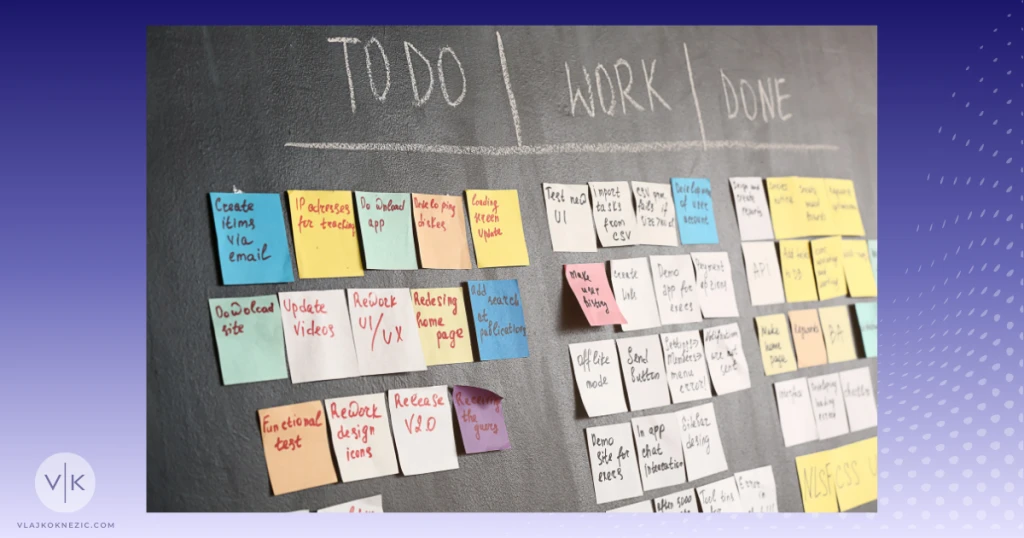
Key Elements of Kanban
The essence of Kanban is visualization. By using boards and cards, teams can see the status of every piece of work at any time. The Kanban board is divided into columns that represent different stages of the workflow, from “To Do” to “Done.” Each card on the board represents a task or a piece of work, moving from left to right as it progresses through stages. Another crucial element is the Work In Progress (WIP) limits, which cap the number of tasks in any given stage. This is designed to prevent overloading team members and to identify bottlenecks early in the process.
Advantages of Kanban
One of the most significant benefits of Kanban is its ability to enhance flexibility. Since Kanban focuses on ongoing delivery, it allows teams to adapt to changes quickly without disrupting the flow of work. Additionally, the visualization and WIP limits help reduce bottlenecks by highlighting where resources must be reallocated to maintain steady work progress. This ongoing adjustment helps teams optimize their throughput and deliver results with greater consistency.
Challenges with Kanban
But, there are drawbacks to using Kanban. Without proper controls and discipline, Kanban systems can lead to scope creep, where the scope of a project or task expands gradually without explicit approval. This happens because Kanban’s flexible nature makes it easy to add more cards to the board, potentially leading to shifting goals and unmanageable workloads if not carefully managed.
Kanban in Action: Use Cases
Kanban proves particularly effective in environments characterized by continuous production or ongoing service and support. For instance, in continuous production settings, Kanban helps manage the flow of production parts to assembly lines in real time, ensuring efficiency and reducing downtime. In the context of support teams, whether IT support or customer service, Kanban allows teams to manage incoming tickets effectively, prioritize urgent issues, and ensure that no request is lost or overlooked.
Conclusion
Kanban’s strength lies in its simplicity and visual impact. By making the workflow visible and limiting work in progress, it offers a robust framework for managing tasks in environments where flexibility and continuous delivery are paramount. While it requires vigilance to guard against scope creep, the adaptability and clarity it provides make Kanban an essential tool for teams dedicated to continuous improvement and operational excellence. Whether streamlining manufacturing processes or managing a busy support desk, Kanban can transform chaos into an ordered flow of productivity.
Lean: Maximize Value, Minimize Waste
Lean methodology, which originated in the manufacturing industry, has found a universal application across various sectors by emphasizing efficiency and value. This approach to project management not only enhances the quality of the output but also significantly cuts down on waste, ensuring that every resource is utilized to its fullest potential. Here’s how Lean thinking reshapes project management, its benefits, challenges, and applicability in different fields.
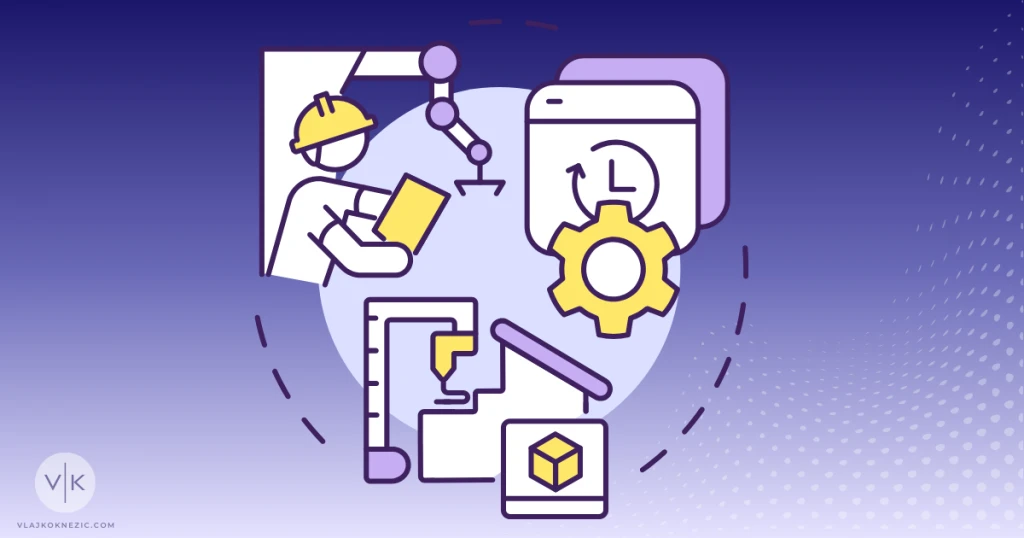
Principles of Lean Thinking in Project Management
Lean thinking in project management revolves around several core principles: identifying value, mapping the value stream, creating flow, establishing pull, and pursuing perfection. The goal is to maximize customer value while minimizing waste. This involves a careful analysis of each step in a project’s lifecycle to ensure it adds value to the end product. Steps that do not add value are considered waste and are targeted for elimination. By focusing on value-added activities, Lean thinking helps streamline processes, reduce cycle times, and eliminate bottlenecks.
Advantages of Lean
The adoption of Lean principles significantly improves overall efficiency. By eliminating unnecessary steps and focusing on value, projects can be completed faster and at a lower cost. This efficiency not only saves time and money but also improves the quality of the output by reducing the opportunities for errors. Lean’s emphasis on value means that every aspect of the project is aligned with customer needs and expectations, which increases customer satisfaction and enhances the competitive edge of the business.
Challenges with Lean
Implementing Lean principles often requires a significant cultural shift within an organization. It demands buy-in from all levels of staff and a change in mindset from activity-focused to value-focused. Resistance to change is common, especially in organizations accustomed to traditional project management methods. Furthermore, Lean requires continuous improvement and adaptation, which can be challenging to sustain without consistent leadership and commitment.
Lean in Action: Use Cases
Lean methodology is most prominently used in manufacturing, where it originated. It helps companies streamline production processes, reduce waste, and improve product quality. However, its principles are equally applicable in areas like process improvement within service industries or healthcare. In these sectors, Lean helps to identify inefficiencies in workflows and eliminate unnecessary steps, thereby speeding up service delivery and improving customer satisfaction.
Conclusion
Lean project management is more than a set of tools; it’s a philosophy that prioritizes customer value and strives for perfection by eliminating waste. While the transition to Lean methodologies can be challenging due to the deep-seated cultural changes required, the payoff in terms of efficiency, customer satisfaction, and overall value is immense. For industries ranging from manufacturing to healthcare, Lean provides a proven framework for achieving more with less, making it an essential strategy in a resource-conscious business environment.
Extreme Programming (XP): Emphasis on Technical Excellence
Extreme Programming (XP) stands out in the agile project management arena due to its stringent focus on technical excellence and quality software delivery. XP is designed to improve software quality and responsiveness to changing customer requirements by adhering to a set of core practices that foster a high level of code craftsmanship. This section explores the fundamental practices of XP, its benefits, potential drawbacks, and optimal use cases.
Core Practices of Extreme Programming
XP introduces several rigorous practices that underpin its framework, primarily focusing on collaboration, simplicity, and frequent feedback loops. Key among these practices are pair programming and test-driven development (TDD). Pair programming involves two developers working together at one workstation—one writes the code while the other reviews each line as it is typed in. This not only improves code quality but also facilitates knowledge sharing within the team. Test-driven development, another cornerstone of XP, requires developers to write tests for a function before the function itself. This ensures that the codebase is continuously tested and encourages developers to consider all possible outcomes, leading to fewer bugs and more robust software.
Advantages of Extreme Programming
The primary benefit of XP is its ability to produce high-quality software. The focus on testing from the very beginning and the collaborative nature of pair programming lead to fewer defects and a higher standard of code. Additionally, XP’s iterative nature allows teams to adapt to changes quickly. Frequent releases in small increments make it easier to incorporate customer feedback and adjust to evolving requirements without disrupting the overall project flow.
Challenges with Extreme Programming
Like any other methodology, XP has its challenges. The intensity of its practices, such as pair programming and continuous testing, can be draining and may not suit all team environments or corporate cultures. It requires a high level of discipline and commitment and experienced developers who can work closely together. The demanding nature of XP can also lead to burnout if not managed carefully.
Extreme Programming in Action: Use Cases
XP is particularly effective in high-stakes software projects where failure is not an option, such as systems that require high reliability and performance under pressure. It is also well-suited to projects where requirements are expected to change frequently, requiring a flexible approach to development. XP tends to work best in teams with experienced developers who are comfortable with its practices and the level of collaboration required.
Conclusion
Extreme Programming is a robust methodology for teams aiming to produce high-quality software rapidly and efficiently. While it demands a significant amount of effort and may not be suitable for every project or team, its focus on technical excellence and adaptability makes it invaluable for complex projects where quality and responsiveness are paramount. For organizations that can embrace its intensive practices, XP offers a pathway to creating superior software that truly meets the needs of its users.
Hybrid Models: Best of Both Worlds
Hybrid project management methodologies offer a pragmatic approach by blending the flexibility of Agile with the structured planning of traditional methods like Waterfall. This fusion creates a customizable framework that can adapt to the wide-ranging needs of different projects and teams. Here, we look into how hybrid models integrate these methodologies, their benefits, potential challenges, and ideal use cases.
Combining Elements of Agile and Traditional Methodologies
Hybrid models combine the iterative, flexible aspects of Agile—such as sprints and continuous feedback—with the rigorous planning, documentation, and milestone-focused approaches typical of traditional project management. This integration allows project managers to maintain control over the project scope and timeline while still adapting to changes and stakeholder feedback as the project progresses. The key is to find the right balance that leverages the strengths of both methodologies to suit the project’s needs.
Advantages of Hybrid Models
The primary advantage of hybrid models is their customizeability. They can be tailored to fit the specific requirements of any project, mixing more or less of Agile and traditional elements depending on what is needed. This makes hybrid models particularly suited for projects that require both strict deadlines and flexibility due to changing requirements or market conditions. Furthermore, hybrid models can facilitate smoother transitions for teams that are new to Agile, providing a stepping stone from a fully traditional approach to a more flexible one.
Challenges with Hybrid Models
However, the flexibility and adaptability of hybrid models come at a cost: complexity. Implementing a hybrid approach can be challenging, particularly in terms of process and management. Effectively blending Agile and traditional methodologies requires a deep understanding of both. Additionally, maintaining consistency and clarity in processes can be difficult when different teams may follow different methodologies under the same project umbrella. Clear communication and strong project leadership are essential to navigating these complexities.
Hybrid Models in Action: Use Cases
Hybrid models are particularly effective in large-scale enterprise projects where different departments or teams may have varying needs and workflows. For example, a software development team might utilize Agile to quickly iterate on product features, while the manufacturing team uses a traditional approach to plan production schedules. Hybrid models are also beneficial for transitional teams that are moving from a traditional to an Agile framework, as they provide a more gradual shift in methodologies.
Hybrid project management methodologies represent a versatile and effective approach, particularly in complex, multi-faceted environments where the demands of scope, time, cost, and quality are critical. By harnessing the best of both Agile and traditional worlds, hybrid models offer a tailored solution that can maximize project success in a variety of settings. While they require careful implementation and management, the potential benefits of increased flexibility and control make them a compelling choice for many organizations.
Whether you’re drawn to the swift sprints of Scrum or the continuous flow of Kanban, each Agile methodology offers unique benefits and challenges. By understanding the nuances of these top 5 methodologies, you can tailor your project management approach to better suit your project’s needs and your team’s dynamics.