Are you ready to transform your organization’s project management approach? Adopting Agile methodologies can improve how your teams work, boost efficiency, and deliver better results. This guide will walk you through the essential steps of transitioning to Agile methodology, from understanding its core principles to measuring success. By the end, you’ll have a clear roadmap to implement Agile practices, train your team, and overcome common challenges, setting your organization on the path to increased productivity and innovation.
Understanding Agile Fundamentals
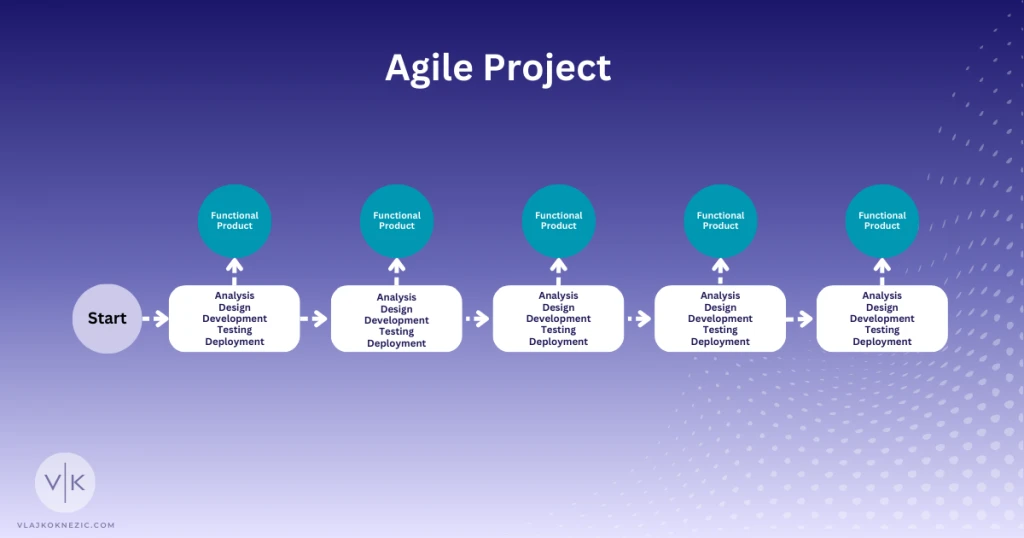
Agile methodology is a flexible approach to project management that emphasizes iterative development, collaboration, and adaptability. At its core, Agile breaks projects into smaller, manageable chunks called sprints. This allows teams to deliver value quickly and respond to changes efficiently.
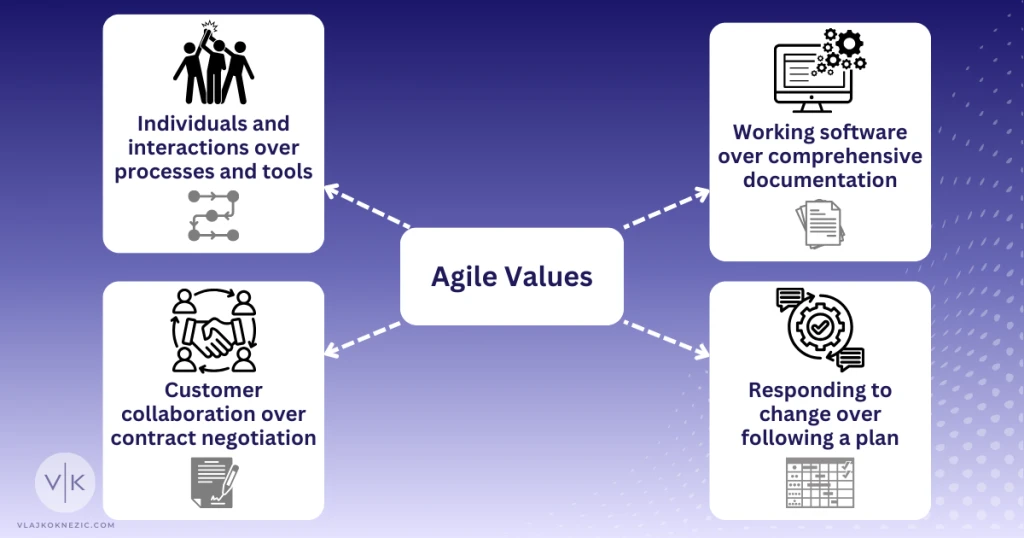
Agile is based on four values defined in the Agile Manifesto document, which are:
- Individuals and interactions over processes and tools: The heart of successful projects lies in human communication and teamwork. Agile prioritizes these elements above rigid procedures or software tools, recognizing that people are the true drivers of success.
- Working software over comprehensive documentation: Delivering functional software quickly takes precedence over spending excessive time on detailed documentation. While documentation plays an important role, the primary measure of progress in Agile is working, usable software.
- Customer collaboration over contract negotiation: Ongoing communication with the client throughout the development process is crucial. Agile methodologies favor adaptive planning and continuous feedback, rather than strict adherence to initial contracts. The focus is on building a collaborative relationship with customers.
- Responding to change over following a plan: Requirements and circumstances often evolve during a project. Agile approaches embrace this reality, adapting quickly to changes instead of rigidly following predetermined plans. Flexibility and responsiveness are key attributes of the Agile mindset.
In project management, Agile offers numerous benefits. It improves transparency, as stakeholders can see progress throughout the project. Teams can adapt to changing requirements more easily, reducing the risk of project failure. Agile also fosters better communication and teamwork, leading to higher-quality products and increased customer satisfaction.
When compared to traditional waterfall methods, Agile shines in its flexibility. Waterfall follows a linear, sequential approach, while Agile embraces change and iteration. This makes Agile particularly well-suited for projects with uncertain or evolving requirements. However, Agile may not be ideal for all projects, especially those with fixed scopes and well-defined outcomes.
Assessing Your Organization’s Readiness
Before diving into an Agile transformation, it’s crucial to evaluate your organization’s readiness for this significant change. This assessment helps identify potential challenges and areas that may require additional attention during the transition. Understanding your current organizational culture, processes, and team dynamics will provide valuable insights into the level of preparation needed. By conducting a thorough readiness assessment, you can develop a tailored approach to implementing Agile methodologies that aligns with your organization’s unique characteristics and goals.
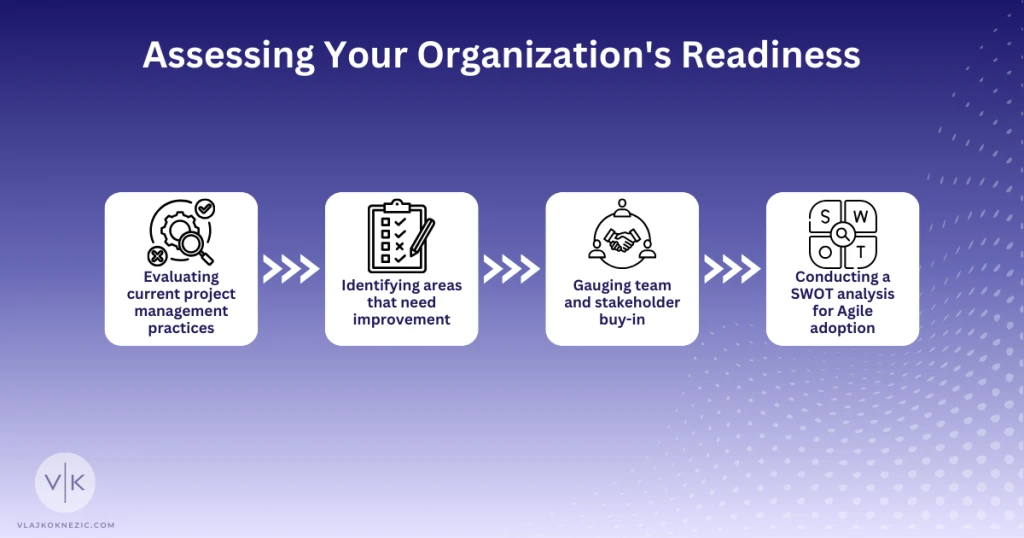
Evaluating current project management practices
Take a close look at how your organization currently manages projects. Are there established processes in place? How effective are they? Identify the strengths and weaknesses of your current approach. This evaluation will help you understand where Agile can bring the most value and where challenges might arise during the transition.
Identifying areas that need improvement
Based on your evaluation, pinpoint specific areas that could benefit from Agile practices. This might include communication bottlenecks, slow decision-making processes, or lack of flexibility in responding to changes. By identifying these areas, you can tailor your Agile adoption strategy to address your organization’s unique needs and challenges.
Gauging team and stakeholder buy-in
Assess the readiness of your team members and stakeholders to embrace Agile methodologies. Are they open to change? Do they understand the benefits of Agile? Conduct surveys or interviews to gather insights on their perspectives and concerns. This information will be valuable in designing your training and communication strategies during the transition.
Conducting a SWOT analysis for Agile adoption
Perform a SWOT (Strengths, Weaknesses, Opportunities, Threats) analysis specifically for Agile adoption in your organization. This will help you identify internal and external factors that may impact your transition. Use this analysis to develop strategies that capitalize on your strengths and opportunities while addressing weaknesses and mitigating potential threats.
Creating an Agile Transition Plan
Developing a comprehensive Agile transition plan is essential for guiding your organization through the complex process of shifting from traditional project management methods. This plan serves as a roadmap, outlining the steps, milestones, and resources required to successfully implement Agile practices across your teams. By creating a detailed and flexible plan, you can ensure a smoother transition, manage expectations, and track progress as your organization embraces the Agile mindset.
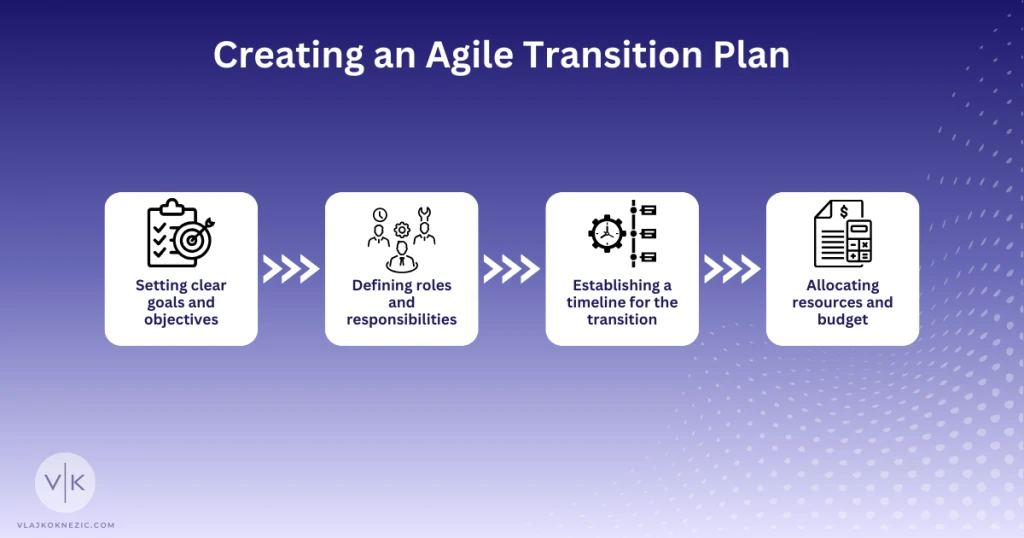
Setting clear goals and objectives
Define specific, measurable goals for your Agile transition. What do you hope to achieve? Improved project delivery times? Better product quality? Increased customer satisfaction? Make sure these goals align with your organization’s overall strategic objectives. Set both short-term and long-term goals to track progress throughout the transition process.
Defining roles and responsibilities
Clearly outline the roles and responsibilities within the new Agile framework. This includes roles like Scrum Master, Product Owner, and Development Team members. Explain how these roles differ from traditional project management positions. Provide detailed job descriptions and expectations for each role to ensure everyone understands their part in the Agile process.
Establishing a timeline for the transition
Create a realistic timeline for your Agile transition. Break the process into phases, such as planning, training, pilot projects, and full implementation. Set milestones and deadlines for each phase. Be prepared to adjust this timeline as needed, as the transition process may reveal unexpected challenges or opportunities.
Allocating resources and budget
Determine the resources required for a successful Agile transition. This includes financial resources for training, tools, and potential productivity dips during the learning curve. Consider the time investment needed from team members and stakeholders. Allocate budget for hiring Agile coaches or consultants if needed. Ensure you have leadership support for the necessary resource allocation.
Implementing Agile Practices
The implementation phase is where the rubber meets the road in your Agile transition journey. This critical stage involves putting your carefully crafted plan into action, introducing Agile methodologies and tools to your teams, and gradually shifting your organizational culture. As you begin implementing Agile practices, it’s important to maintain flexibility, gather feedback consistently, and be prepared to make adjustments to ensure a successful adoption across your organization.
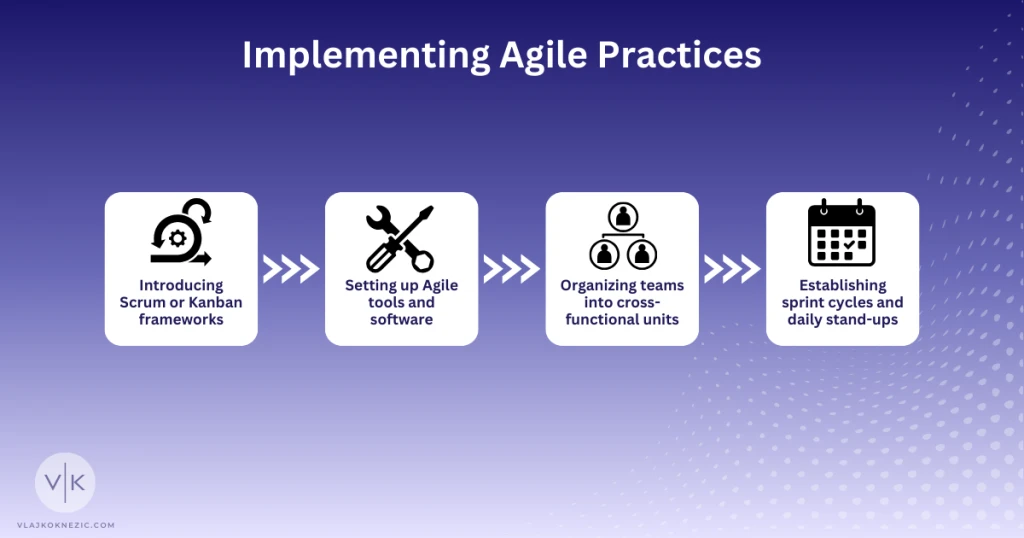
Introducing Scrum or Kanban frameworks
Choose the Agile framework that best suits your organization’s needs. Scrum is ideal for complex projects with changing requirements, while Kanban works well for continuous flow processes. Introduce the chosen framework gradually, starting with key concepts and practices. Provide real-world examples of how these frameworks have been successfully implemented in similar organizations.
Setting up Agile tools and software
Select and implement Agile project management tools that support your chosen framework. Popular options include Jira, Trello, and Azure DevOps. Ensure these tools integrate well with your existing systems. Provide thorough training on how to use these tools effectively. Consider appointing tool champions who can support their colleagues during the transition.
Organizing teams into cross-functional units
Restructure your teams to create cross-functional units capable of delivering end-to-end value. These teams should include members with diverse skills and expertise. Encourage collaboration and knowledge sharing within these units. Be prepared to address challenges that may arise from this reorganization, such as resistance to change or concerns about job security.
Establishing sprint cycles and daily stand-ups
Implement regular sprint cycles, typically lasting 1-4 weeks. Set up daily stand-up meetings to promote communication and accountability. Teach teams how to effectively plan and execute sprints, including sprint planning, review, and retrospective meetings. Monitor the effectiveness of these practices and be ready to adjust the sprint length or meeting formats as needed.
Training and Upskilling Your Team
A successful transition to Agile methodologies hinges on equipping your team with the necessary knowledge and skills to thrive in this new environment. Comprehensive training and upskilling programs are essential to help your employees understand Agile principles, adopt new practices, and develop the mindset required for Agile success. By investing in your team’s development, you not only facilitate a smoother transition but also empower your workforce to fully embrace and leverage the benefits of Agile project management.
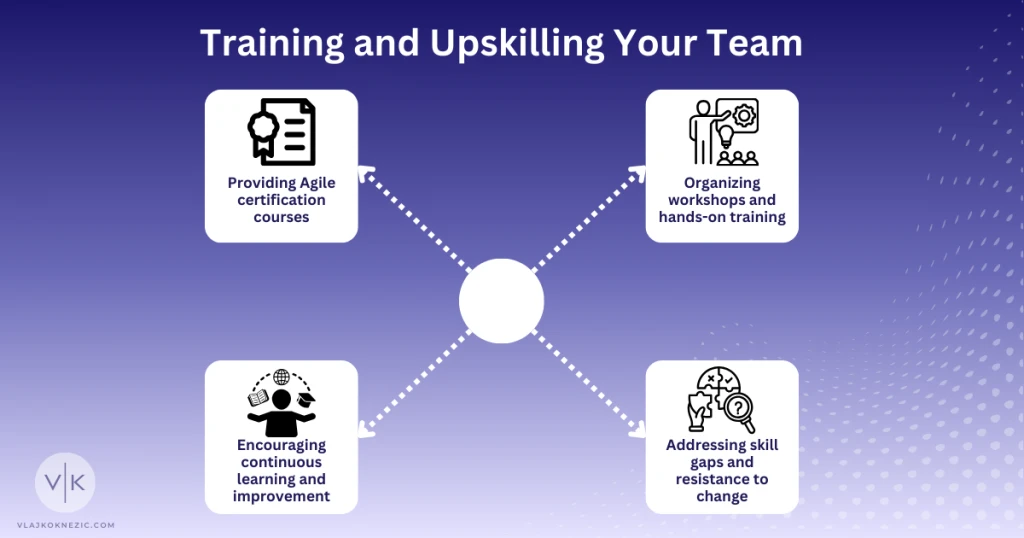
Providing Agile certification courses
Offer Agile certification courses to your team members. Popular certifications include Certified ScrumMaster (CSM) and Professional Scrum Master (PSM). These courses provide a solid foundation in Agile principles and practices. Consider bringing in certified trainers to conduct on-site training sessions. This approach can be more cost-effective and allows for customization to your organization’s specific needs.
Organizing workshops and hands-on training
Complement formal training with practical, hands-on workshops. These sessions allow team members to apply Agile concepts to real-world scenarios. Use role-playing exercises to practice Agile ceremonies like sprint planning and daily stand-ups. Encourage participants to share their experiences and learn from each other. Repeat these workshops regularly to reinforce learning and address new challenges as they arise.
Encouraging continuous learning and improvement
Foster a culture of continuous learning within your organization. Provide access to online resources, books, and webinars on Agile methodologies. Encourage team members to attend Agile conferences and meetups. Set up internal knowledge-sharing sessions where team members can present on Agile topics or share lessons learned from their projects. Recognize and reward individuals who demonstrate a commitment to learning and improving their Agile skills.
Addressing skill gaps and resistance to change
Identify skill gaps within your team and develop targeted training programs to address them. This might include technical skills, soft skills, or Agile-specific competencies. Be prepared to address resistance to change among team members. Provide one-on-one coaching for those struggling with the transition. Communicate the benefits of Agile clearly and consistently, addressing concerns and misconceptions along the way.
Overcoming Common Challenges
The journey to Agile adoption is rarely without obstacles, and being prepared for common challenges can significantly smooth the transition process. From resistance to change and cultural misalignment to difficulties in scaling Agile practices, organizations often encounter hurdles that can impede progress. By anticipating these challenges and developing strategies to address them proactively, you can maintain momentum and ensure a more successful Agile transformation.
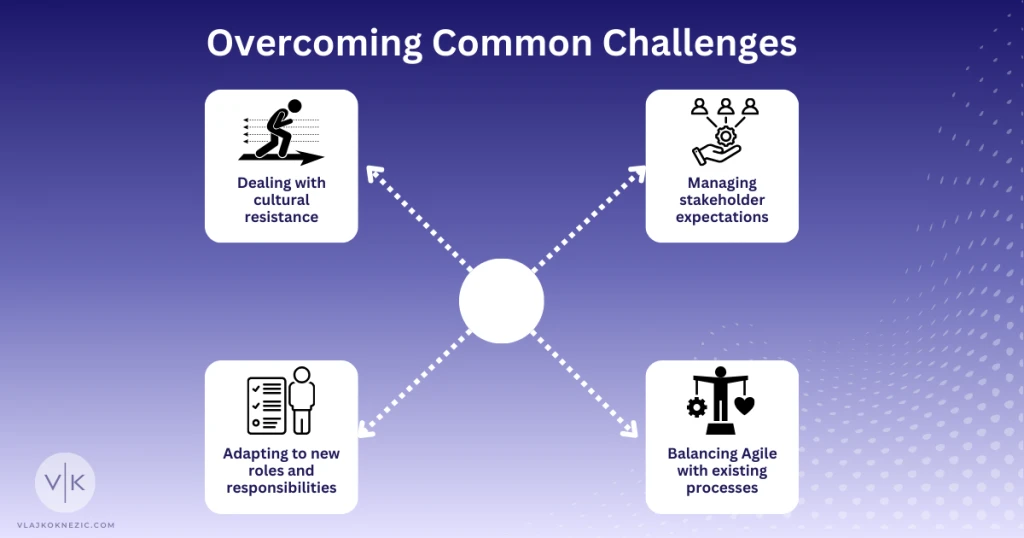
Dealing with cultural resistance
Cultural resistance is often the biggest hurdle in Agile adoption. Address this by clearly communicating the reasons for the change and its benefits. Involve team members in the transition process to build ownership. Celebrate early wins to demonstrate the value of Agile. Be patient and persistent, as cultural change takes time. Lead by example, embodying Agile values in your own work and interactions.
Managing stakeholder expectations
Educate stakeholders about Agile methodologies and how they differ from traditional approaches. Set realistic expectations about project timelines, deliverables, and the iterative nature of Agile development. Involve stakeholders in sprint reviews to keep them engaged and informed. Be transparent about challenges and progress, maintaining open lines of communication throughout the project.
Adapting to new roles and responsibilities
Help team members understand and adapt to their new roles in the Agile framework. Provide support and guidance as they navigate these changes. Be prepared for some initial discomfort or confusion as people adjust to new responsibilities. Offer mentoring or coaching to help individuals grow into their roles. Recognize and celebrate successes as team members become more comfortable with their Agile roles.
Balancing Agile with existing processes
Find ways to integrate Agile practices with existing processes and systems. This might involve adapting reporting structures or modifying approval workflows. Be flexible and willing to experiment with different approaches. Seek input from team members on how to best balance Agile principles with organizational requirements. Regularly review and adjust these integrations to ensure they work effectively for all parties involved.
Measuring Success and Continuous Improvement
As your organization progresses through its Agile transition, it’s crucial to establish metrics and benchmarks to gauge the effectiveness of your new practices. Regularly measuring success allows you to identify areas of improvement, celebrate wins, and make data-driven decisions to refine your Agile implementation. This commitment to continuous improvement embodies the Agile spirit and ensures that your organization remains adaptable and efficient in the long term.
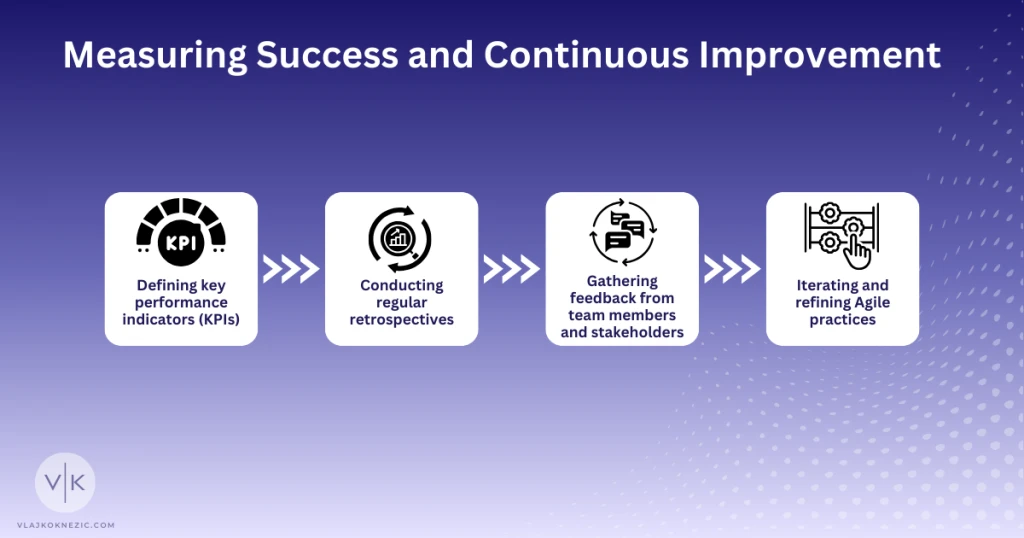
Defining key performance indicators (KPIs)
Establish clear, measurable KPIs to track the success of your Agile adoption. These might include metrics like sprint velocity, cycle time, or customer satisfaction scores. Align these KPIs with your organization’s overall goals and objectives. Make sure the metrics you choose provide meaningful insights into your Agile processes and outcomes. Regularly review and update your KPIs to ensure they remain relevant as your Agile practices mature.
Conducting regular retrospectives
Hold retrospective meetings at the end of each sprint or project phase. These sessions provide an opportunity for teams to reflect on what went well and what could be improved. Encourage open, honest feedback from all team members. Use techniques like the “Start, Stop, Continue” exercise to structure these discussions. Act on the insights gained from retrospectives to continuously refine your Agile practices.
Gathering feedback from team members and stakeholders
Regularly solicit feedback from both team members and stakeholders on the Agile process. Use surveys, one-on-one interviews, or focus groups to gather diverse perspectives. Pay attention to both quantitative data and qualitative insights. Look for patterns in the feedback that might indicate systemic issues or opportunities for improvement. Share this feedback transparently with the team and use it to inform your continuous improvement efforts.
Iterating and refining Agile practices
Use the insights gained from KPIs, retrospectives, and feedback to continuously refine your Agile practices. Be willing to experiment with different approaches and techniques. Encourage teams to suggest and implement improvements to their own processes. Regularly review and update your Agile transition plan based on these learnings. Remember that becoming truly Agile is an ongoing journey of continuous improvement and adaptation.
To wrap up, adopting Agile methodology requires careful planning and execution. From understanding the fundamentals to measuring success, each step plays a vital role in the transition. By assessing readiness, creating a solid plan, implementing practices, training teams, and overcoming challenges, organizations can successfully shift to Agile. Remember, continuous improvement is key to maximizing the benefits of this approach.