User stories are a powerful tool in agile methodologies, enabling teams to focus on user needs and deliver value efficiently. However, writing user stories can be tricky at the beginning. This guide will walk you through the essentials of creating, organizing, and implementing user stories in your projects. You will gain the knowledge and skills to write clear, concise, and effective user stories that drive your development process forward and lead to better outcomes for your users and stakeholders.
What Are User Stories?
User stories are short, simple descriptions of a feature told from the perspective of the person who desires the new capability, usually a user or customer of the system. They’re an essential part of agile software development, helping teams focus on delivering value to end-users.
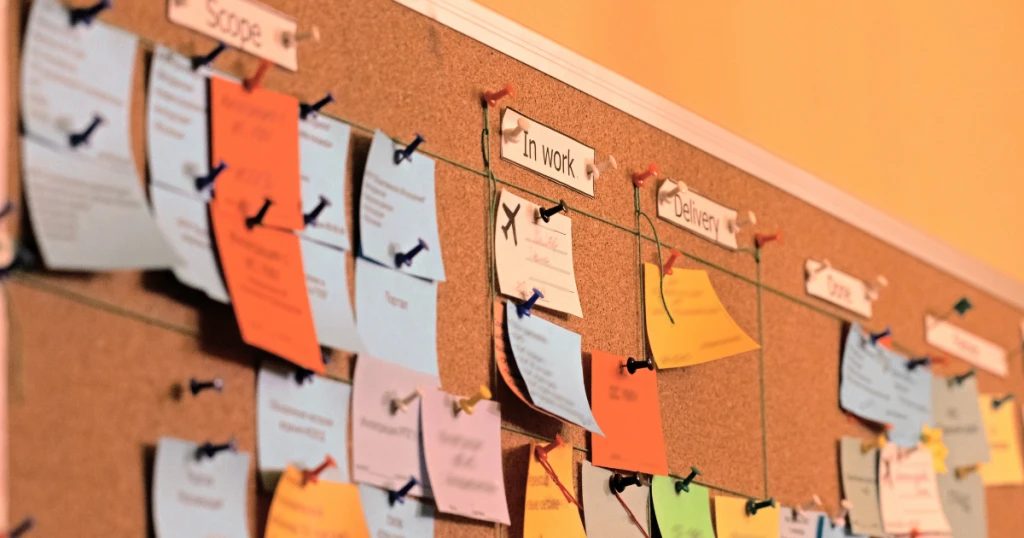
User stories serve multiple purposes in the development process. They provide a clear, concise way to communicate requirements to developers. By keeping stories small and focused, teams can estimate work more accurately and plan sprints effectively. User stories also encourage collaboration between business stakeholders and technical teams, ensuring everyone has a shared understanding of the project goals.
A well-crafted user story contains three key components: the user role, the desired action, and the benefit or value. This structure helps ensure that features are developed with a clear purpose in mind, rather than just for the sake of adding functionality. When writing user stories, it’s crucial to avoid technical jargon and focus on the user’s perspective. This approach keeps the team aligned with user needs throughout the development process.
The “As a… I want… So that…” Format
The standard structure for user stories follows the format: “As a [user role], I want [desired action] so that [benefit].” This simple yet powerful template helps capture the essential elements of a feature request.
For example:
- “As a busy professional, I want to set reminders for important tasks so that I don’t forget critical deadlines.”
- “As a social media manager, I want to schedule posts in advance so that I can maintain a consistent content calendar.”
When writing user stories, avoid common pitfalls such as including too much detail or technical specifications. Keep the focus on the user’s needs and the value they’ll gain. It’s also important to use language that’s easily understood by both technical and non-technical team members.
Some stories may be written poorly, like:
- “As a user, I want the system to use a NoSQL database.”
- “As a developer, I want to refactor the codebase.”
These examples fail to capture the user’s perspective or the value provided. Instead, focus on the end-user benefit and leave implementation details for later discussions.
INVEST Criteria for User Stories
The INVEST criteria provide a valuable framework for creating high-quality user stories. Let’s break down each element:
Independent
User stories should be self-contained and not dependent on other stories. This independence allows for flexible prioritization and implementation. For example, “As a customer, I want to view my order history” can be developed independently of “As a customer, I want to track my current order.”
Negotiable
Stories should leave room for discussion and refinement. They’re not detailed specifications but rather conversation starters. A negotiable story might be “As a user, I want to share photos with friends,” leaving the exact implementation open for team discussion.
Valuable
Each story must provide value to the end-user or customer. “As a marketing manager, I want to see campaign performance analytics so I can optimize our strategies” clearly demonstrates value to the user role.
Estimable
Teams should be able to estimate the effort required to implement a story. If a story is too vague or complex to estimate, it may need to be broken down further. “As a user, I want a better interface” is too broad, while “As a user, I want a one-click checkout option” is more estimable.
Small
Stories should be small enough to be completed within a single iteration or sprint. Large stories, often called epics, should be broken down into smaller, manageable pieces. Instead of “As a user, I want a complete e-commerce platform,” break it down into smaller stories like “As a user, I want to add items to a shopping cart” and “As a user, I want to make payment for items in my shopping cart” and so on.
Testable
Stories must be written in a way that allows for clear acceptance criteria and testing. “As a user, I want to reset my password, so I can regain access to my account.” is not easily testable since there can be many ways to reset the password, but “As a user, I want to reset my password by receiving a reset link via email, so I can regain access to my account.” provides a clear, testable criteria.
Writing Effective Acceptance Criteria
Acceptance criteria are conditions that a software product must satisfy to be accepted by a user, customer, or other stakeholders. They’re used to define when a user story is complete and working as intended.
To create clear and concise criteria, focus on specific, measurable outcomes. Use simple language and avoid technical jargon. Each outcome should be testable and unambiguous. It’s often helpful to use the Given-When-Then format to structure your criteria.
Here are some examples of good acceptance criteria:
- Given I am on the login page, when I enter valid credentials and click “Login,” then I should be redirected to my dashboard.
- Given I have items in my shopping cart, when I proceed to checkout, then I should see a summary of my order including item details, quantities, and total price.
- Given I am viewing a product page, when I click the “Add to Wishlist” button, then the item should be added to my wishlist and I should see a confirmation message.
These criteria are specific, testable, and clearly define the expected behavior of the feature. They provide a solid foundation for developers to work from and for testers to verify the implementation.
User Story Mapping Techniques
User story mapping is a visual exercise that helps teams understand the big picture of their product backlog. It involves arranging user stories in a specific order to create a model of how users will interact with the product.

To create a user story map, start by identifying the major activities or workflows that users will engage in. These form the backbone of your map. Under each activity, list the specific tasks users need to complete, represented by user stories. Arrange these stories in order of priority from top to bottom.
Next, group related stories into releases or iterations. This helps visualize how the product will evolve over time and ensures that each release provides value to users. As you build your map, you may identify gaps in functionality or opportunities for improvement.
Story mapping offers several benefits for product backlog management:
- It provides a holistic view of the product, helping teams understand how individual stories fit into the bigger picture.
- It facilitates prioritization by visualizing the user journey and highlighting critical paths.
- It promotes collaboration and shared understanding among team members and stakeholders.
- It helps identify dependencies and potential roadblocks early in the development process.
By using story mapping techniques, teams can create more cohesive and user-focused product backlogs, leading to better planning and more successful product outcomes.
Breaking Down Large User Stories
Large user stories, often referred to as epics or features, can be challenging to estimate and implement within a single iteration. Breaking them down into smaller, more manageable stories is a crucial skill for agile teams.
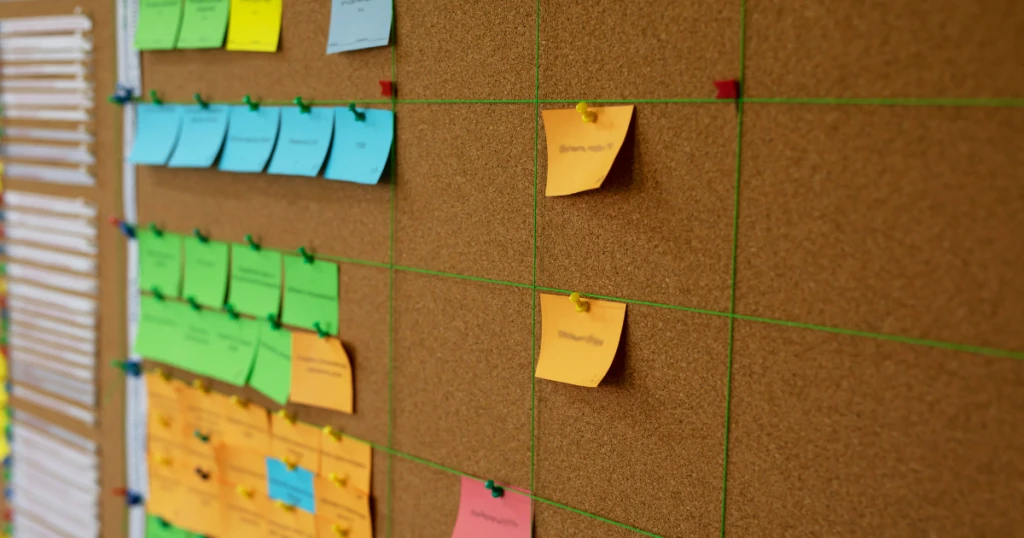
To identify epics and features, look for stories that describe broad functionality or encompass multiple user activities. These are typically too large to be completed in a single sprint and need to be broken down further.
When splitting user stories, consider the following techniques:
- Workflow steps: Break down a large story into smaller steps of a user workflow.
- Business rules: Separate complex business rules into individual stories.
- Variations: Create separate stories for different variations of a feature.
- Data types: Split stories based on different types of data being processed.
- Operations: Divide stories by CRUD (Create, Read, Update, Delete) operations.
For example, an epic like “As a user, I want a complete profile management system” could be split into:
- “As a user, I want to create a profile with basic information.”
- “As a user, I want to upload a profile picture.”
- “As a user, I want to edit my profile information.”
- “As a user, I want to set privacy settings for my profile.”
When breaking down stories, it’s crucial to maintain the value proposition of the original epic. Each smaller story should still deliver some value to the user, even if it’s just a part of the larger feature.
Prioritizing User Stories
Effective prioritization of user stories is essential for delivering maximum value to users and stakeholders. Several methods can be used to assess story priority, each with its own strengths.

One popular approach is the MoSCoW method, which categorizes stories into four groups:
- Must-have: Critical features that are essential for the product to function.
- Should-have: Important features that add significant value but aren’t absolutely necessary.
- Could-have: Desirable features that would be nice to have if time and resources allow.
- Won’t-have: Features that aren’t planned for the current release but may be considered in the future.
For example, in an e-commerce app, “User can add items to cart” would be a Must-have, while “User can save items for later” might be a Should-have or Could-have.
When prioritizing, it’s important to balance business value with technical considerations. High-value stories that align with business goals should generally be prioritized, but technical dependencies and risks must also be taken into account.
Consider factors such as:
- Customer impact: How many users will benefit from this feature?
- Revenue potential: Will this feature directly or indirectly drive revenue?
- Competitive advantage: Does this feature give us an edge over competitors?
- Technical complexity: How difficult is it to implement this feature?
- Dependencies: Does this story enable or block other important stories?
By carefully weighing these factors, teams can create a prioritized backlog that maximizes value delivery while managing technical constraints effectively.
Collaborating on User Stories
Collaboration is key to creating effective user stories that truly capture user needs and align with business goals. Involving stakeholders in the story writing process ensures that diverse perspectives are considered and reduces the risk of misunderstandings later in development.

One effective technique for collaborative story writing is hosting story workshops. These sessions bring together stakeholders, product owners, developers, and other relevant team members to brainstorm and refine user stories. During these workshops, encourage open discussion and use techniques like affinity mapping to organize ideas.
To facilitate story workshops:
- Set clear objectives for the session.
- Use visual aids like whiteboards or digital collaboration tools.
- Encourage participation from all attendees.
- Time-box discussions to maintain focus.
- Document outcomes and action items.
For remote teams, various tools can support collaborative story writing. Digital whiteboards, project management platforms, and video conferencing software can help recreate the interactive nature of in-person workshops. Some popular tools include:
- Miro or Mural for virtual whiteboards
- Jira or Trello for managing user stories and backlogs
- Zoom or Microsoft Teams for video conferencing
When using these tools, establish clear guidelines for participation and document sharing to ensure smooth collaboration. Regular check-ins and asynchronous communication channels can help keep everyone aligned between formal collaboration sessions.
Common Challenges and Solutions
Agile teams often face several challenges when working with user stories. Here are some common issues and strategies to address them:
Dealing with ambiguous requirements can be frustrating for development teams. To clarify ambiguity, encourage open communication between the product owner and developers. Use techniques like the “Five Whys” to dig deeper into the underlying needs behind a story. If necessary, create spike stories to investigate uncertain areas before committing to implementation.
Handling non-functional requirements (NFRs) in user stories can be tricky. These requirements, such as performance, security, or scalability, don’t always fit neatly into the user story format. One approach is to create separate stories for significant NFRs, framing them in terms of user benefit. For example: “As a user, I want the system to respond to my searches within 2 seconds so that I can quickly find what I need.”
Addressing technical debt through user stories is another challenge. While it’s tempting to focus solely on new features, neglecting technical debt can slow down development in the long run. To tackle this, consider creating user stories that highlight the user or business benefit of addressing technical debt. For instance: “As a user, I want the app to have faster load times so that I can access my information more quickly.”
Some strategies to address these challenges include:
- Regular backlog refinement sessions to clarify and improve stories.
- Creating a definition of “ready” for stories to ensure they meet quality standards before development.
- Using acceptance criteria to clearly define both functional and non-functional requirements.
- Balancing feature development with technical debt reduction in sprint planning.
By proactively addressing these common challenges, teams can create more effective user stories and deliver better outcomes for their users and stakeholders.
User stories are essential tools in agile development, helping teams create valuable, user-focused software. By following the “As a… I want… So that…” format, applying the INVEST criteria, and writing effective acceptance criteria, teams can improve their project outcomes.