Mastering Scrum Basics: A 2024 Guide for Agile Teams
Table of Contents
Scrum has taken the project management world by storm, and for good reason! Did you know that 85% of Agile teams use Scrum or a hybrid approach? Whether you’re a seasoned pro or just starting out, understanding Scrum is crucial for success in today’s fast-paced business environment. In this guide, we’ll plunge into the fundamental elements of Scrum, demystify its key concepts, and show you how to implement this powerful framework in your projects.
What is Scrum? Understanding the Agile Framework #

Scrum is a lightweight, iterative agile project management framework within the broader Agile methodology, designed to help teams tackle complex projects while delivering high-quality products. It provides a specific structure and set of practices to implement Agile principles, emphasizing collaboration, flexibility, and rapid delivery. Scrum is characterized by fixed-length iterations called sprints, typically lasting 1-4 weeks, during which a potentially shippable product increment is created.
Within the Agile landscape, Scrum stands out as one of the most popular and widely adopted approaches. It aligns closely with the Agile Manifesto’s values, prioritizing individuals and interactions, working software, customer collaboration, and responding to change. Scrum’s framework includes defined roles (Product Owner, Scrum Master, Development Team), events (Sprint Planning, Daily Scrum, Sprint Review, Sprint Retrospective), and artifacts (Product Backlog, Sprint Backlog, Increment).
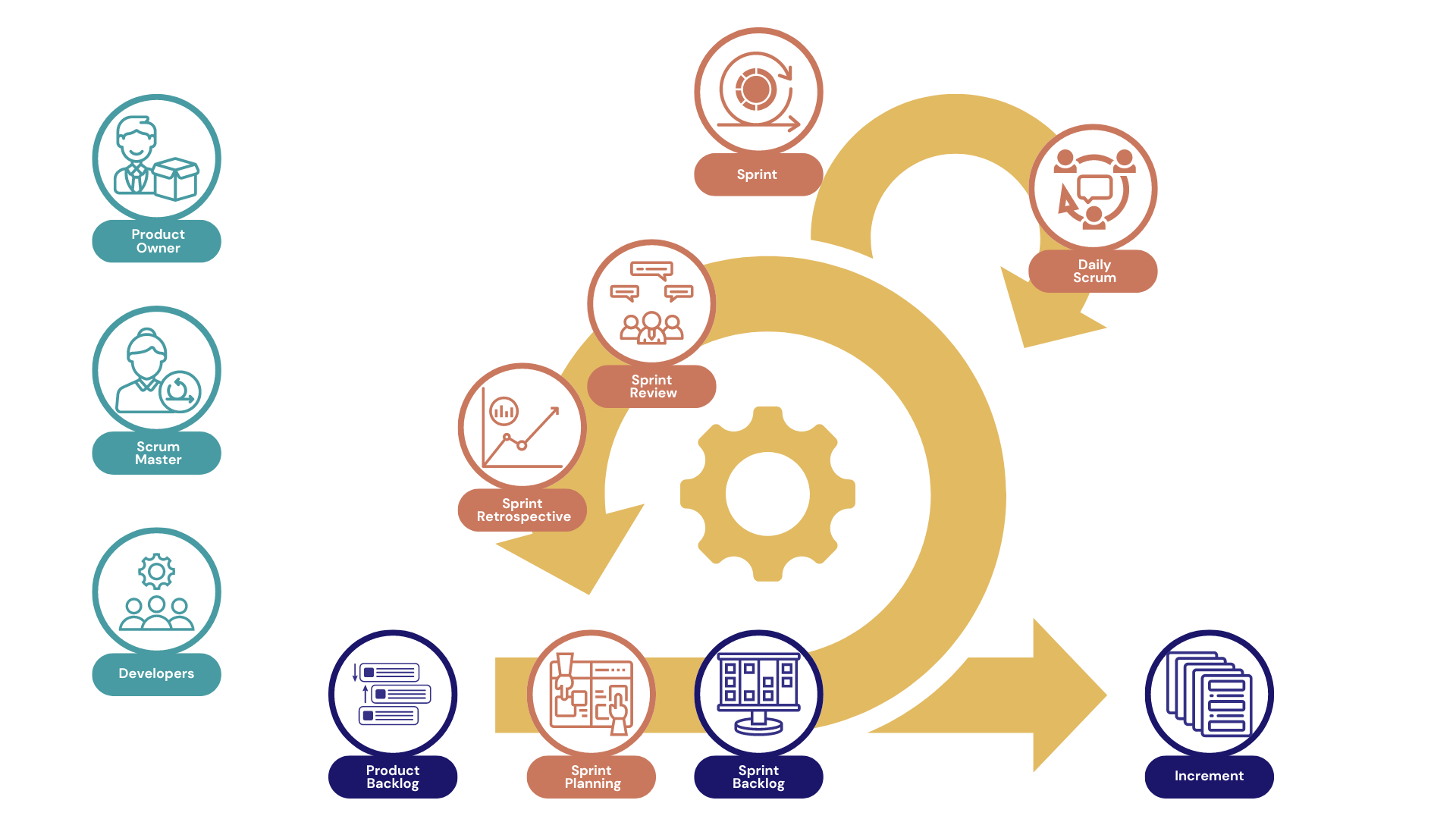
This structure provides a practical way to bring Agile concepts to life in real-world projects, making Scrum a versatile choice for teams seeking agility and efficiency across various industries.
Brief history and evolution of Scrum #
Scrum’s roots trace back to the mid-1980s when software development faced challenges with slow, inflexible processes. In 1986, Hirotaka Takeuchi and Ikujiro Nonaka introduced a holistic, team-based approach in their paper “The New New Product Development Game,” laying the groundwork for what would become Scrum. This concept aimed to address the limitations of traditional, sequential development methods.
In 1995, Jeff Sutherland and Ken Schwaber formally presented Scrum at the OOPSLA conference, drawing from empirical process control theory and complex adaptive systems. The framework gained traction as an alternative to waterfall methodologies, offering flexibility and adaptability in project management. The introduction of the Scrum Guide in 2010 provided a definitive source for Scrum theory and practices.
Since then, Scrum has evolved beyond software development, with adaptations like Scaled Agile Framework (SAFe) and Scrum of Scrums addressing the needs of larger organizations. Regular updates to the Scrum Guide ensure the framework remains relevant in our fast-paced, digital world.
Core principles and values of Scrum #
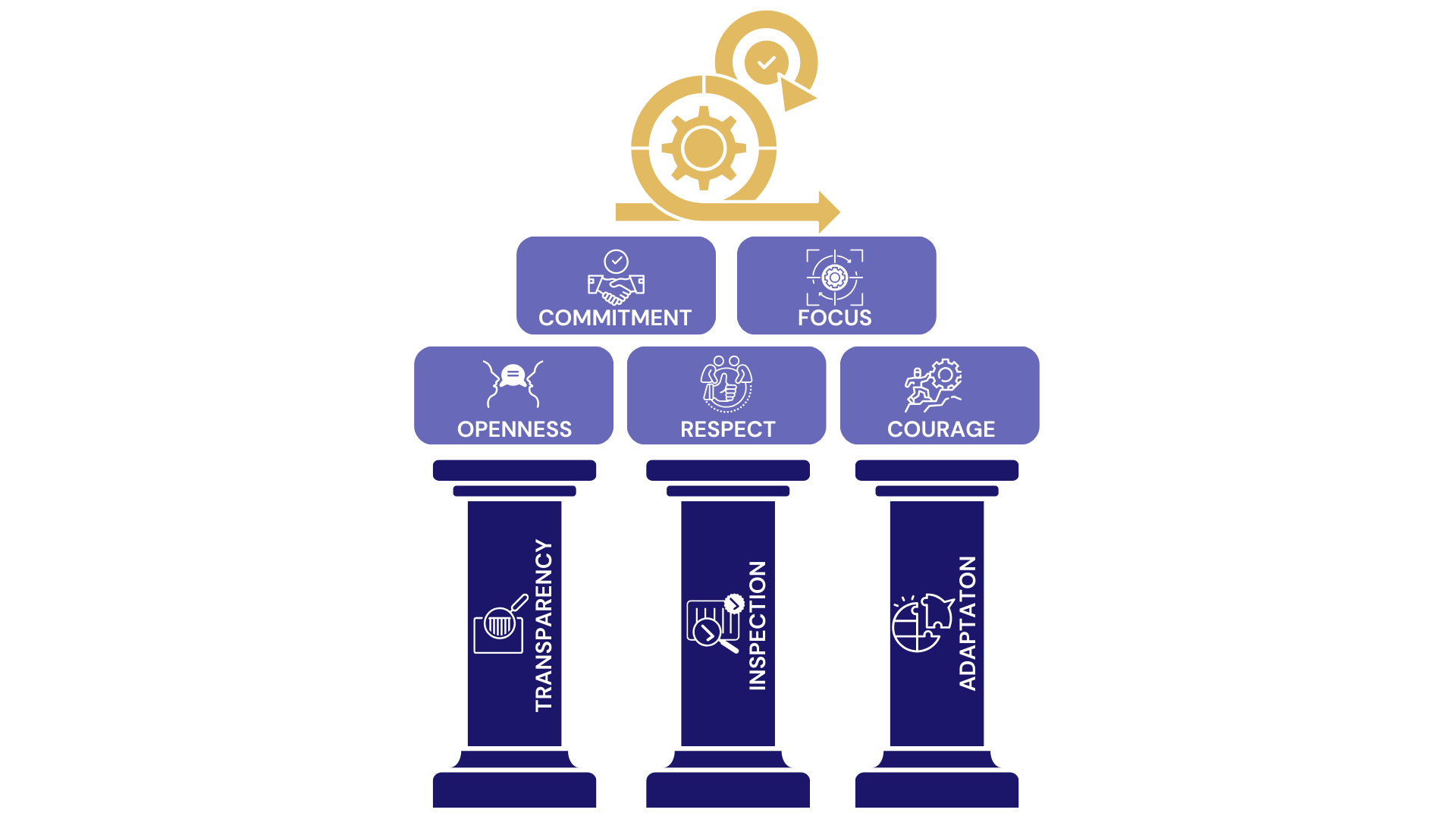
At the heart of Scrum lie its core values: commitment, courage, focus, openness, and respect. These scrum values form the bedrock of the Scrum framework, guiding team behavior and decision-making throughout the agile project management process.
The three pillars of Scrum – transparency, inspection, and adaptation – are fundamental principles that support these values. Transparency ensures that all aspects of the process are visible to everyone involved. Inspection allows the team to frequently check their progress and the product they’re creating. Adaptation means the team can adjust their plans and approach based on what they learn through inspection.
Scrum also embraces the principles of self-organizing teams and cross-functional collaboration. The Scrum Team, consisting of the Product Owner, Scrum Master, and Development Team, works together in short, focused sprints to deliver increments of value. This iterative process, combined with regular sprint planning, daily standups, sprint reviews, and retrospectives, creates a rhythm of continuous improvement.
By adhering to the five scrum values, three pillars and two principles principles, Scrum teams can navigate complex projects with agility, responsiveness, and a keen focus on delivering high-quality product increments that truly matter to the customer.
Benefits of implementing Scrum in project management #
Implementing Scrum in project management offers numerous benefits that enhance team productivity and product quality. One of the primary advantages is increased agility and faster time-to-market. By breaking work into short sprints and focusing on delivering potentially shippable product increments, teams can quickly adapt to changing requirements and market conditions. This iterative approach allows for regular stakeholder feedback, ensuring that the final product aligns closely with user needs and expectations.
Scrum also promotes transparency and improved communication within the team and with stakeholders. The use of visual tools like Scrum boards and burndown charts provides clear visibility into project progress. Regular events such as Daily Scrums, Sprint Reviews, and Retrospectives foster continuous improvement and collaboration.
Additionally, the self-organizing nature of Scrum teams encourages innovation and problem-solving, leading to higher job satisfaction and improved team morale. The framework’s emphasis on empirical process control and iterative development results in better risk management and more predictable outcomes, ultimately leading to increased customer satisfaction and project success.
The Three Pillars of Scrum: Transparency, Inspection, and Adaptation #
Imagine Scrum as a three-legged stool, with each leg representing one of its fundamental pillars: transparency, inspection, and adaptation. These pillars aren’t just fancy project management jargon – they’re the secret sauce that makes Scrum so effective in today’s fast-paced, ever-changing business landscape. Think of them as the power trio of agile methodologies, working in harmony to create a robust framework for delivering high-quality products.
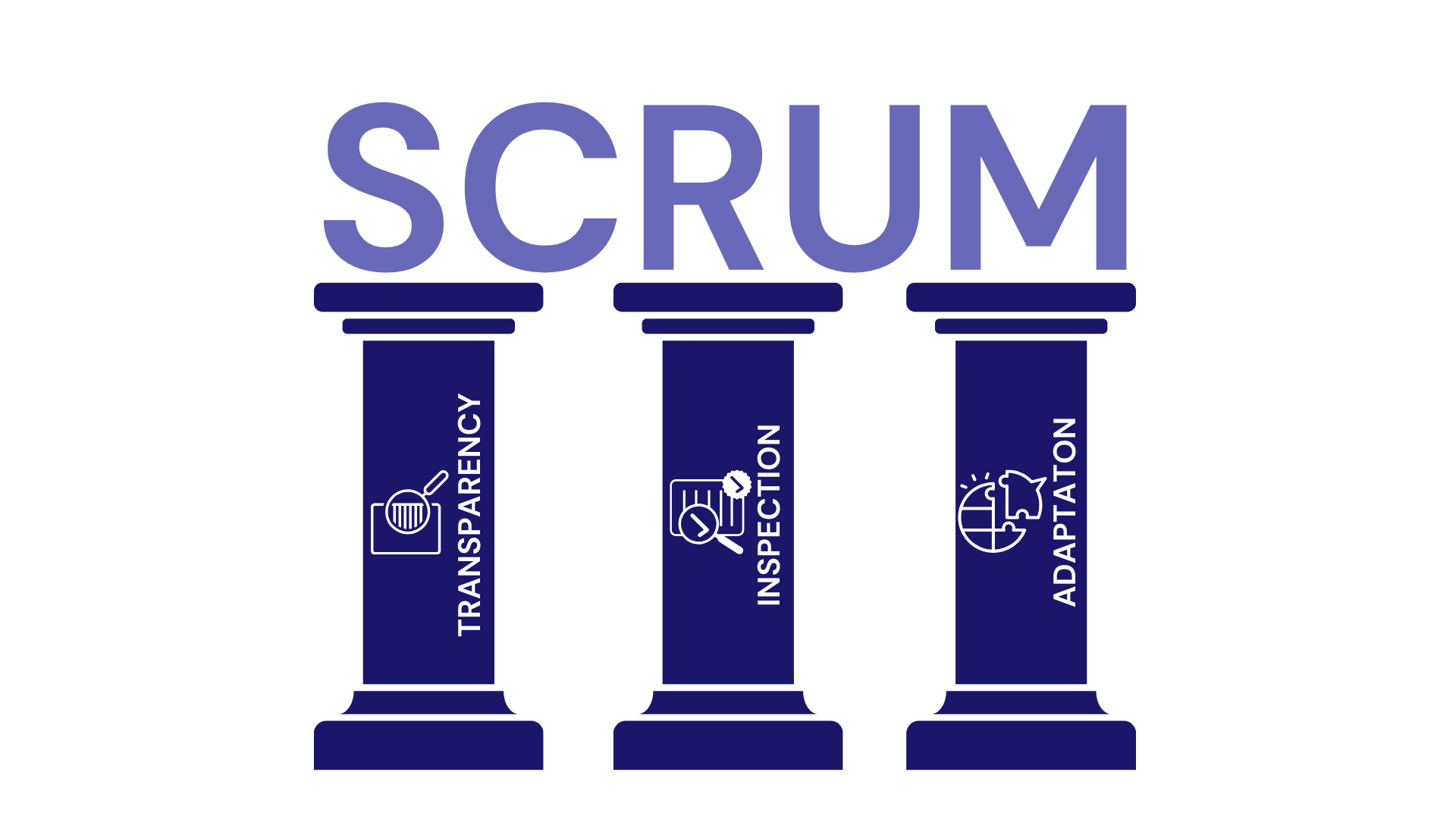
In this section, we’ll explore how these pillars form the backbone of empirical process control in Scrum, enabling teams to navigate complex projects with agility and precision. Get ready to discover how these three musketeers of Scrum can transform your project management approach and set your team up for success!
Transparency #
Transparency is all about keeping things crystal clear for everyone involved. It means that all aspects of the Scrum process – from the Product Backlog to the Definition of Done – are visible and understood by the entire Scrum Team and stakeholders. This openness fosters trust, enables better decision-making, and ensures that everyone’s on the same page. For example, a well-maintained Scrum Board makes the team’s progress visible at a glance, while a transparent Product Backlog helps prioritize work effectively.
Inspection #
Inspection is the pillar that keeps Scrum Teams on their toes. It involves regularly checking the Scrum artifacts, progress towards the Sprint Goal, and the product being developed. This constant scrutiny helps identify deviations or problems early on. Daily Scrums, Sprint Reviews, and Sprint Retrospectives are key events that support inspection. By frequently examining their work and processes, teams can catch issues before they snowball and ensure they’re always aligned with project goals and customer needs.
Adaptation #
Adaptation is where the magic of agility truly happens. Based on the insights gained through inspection, Scrum Teams adjust their plans, processes, or the product itself. This could mean refining the Product Backlog, modifying the Sprint Backlog, or even changing the way the team works. The Sprint Retrospective is a prime example of adaptation in action, where teams reflect on their performance and identify improvements for the next Sprint. This pillar ensures that Scrum Teams remain flexible, continuously improve, and stay responsive to change – essential qualities in today’s dynamic business environment.
How the pillars work together to create an effective Scrum process #
The three pillars of Scrum - transparency, inspection, and adaptation - work synergistically to create an effective and agile process.
Transparency ensures that all aspects of the project, from the Product Backlog to the Sprint progress, are visible and understood by everyone involved. This openness enables meaningful inspection, allowing the team to regularly assess their work and processes during events like Daily Scrums, Sprint Reviews, and Sprint Retrospectives.
Inspection, in turn, provides the insights necessary for meaningful adaptation. As the team examines their progress and processes, they identify areas for improvement and make informed adjustments. This could involve refining the Product Backlog, modifying the team’s workflow, or updating the Definition of Done. The continuous cycle of transparency enabling inspection, which then informs adaptation, creates a powerful feedback loop.
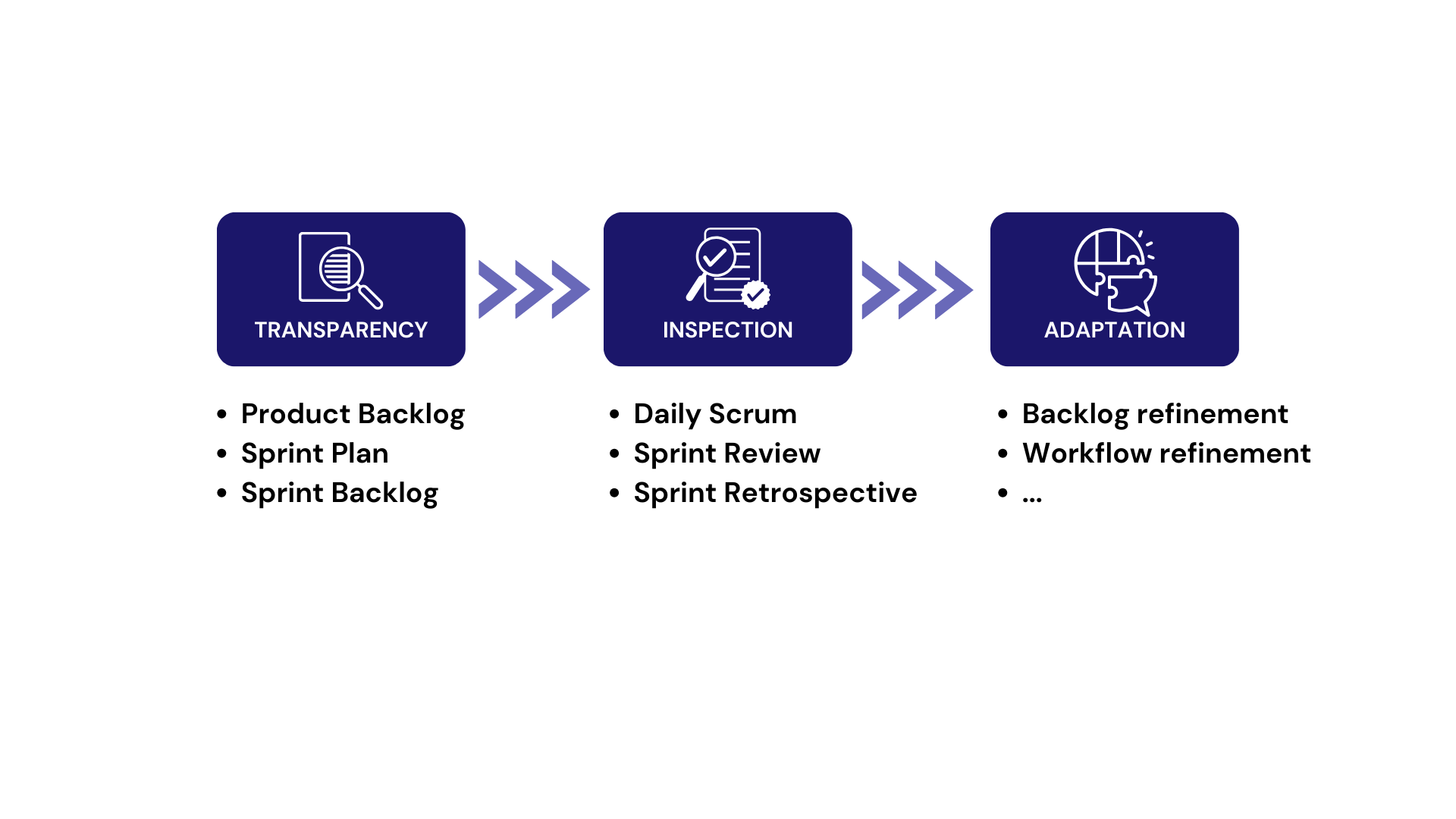
This iterative process drives continuous improvement, helping the team respond effectively to changes, optimize their performance, and consistently deliver high-quality product increments that align with stakeholder needs.
Scrum Roles: The Dream Team of Agile Development #
In this section, we will explore the essential roles that constitute the core of Scrum methodology: the Product Owner, Scrum Master, and Development Team. These roles form the foundation of the Scrum framework, each contributing distinct responsibilities and expertise to the agile development process. The synergy between these roles is crucial for the successful implementation of Scrum principles and the delivery of high-quality product increments.
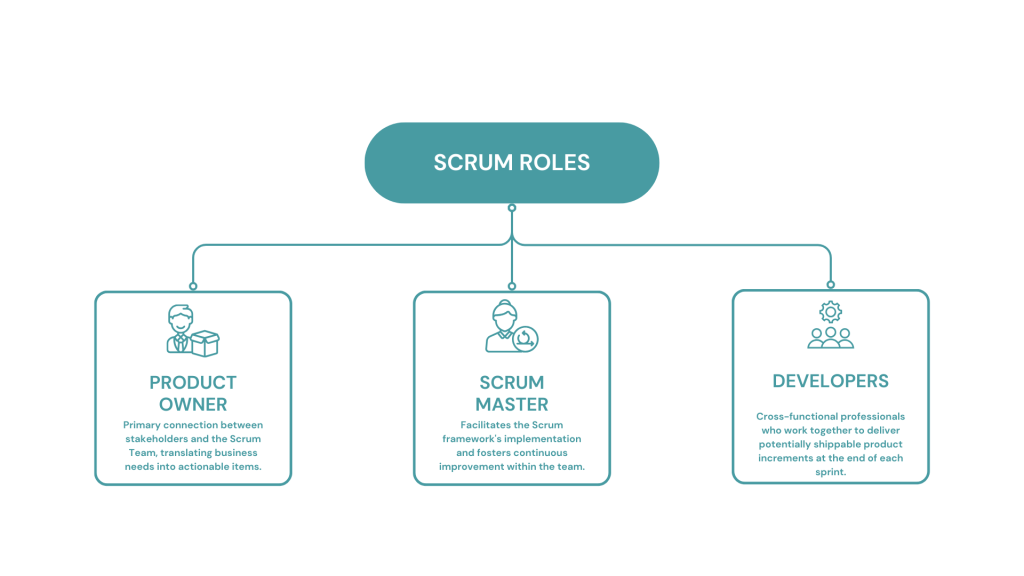
As we delve into each role, we will examine how their unique functions contribute to the overall effectiveness of the Scrum framework. Understanding these roles is fundamental for organizations seeking to implement Scrum or improve their existing agile practices. This exploration will provide insight into how these roles collaborate to foster self-organization, cross-functional teamwork, and iterative development, all of which are hallmarks of successful Scrum implementation.
Product Owner: The visionary leader #
The Product Owner is the visionary leader in Scrum, responsible for maximizing the value of the product and the work of the Development Team. This role serves as the primary liaison between stakeholders and the Scrum Team, translating business needs into actionable items. The Product Owner’s main responsibility is managing the Product Backlog, ensuring it is transparent, visible, and understood by all team members.
Key duties of the Product Owner include prioritizing user stories, refining the backlog, and clearly expressing Product Backlog items. They collaborate closely with stakeholders to gather requirements and feedback, which informs backlog prioritization and sprint planning. During Sprint Reviews, the Product Owner presents the completed work to stakeholders and collects valuable feedback.
By making informed decisions about product features and release planning, the Product Owner guides the product’s evolution, always striving to deliver maximum value in each sprint while aligning with the overall product vision and market needs.
Scrum Master: The servant-leader and process champion #
The Scrum Master serves as a servant-leader and process champion, facilitating the Scrum framework’s implementation and fostering continuous improvement within the team. They ensure that Scrum theory, practices, and rules are understood and followed, acting as a guardian of the process. The Scrum Master’s role is crucial in removing impediments, facilitating Scrum events, and coaching the team in self-organization and cross-functionality.
Key responsibilities of the Scrum Master include facilitating Daily Scrums, Sprint Planning, Sprint Reviews, and Sprint Retrospectives. They help the team maintain a clear and up-to-date Sprint Backlog, and work with the Product Owner to ensure effective Product Backlog management. The Scrum Master also plays a vital role in educating stakeholders about Scrum principles and helping the organization adopt agile practices.
By promoting transparency, inspection, and adaptation, the Scrum Master enables the team to maximize their productivity and deliver high-quality product increments consistently.
Development Team: The collaborative powerhouse #
The Development Team in Scrum is a collaborative powerhouse, consisting of cross-functional professionals who work together to deliver potentially shippable product increments at the end of each sprint. This self-organizing group possesses all the skills necessary to create the product, whether it’s coding, testing, design, or any other required expertise. The team size typically ranges from 3 to 9 members, ensuring optimal communication and productivity.
During each sprint, the Development Team transforms items from the Product Backlog into valuable, working features. They participate actively in sprint planning, estimating user stories and committing to the sprint goal. Through daily standups, the team inspects their progress and adapts their plan as needed. The Development Team’s commitment to the Definition of Done ensures that each increment meets quality standards.
Their collective ownership of the work, coupled with their diverse skills, enables them to tackle complex problems efficiently and deliver high-quality results consistently.
How these roles interact and support each other #
The synergy between the Product Owner, Scrum Master, and Development Team is crucial for the success of Scrum projects. The Product Owner collaborates with the Development Team during backlog refinement and sprint planning, ensuring that user stories are well-defined and prioritized. The Scrum Master facilitates this interaction, ensuring effective communication and removing any impediments that might hinder progress.
During sprints, the Development Team works autonomously to achieve the sprint goal, while the Scrum Master shields them from external disruptions. The Product Owner remains available for clarifications and participates in the daily standup when needed.
At the sprint review, all three roles come together with stakeholders to inspect the increment and gather feedback.
The sprint retrospective provides an opportunity for the entire Scrum team to reflect on their processes and identify improvements, with the Scrum Master guiding the discussion and the Product Owner contributing insights on product value and market needs.
Scrum Events: Keeping the Rhythm of Agile Projects #
Scrum events form the backbone of the framework’s empirical process control, providing structure and regularity to the agile software development . These time-boxed events, including Sprint Planning, Daily Scrum, Sprint Review, and Sprint Retrospective, are designed to create consistency and minimize the need for meetings not defined in Scrum. Each event serves a specific purpose in the inspection and adaptation cycle, enabling transparency and fostering collaboration among team members.
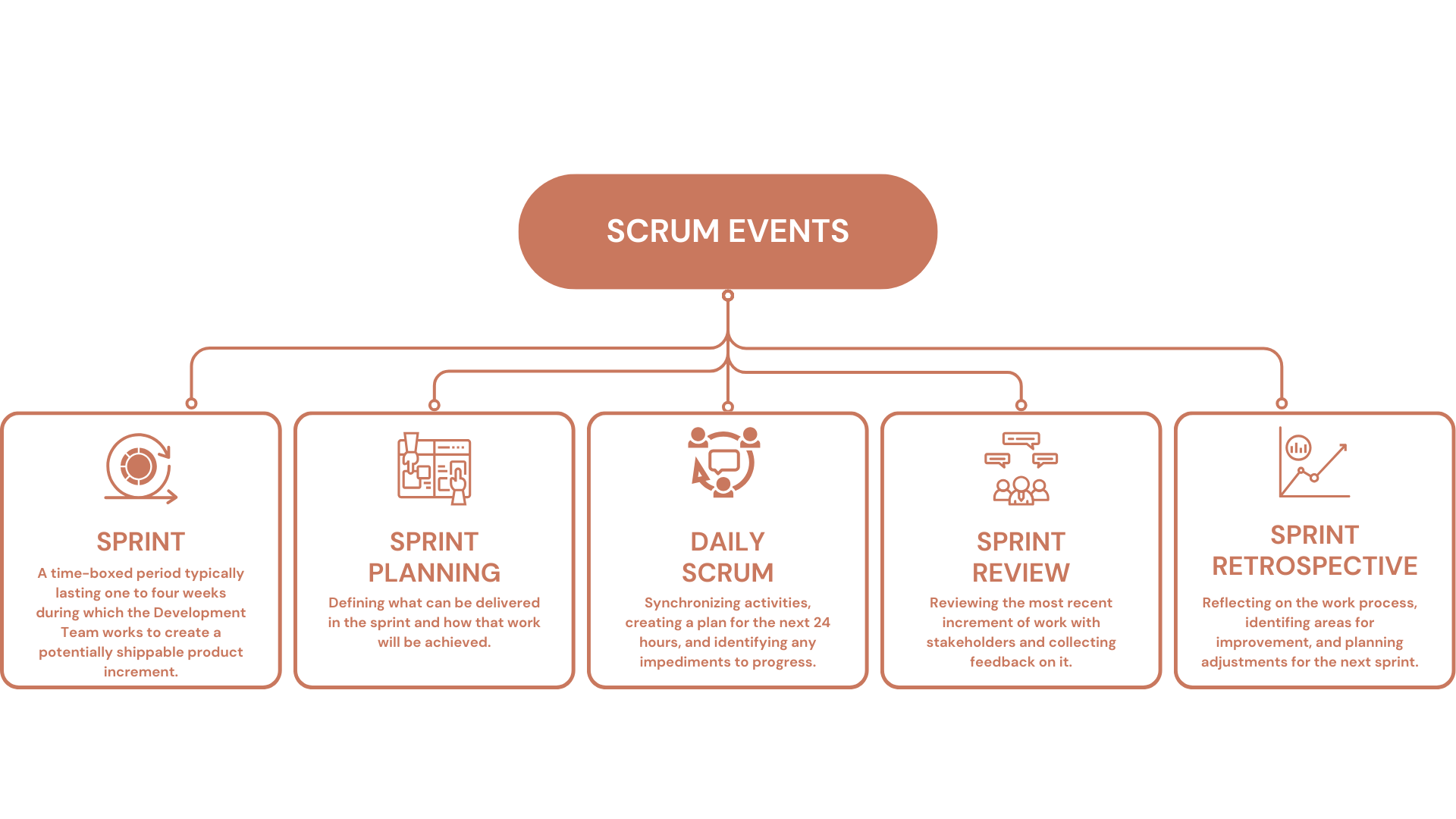
Together, these events create a rhythm that guides Scrum teams through the iterative and incremental development process, ensuring regular opportunities for planning, synchronization, and improvement. By adhering to these prescribed events, Scrum teams maintain focus, improve communication, and enhance their ability to deliver value consistently throughout the project lifecycle.
Sprint: The heartbeat of Scrum #
The Sprint is the core rhythm of Scrum, a time-boxed period typically lasting one to four weeks during which the Development Team works to create a potentially shippable product increment. This fixed-duration event provides a consistent cadence for the Scrum Team, enabling predictable planning and delivery cycles. Throughout the Sprint, the team focuses on achieving the Sprint Goal, a concise objective that guides their efforts in implementing selected Product Backlog items.
Within each Sprint, all other Scrum events are contained: Sprint Planning, Daily Scrums, the Sprint Review, and the Sprint Retrospective. This structure facilitates regular inspection and adaptation of both the product being developed and the team’s processes. By maintaining a consistent Sprint length, the Scrum Team enhances its ability to estimate and plan future work, leading to improved forecasting and increased predictability in product delivery.
The Sprint’s iterative nature embodies Scrum’s empirical approach to product development, promoting transparency, inspection, and adaptation.
Sprint Planning: Setting the stage for success #
Sprint Planning is a critical Scrum event that sets the stage for a successful Sprint. This time-boxed meeting involves the entire Scrum Team - the Product Owner, Scrum Master, and Development Team. During Sprint Planning, the team collaboratively defines the Sprint Goal and creates the Sprint Backlog. The Product Owner presents the highest priority items from the Product Backlog, while the Development Team determines which items they can complete within the Sprint, considering their capacity and previous velocity.
The outcome of Sprint Planning is a clear, shared understanding of what can be delivered in the Increment and how the work needed to deliver the Increment will be achieved. The team breaks down selected Product Backlog items into smaller, actionable tasks, estimating the effort required for each.
This detailed planning enables the Development Team to self-organize their work for the upcoming Sprint, fostering commitment to the Sprint Goal. The Scrum Master ensures that the event takes place and that attendees understand its purpose, keeping the discussion focused and productive within the allocated time-box.
Daily Scrum: Quick, focused, and essential #
The Daily Scrum, often referred to as the daily stand-up, is a crucial 15-minute time-boxed event that occurs every day of the Sprint. This meeting is attended by the Development Team, with the Scrum Master ensuring it takes place and adheres to the time limit. The primary purpose of the Daily Scrum is to synchronize activities, create a plan for the next 24 hours, and identify any impediments to progress.
During the Daily Scrum, each Development Team member typically addresses three key questions: what they accomplished since the last meeting, what they plan to do before the next meeting, and any obstacles they’re facing. This format promotes transparency, enabling the team to quickly assess progress towards the Sprint Goal and adapt their plan as necessary. The
Daily Scrum is not a status report to management but rather a critical inspection and adaptation point for the Development Team. It fosters collaboration, highlights dependencies, and allows for quick problem-solving, all of which contribute to the team’s self-organization and ability to meet the Sprint Goal efficiently.
Sprint Review: Showcasing progress and gathering feedback #
The Sprint Review is a crucial Scrum event held at the end of each Sprint, where the Scrum Team presents the completed work to stakeholders. This time-boxed meeting, typically lasting up to four hours for a one-month Sprint, focuses on inspecting the product increment and adapting the Product Backlog. The Development Team demonstrates the new features and functionality, while the Product Owner explains what Product Backlog items have been “Done” and what remains pending.
During the Sprint Review, stakeholders provide valuable feedback, which helps refine the product vision and inform future development priorities. This collaborative session fosters transparency and enables the team to gather insights that may influence the next Sprint Planning. The Scrum Master ensures the event remains within the time-box and that discussions stay productive.
By regularly showcasing progress and soliciting feedback, the Sprint Review plays a vital role in the empirical process control of Scrum, contributing to the continuous improvement and alignment of the product with user needs and market demands.
Sprint Retrospective: Continuous improvement in action #
The Sprint Retrospective is the final event within a Sprint, providing a dedicated opportunity for the Scrum Team to inspect and adapt their processes. This time-boxed meeting, typically lasting up to three hours for a one-month Sprint, focuses on reviewing the effectiveness of the team’s practices, identifying areas for improvement, and creating a plan for implementing changes.
During the Retrospective, the team reflects on various aspects of their work, including team interactions, processes, and tools. They discuss what went well, what could be improved, and agree on specific action items to enhance their performance in the next Sprint. The Scrum Master facilitates this event, ensuring a positive and productive atmosphere while encouraging open and honest communication.
By regularly examining their ways of working and committing to continuous improvement, the Scrum Team embodies the principle of empirical process control. This ongoing cycle of inspection and adaptation helps the team to incrementally optimize their practices, leading to increased efficiency, quality, and satisfaction in their Scrum implementation.
Scrum Artifacts: The Building Blocks of Transparency #
Scrum artifacts are essential tools that provide transparency and guide decision-making throughout the Scrum process. The three primary artifacts are the Product Backlog, Sprint Backlog, and Increment. These elements ensure that all team members and stakeholders have a clear understanding of the work to be done, the progress being made, and the value being delivered.
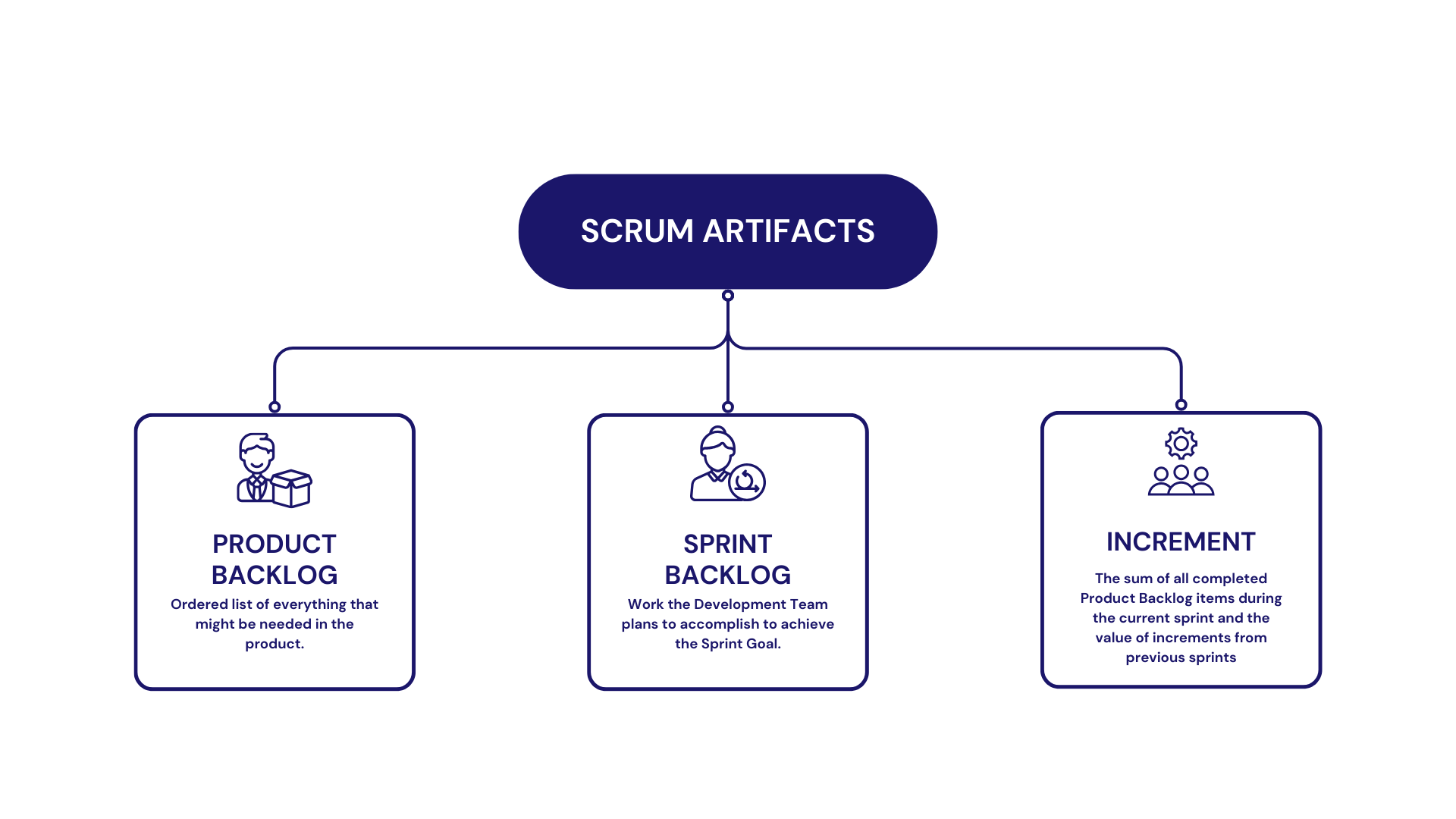
The Product Backlog is an ordered list of everything that might be needed in the product, serving as the single source of requirements for any changes to be made. The Sprint Backlog is a plan for delivering the product Increment and realizing the Sprint Goal. It makes visible all of the work that the Development Team identifies as necessary to meet the Sprint Goal. The Increment is the sum of all the Product Backlog items completed during a Sprint and the value of the increments of all previous Sprints.
These artifacts work together to promote transparency, enabling effective inspection and adaptation, which are crucial for the empirical process control that Scrum embodies.
Product Backlog: The ever-evolving to-do list #
The Product Backlog is the heart of Scrum, serving as an ever-evolving to-do list for the product. Managed by the Product Owner, it’s a dynamic, ordered list of everything that might be needed in the product. This artifact contains user stories, features, enhancements, and fixes, all prioritized based on business value, risk, and necessity. The Product Backlog is never complete; it constantly evolves as the product and its environment change, reflecting new market needs, technological advancements, or stakeholder feedback.
Backlog refinement is an ongoing process where the Product Owner and Development Team collaborate to add detail, estimates, and order to backlog items. This activity ensures that the backlog remains relevant, detailed, and ready for upcoming sprints. During Sprint Planning, the team selects high-priority items from the Product Backlog to form the Sprint Backlog.
The transparency of the Product Backlog allows all stakeholders to understand what the team is working on and what’s coming next, facilitating better decision-making and alignment with business goals.
Sprint Backlog: The roadmap for each sprint #
The Sprint Backlog is a crucial Scrum artifact that serves as the roadmap for each sprint, detailing the work the Development Team plans to accomplish to achieve the Sprint Goal. It’s created during Sprint Planning, where the team selects a subset of high-priority items from the Product Backlog and breaks them down into specific tasks. This detailed plan makes the work visible and transparent, allowing the team to track progress throughout the sprint.
The Sprint Backlog is owned by the Development Team and is a highly visible, real-time picture of the work they plan to accomplish during the sprint. It includes not only the selected Product Backlog items but also the plan for delivering them. As the team progresses through the sprint, they update the Sprint Backlog daily, often using a Scrum board or burndown chart to visualize their progress.
This adaptability allows the team to respond to new insights and challenges, adjusting their plan as needed while maintaining focus on the Sprint Goal. The Sprint Backlog thus embodies the principles of transparency, inspection, and adaptation central to Scrum.
Increment: The tangible result of each sprint #
The Increment is the tangible outcome of each sprint, representing the sum of all completed Product Backlog items during the current sprint and the value of increments from previous sprints. It’s a concrete step towards the product vision and must meet the Scrum Team’s Definition of Done, ensuring a potentially releasable state. This artifact embodies the principle of delivering value in each sprint, making progress visible and measurable.
The Increment plays a crucial role in the empirical process control of Scrum. During the Sprint Review, the Scrum Team presents the Increment to stakeholders, gathering feedback and insights that inform future sprint planning and Product Backlog refinement. This transparency allows for inspection of the actual product, enabling stakeholders to make informed decisions about future development. The Increment also serves as a motivational tool for the Development Team, providing a sense of accomplishment and progress.
By consistently delivering valuable Increments, the team builds trust with stakeholders and demonstrates the effectiveness of the Scrum framework in creating high-quality, user-centric products.
Implementing Scrum: Tips for Success in 2024 #
Common challenges and how to overcome them #
Implementing Scrum often comes with challenges that teams must navigate to fully realize its benefits.
One common issue is resistance to change, particularly in organizations transitioning from traditional project management methods. This can be addressed through education and training on Scrum principles, emphasizing the benefits of agility and iterative development.
Another challenge is maintaining focus during sprints, with teams sometimes struggling to avoid scope creep. Effective Sprint Planning, a well-maintained Product Backlog, and a strong commitment to the Sprint Goal can help mitigate this issue.
Teams may also face difficulties in accurately estimating work and managing velocity. This can be improved through regular backlog refinement sessions and by using techniques like Planning Poker for more accurate estimations.
Additionally, some teams struggle with the self-organizing aspect of Scrum. To address this, Scrum Masters should focus on coaching the team in agile principles and fostering a culture of shared responsibility.
Continuous improvement through honest and open Sprint Retrospectives is key to identifying and addressing these and other challenges as they arise.
Tools and software to support Scrum practices #
A variety of tools and software solutions are available to support Scrum practices, enhancing team collaboration and project visibility.
Digital Scrum boards, such as those offered by Jira, Trello, or Azure DevOps, provide a visual representation of the Sprint Backlog and work progress. These tools often include features for managing the Product Backlog, creating user stories, and tracking sprint progress through burndown charts.
For more comprehensive project management, platforms like VersionOne, Rally, or Scrumwise offer integrated solutions that cover the entire Scrum framework. These tools typically include features for sprint planning, backlog refinement, and generating reports on team velocity and sprint performance.
Additionally, communication tools like Slack or Microsoft Teams can facilitate Daily Scrums and improve team collaboration, especially for distributed teams.
While these digital tools can greatly enhance Scrum implementation, it’s important to remember that they should support, not replace, the core principles of transparency, inspection, and adaptation that are fundamental to Scrum.
Adapting Scrum for different team sizes and industries #
Scrum’s flexibility allows it to be adapted for various team sizes and industries beyond software development. For smaller teams, roles may be combined, such as having a Product Owner who also acts as a part-time team member. Larger organizations might implement Scrum of Scrums or Scaled Agile Framework (SAFe) to coordinate multiple Scrum teams working on related projects.
In non-software industries, Scrum has been successfully applied in marketing, education, and even manufacturing. The key is to maintain the core Scrum principles while adapting the framework to fit specific industry needs. This might involve adjusting sprint lengths, modifying the Definition of Done, or reinterpreting what constitutes a “potentially shippable product increment” in different contexts.
Regardless of the adaptations, the focus remains on iterative development, continuous improvement, and delivering value to stakeholders.
Measuring success and continuous improvement #
Measuring success in Scrum involves tracking various metrics that reflect the team’s productivity and the value delivered to stakeholders. Key performance indicators often include sprint velocity, burndown charts, and the number of completed user stories per sprint. Teams also monitor product quality through metrics like defect rates and customer satisfaction scores. These measurements provide insights into the team’s performance and help identify areas for improvement.
Continuous improvement is at the heart of Scrum, primarily facilitated through Sprint Retrospectives. During these sessions, teams reflect on their processes, identifying what worked well and what could be enhanced. They use this feedback to make incremental adjustments to their practices, fostering a culture of ongoing refinement. By regularly inspecting and adapting their approach, Scrum teams can optimize their performance, increase efficiency, and consistently deliver higher-quality product increments.
By embracing the roles, events, and artifacts of Scrum, you’re setting your team up for increased productivity, better collaboration, and more successful project outcomes. Remember, Scrum is all about incremental planning and delivery and continuous improvement, so don’t be afraid to adapt and refine your process as you go.